
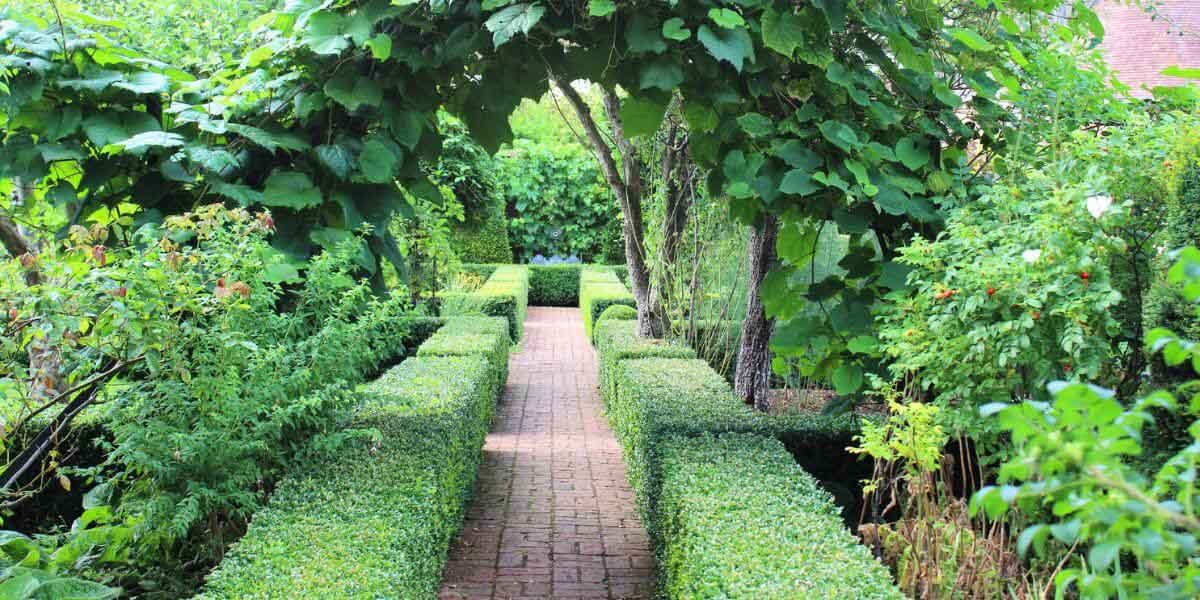
Knot Gardens and Garden Mazes – A Resurgence in 2024
As we step into 2024, the world of gardening is blossoming with creativity and a return to traditional forms. One particular art form that has gained momentum this year is the knot garden, a historical design that has captivated homeowners and landscape enthusiasts alike. The recent release of the film “Saltburn”, with its lush visuals and opulent gardens, has kindled a renewed fascination with intricate outdoor designs. Knot gardens, with their elaborate patterns and tightly clipped hedges, are not just a nod to history but also a statement of artistic ambition and personal expression in the modern garden.
A Historical Influence
The knot garden is not a new concept; its roots stretch back to the Renaissance when horticultural artistry peaked in Europe, particularly in England and France. These gardens were carefully designed to resemble intricate lacework, with paths weaving through foliage arranged in complex patterns. They often featured low hedges, lined with vibrant flowers, herbs, and aromatic plants, creating not just beauty but also a tactile experience for anyone walking through. The name itself comes from the ‘knot’ in medieval tapestries, where designs seemed to intertwine seamlessly.
In the modern era, the knot garden has morphed into a symbol of status, often associated with grandeur and estate gardens. Yet, the allure of such designs extends beyond their visual appeal; they invite us into a world of contemplation and serenity, making them a desirable addition for homeowners looking to transform their outdoor spaces.
The Decline of Boxwood: A New Era of Plant Choices
Traditionally, boxwood (Buxus spp.) has been the mainstay plant for knot gardens, valued for its dense growth and ability to be clipped into precise shapes. However, the recent challenges posed by boxwood blight and the invasive box tree caterpillar have made it increasingly difficult for gardeners to maintain healthy boxwood hedges. As more and more homeowners are abandoning boxwood for more resilient options, the question arises: What plants can effectively replace this cherished classic?
Among the alternative hedging plants that gardeners are opting for in 2024 are:
- Yew (Taxus baccata): Known for its rich, dark green foliage and excellent tolerance to clipping, yew is a classic choice for knot gardens. Its ability to thrive in various soil conditions and partial shade makes it versatile.
- Hornbeam (Carpinus betulus): This deciduous tree provides a beautiful fall colour and works well for creating a formal effect. It can be pruned into shape, offering a sturdier alternative to boxwood.
- Lavender (Lavandula spp.): While not a traditional topiary plant, lavender can serve as a fragrant addition to the edges of knot gardens. Its compact growth habit can form a low hedge, giving off a delightful aroma.
- Euonymus (Euonymus fortunei): Its dense, evergreen variety can create a lovely hedge that adds colour and texture all year round. Plus, it grows rapidly, making it an excellent filler for garden designs.
- Holly (Ilex aquifolium): With its distinctive, spiny leaves and bright berries, holly not only provides a stunning visual impact but also attracts birds and wildlife into the garden.
Homeowners are embracing these diverse plant options not only for their practical advantages but also for their aesthetic potential. The shift away from boxwood is indicative of a broader trend towards sustainability and ecological responsibility in gardening.
Status vs. Horticultural Interest: A Question of Intent
As homeowners install knot gardens and mazes, a crucial question looms: Are these designs a pursuit of status or a genuine interest in horticulture? While it’s true that a meticulously maintained knot garden is often seen as a marker of wealth and prestige, the craftsmanship involved should not be underestimated. The act of laying out paths, selecting the right plants, and managing growth can provide a fulfilling and enriching experience.
In 2024, the revival of knot gardens signals a marriage of style, history, and personal passion. Homeowners are telling their stories through the landscapes they create, and whether these gardens serve as social currency or as a heartfelt expression of love for nature, they spark a renaissance in landscape artistry that is bound to flourish.
As we admire the intricate patterns of knot gardens taking root across properties, we are reminded that the world of gardening is as much about cultivation of the earth as it is about the cultivation of our personal narratives. Whether driven by status or true horticultural interest, knot gardens invite us all to participate in a dialogue between history, nature, and our own creative endeavours.
So, as the season unfolds, let us appreciate not just the beauty of these gardens but also the diversity in motivations behind their creation. How can we better define our gardening ambitions — as expressions of status or as true connections to the flourishing world around us? The choice, as with the garden itself, is wonderfully intricate and uniquely personal.