
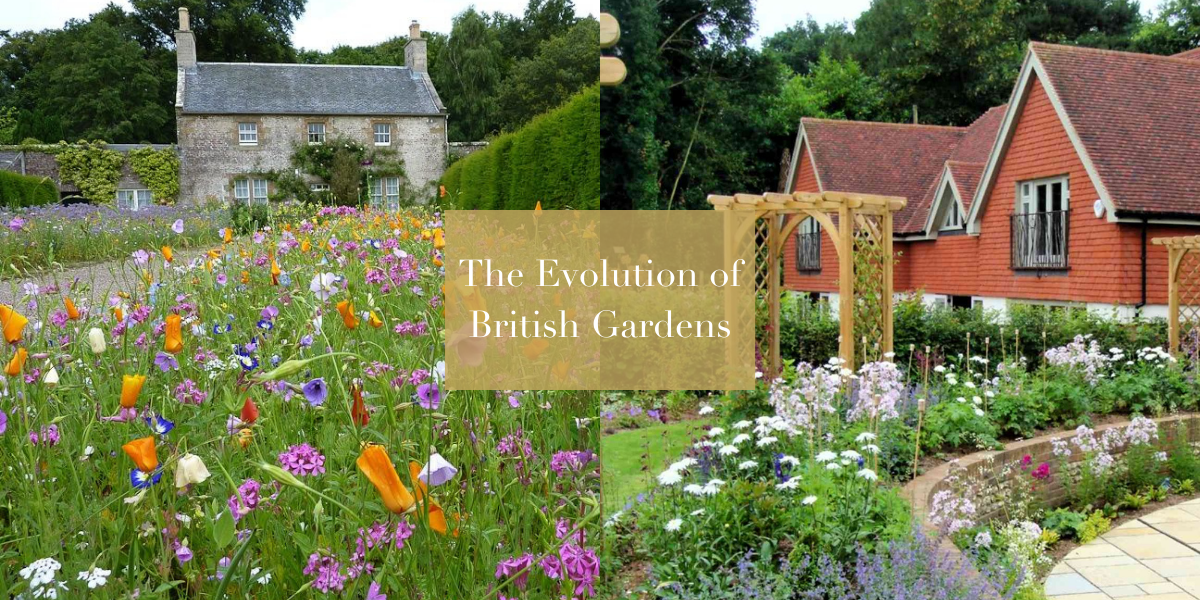
An intrinsic part of British culture, a garden reflects the values, aesthetics, and evolving environmental concerns of their time. From the formal geometric designs of Tudor knot gardens to the expansive, sculpted landscapes of the 18th century and the cottage garden revival of the Arts and Crafts movement, British gardens evolve to suit the needs and desires of society. Today, a growing emphasis on sustainability and biodiversity is reshaping garden design, moving away from traditional lawns and chemically managed flowerbeds towards rewilded meadows and pollinator-friendly planting schemes.
As climate change and habitat loss become urgent concerns, many gardeners, landscape designers, and homeowners are reconsidering how they interact with their outdoor spaces. The modern approach increasingly prioritises harmony with nature over rigid control, favouring ecological planting and water-efficient designs.
The historical journey of British gardens is a reflection of broader cultural, technological, and environmental movements. By exploring this evolution, we can better appreciate the balance between design and ecology, and how today’s gardens are becoming a vital part of sustainable living.
The Origins of Formal Gardens & Aristocratic Influence
The earliest British gardens were shaped by the influence of European aristocracy, particularly Italian Renaissance and French Baroque. In the Tudor and Stuart periods (16th and 17th centuries), gardens became a status symbol, designed to demonstrate wealth, sophistication, and control over nature. These gardens were meticulously planned, with an adherence to symmetry, geometric layouts, and neatly clipped hedges forming intricate patterns. The knot garden, a popular design of the era, featured interwoven plant beds resembling embroidery patterns, often filled with aromatic herbs such as rosemary, thyme, and lavender. These structured gardens were not just for decoration; they also had practical applications, with many incorporating herbs and medicinal plants.
The grandeur of formal gardens expanded in the late 17th and early 18th centuries as aristocrats sought to emulate the opulence of Versailles, the masterpiece of André Le Nôtre. The parterre garden, characterised by ornamental flower beds arranged in elaborate designs and separated by gravel pathways, became a defining feature of aristocratic estates. These gardens were not only visually impressive, but also served as a backdrop for social gatherings, reinforcing the power and prestige of their owners. Water features, such as fountains and canals, were introduced, creating a theatrical and highly controlled landscape. Statuary, pergolas, and mazes were also integrated, adding elements of drama and mystery to the garden experience
To maintain their beauty, these formal gardens required vast amounts of labour. Vast teams of gardeners were responsible for precise clipping, seasonal replanting, and pathway maintenance. A single estate could require dozens of workers to uphold its pristine appearance. This demand made such gardens unsustainable for the average landowner, reinforcing their role as a privilege of the elite. They also reflected a mindset of dominance over nature, where every element of the landscape was manipulated to conform to human ideals of order and symmetry.
Over time, however, attitudes towards nature began to shift. The highly structured formality of these gardens, while impressive, began to feel restrictive to a society that was slowly embracing the ideals of Romanticism and the natural world. Influenced by changing artistic and philosophical perspectives, as well as the works of poets and thinkers who idealised nature’s untamed beauty, there was a growing desire for landscapes that felt organic and immersive rather than rigid and artificial. This shift in perception laid the foundation for a new movement, one that would move away from geometric perfection and towards the expansive, rolling landscapes that would define British garden design for centuries to come.
Capability Brown & The Birth of the English Landscape Garden
By the mid-18th century, a dramatic shift in garden design was underway. The rigid symmetry and highly ornamental nature of formal gardens began to be viewed as artificial and restrictive. A new approach, which embraced rolling landscapes, winding pathways, and expansive views, emerged as a defining feature of British garden design. Leading this revolution was Lancelot “Capability” Brown, whose influence would shape the aesthetics of countless estates across England.
Brown rejected the strict formality of previous garden styles in favour of naturalistic landscapes that blended seamlessly with the surrounding countryside. His gardens were not merely decorative; they were designed to evoke an emotional response, creating a sense of effortless beauty and grandeur. He used carefully planned contours, tree placements, and expansive lakes to construct an idealised vision of nature—one that appeared untouched but was, in fact, highly engineered.
One of Brown’s greatest contributions was his use of undulating lawns and water features, which created an illusion of depth and movement. Unlike the rigid parterres and terraces of earlier periods, his designs introduced a softness and fluidity that made the landscape feel more organic. Trees were strategically planted to frame sweeping vistas, while serpentine lakes and rivers reflected the sky, further enhancing the illusion of natural beauty. The result was a harmonious, pastoral scene, where man’s hand was invisible but ever-present.
Brown’s work can be seen in some of Britain’s most famous estates, including Blenheim Palace, Chatsworth House, and Stowe. These grand estates became showcases for his ability to reshape the landscape, making it appear effortlessly beautiful while still maintaining a sense of order. His transformation of Blenheim Palace is particularly notable, where he turned formal gardens into an expansive naturalistic parkland, complete with rolling meadows, sweeping lakes, and groves of trees that gave the illusion of endless space.
Although Brown’s approach was widely celebrated, it was not without criticism. Detractors lamented the loss of intricate flower beds and structured designs, arguing that his style prioritised the wealthy landowner’s desire for grandeur and scale over the needs of everyday gardeners. Others felt that his work erased historical features, replacing them with a romanticised version of nature that, while beautiful, lacked the biodiversity of a truly wild landscape.
Despite these criticisms, Brown’s legacy is undeniable. His influence on landscape architecture set the foundation for the English garden tradition that continues to inspire designers today. His work remains a testament to the power of design to shape perceptions of nature, merging human ingenuity with the untamed beauty of the countryside.
The Victorian Garden – Ornamental and Exotic Plant Collecting
The Victorian era (1837–1901) was a time of immense innovation, expansion, and cultural transformation, and nowhere was this more evident than in British garden design. With the Industrial Revolution fueling advances in transportation, botany, and glasshouse technology, the Victorian period saw an explosion in horticultural curiosity. It was a golden age of plant collecting, ornamental gardening, and experimentation, as gardens became both a scientific pursuit and a visual spectacle.
One of the most defining features of Victorian gardens was the obsession with exotic plants. The expansion of the British Empire provided access to new species from Asia, Africa, and South America, many of which had never before been cultivated in Britain. Explorers and botanists, such as Joseph Hooker and Robert Fortune, embarked on dangerous expeditions to bring back specimens that would later adorn the gardens of the wealthy. This influx of foreign flora led to the construction of grand conservatories and glasshouses, such as the Palm House at Kew Gardens, which allowed tropical plants to thrive despite Britain’s cool climate.
Victorian gardens were highly ornamental, featuring vibrant, structured flower beds filled with carefully arranged annuals and perennials. The rise of the bedding-out system, where plants were grown in greenhouses and replaced throughout the season to maintain a perfect floral display, became a hallmark of the time. Geraniums, fuchsias, begonias, and petunias were some of the most popular choices, arranged in symmetrical patterns with bold color contrasts. This created eye-catching displays that were both meticulously controlled and visually striking.
The invention of the lawnmower in 1830 by Edwin Budding revolutionised garden maintenance, making immaculately kept lawns more accessible to the middle class. The lawn, previously a luxury reserved for aristocratic estates, became a staple of suburban homes, reinforcing the idea that a well-manicured garden was a symbol of respectability. Public parks, such as those designed by Joseph Paxton, introduced structured landscapes to urban populations, providing green spaces for recreation and socialising.
Another key feature of Victorian gardens was the inclusion of elaborate architectural elements. Cast-iron gazebos, fountains, statues, pergolas, and trellises adorned gardens, adding an extra layer of grandeur and theatricality. The influence of Gothic Revival architecture extended into garden design, with intricate stonework and ornamental structures providing dramatic focal points. Many wealthy estate owners built rock gardens, ferneries, and alpine beds, showcasing the latest trends in plant cultivation.
However, while Victorian gardens were known for their controlled aesthetic, they were also deeply connected to scientific progress. The period saw advancements in botany, plant hybridisation, and garden chemistry, allowing for the breeding of hardier, more diverse plant varieties. The introduction of fertilisers and pesticides led to greater crop yields, but also set the stage for debates about the ethical and environmental impact of artificial intervention in gardening.
Despite the lavish excess of Victorian gardens, there were also early signs of a growing appreciation for naturalistic planting. Influenced by John Ruskin and the Arts and Crafts Movement, some gardeners began moving away from rigidly structured flower beds in favor of more informal, painterly compositions. This marked the beginning of a transition that would gain full momentum in the early 20th century, as formal Victorian gardens gradually gave way to more organic, free-flowing designs.
The legacy of the Victorian garden remains strong today, with botanical gardens, public parks, and grand conservatories continuing to showcase the bold, elaborate plantings of the era. While modern sensibilities often favour sustainability over extravagance, the Victorian passion for plants and scientific curiosity laid the foundation for much of today’s horticultural knowledge.
The 20th Century Shift from Ornament to Functionality
The 20th century saw one of the most dramatic transformations in British garden design, as the grandeur and high-maintenance aesthetics of previous centuries gave way to more practical and functional outdoor spaces. While Victorian gardens had been highly ornamental and meticulously controlled, the arrival of war, urbanisation, and shifting social structures led to a re-evaluation of garden design. By the mid-20th century, the focus had shifted towards ease of maintenance, practicality, and recreational use, leading to the emergence of modern suburban gardens, public parks, and an emphasis on gardening as a leisure activity rather than a display of wealth and power.
The Influence of War and Economic Change
The impact of two World Wars fundamentally altered British gardening. The Victorian era’s luxurious, decorative planting schemes were no longer feasible during times of national crisis. With food shortages a significant concern, World War II’s Dig for Victory campaign encouraged people to transform their gardens into productive vegetable plots. Lawns and flower beds were replaced with rows of potatoes, carrots, cabbage, and onions, with many once extravagant gardens becoming farmland.
This shift towards functionality persisted even after the war ended. The economic challenges of post-war Britain meant that maintaining large, ornamental gardens was impractical for most people. Gardeners, once employed in large numbers to tend aristocratic estates, were now scarce, and labour-intensive planting schemes were largely abandoned. Instead, gardens began to prioritise practicality and efficiency, with smaller plots, fewer exotic plants, and simpler designs that could be maintained without significant resources.
The Rise of Suburban Gardens
As homeownership increased during the mid-20th century, the suburban back garden emerged. Unlike the vast estates of previous centuries, these gardens were compact, private, and designed for everyday living rather than spectacle. The once grand lawns of stately homes were miniaturised into neatly trimmed grass patches, surrounded by flower borders and small vegetable patches. The garden became an extension of the home, used for leisure, relaxation, and family gatherings.
The availability of mass-produced garden furniture, barbecues, and patio sets transformed gardens into outdoor living spaces. Families could now enjoy summer meals outside, and the garden became a space for social interaction rather than just decoration. Children’s play areas, rockeries, and small ponds became common features, reflecting the garden’s new role as a multi-functional space.
The Impact of the Arts and Crafts Movement
While some gardeners embraced the new practicality, others sought to reclaim a sense of artistry. The Arts and Crafts Movement, championed by William Morris and Gertrude Jekyll, encouraged a return to naturalistic planting and craftsmanship, rejecting the industrial mass production that was beginning to dominate design.
Jekyll’s approach was particularly influential—she pioneered colour-themed planting schemes and promoted the use of cottage garden aesthetics, where perennials, climbers, and shrubs were layered to create soft, painterly compositions. This move away from rigid formality allowed gardens to feel more natural and inviting, blending aesthetic appeal with the practical realities of modern living.
The Introduction of Chemical Gardening and Mass Production
The 20th century also saw significant advancements in horticultural technology. The development of synthetic fertilisers, pesticides, and herbicides led to the rise of mass-market gardening. Products such as weed killers, lawn feeds, and chemical pest control became widely available, allowing homeowners to maintain pristine green lawns and flower beds without the intensive manual labour it once required.
Garden centres, which first appeared in the mid-20th century, revolutionised how people approached gardening. Previously, plants were sourced from specialist nurseries or grown from seed, but garden centres made a vast range of plants, tools, and accessories available to the general public. This accessibility helped democratise gardening, making it possible for more people to cultivate and maintain outdoor spaces, regardless of their level of expertise.
A Growing Awareness of Ecology and Sustainability
Despite the popularity of chemical gardening, concerns about environmental damage arose towards the end of the 20th century. The widespread use of pesticides led to a decline in bee populations and biodiversity, prompting a shift towards more sustainable practices. By the 1980s and 1990s, wildlife-friendly gardening, composting, and organic food production gained traction, marking the beginning of a new movement towards ecological responsibility in garden design.
The Modern-Day Garden Renaissance
In the relatively early stages of the 21st Century, British gardens are undergoing yet another transformation, this time driven by environmental awareness, biodiversity conservation, and a return to naturalistic planting. Gone are the days when manicured lawns and chemically sustained flower beds were the gold standard. Today, a growing movement towards sustainable, wildlife-friendly, and climate-adaptive gardening is shaping the way homeowners and designers interact with outdoor spaces.
One of the most significant trends of modern gardening is rewilding, a movement that encourages less control and more ecological harmony. The idea of a “perfectly kept” garden, once synonymous with neatly clipped hedges and symmetrical flower beds, has given way to a preference for wildflower meadows, diverse plant communities, and minimal human intervention. The No-Mow Movement, which promotes the reduction of lawn mowing to allow native grasses and wildflowers to flourish, is gaining popularity. This shift is not merely aesthetic; it plays a crucial role in supporting declining bee and butterfly populations, providing food sources and habitats for essential pollinators.
Another key development in modern garden design is the emphasis on drought-resistant planting and water-efficient landscaping. With climate change leading to unpredictable weather patterns, gardeners are increasingly adopting xeriscaping techniques, which focus on using plants that require minimal irrigation. Mediterranean-style gardens, featuring lavender, rosemary, olive trees, and drought-tolerant grasses, are becoming more common, particularly in southern England, where summer droughts are becoming more frequent. Rainwater harvesting, permeable paving, and greywater recycling systems are also being incorporated into garden designs to reduce water consumption and mitigate flooding risks.
Parallel to this, there has been a renewed interest in edible landscaping, where food production is seamlessly integrated into ornamental gardens. The traditional separation between kitchen gardens and decorative planting is being blurred; with fruit trees, herb borders, and vegetable patches appearing alongside perennials and shrubs. The “grow your own” movement, fueled by concerns over food security and sustainability, has inspired many homeowners to cultivate their own produce, from tomatoes and strawberries to more exotic crops like figs and persimmons. Community gardens have also gained momentum, providing urban residents with shared spaces to cultivate fresh, locally-grown food.
The concept of vertical gardening and urban greening has also become increasingly relevant, particularly in cities with limited outdoor space. Green walls, rooftop gardens, and balcony planters allow even the smallest urban dwellings to incorporate pockets of greenery, improving air quality, reducing urban heat, and enhancing mental well-being. The integration of technology into gardening, such as smart irrigation systems, automated lighting, and climate-responsive greenhouses, has further revolutionised the effiency and accessibility of garden maintenance.
The rise of immersive and sensory gardens is another fascinating development, focusing on engaging senses beyond simply visual. These gardens incorporate fragrant plants, textured foliage, calming water features, and even interactive elements like musical sculptures. The increasing recognition of gardens as spaces for well-being and mental health has led to the promotion of therapeutic gardens, designed specifically to provide a sense of tranquillity and connection to nature.
While the accessibility of chemical fertilisers, synthetic pesticides, and non-native ornamental plants remains high, more gardeners are making conscious efforts to avoid harmful interventions and embrace organic, regenerative practices. The increasing popularity of permaculture principles, companion planting, and closed-loop garden systems signifies a broader awareness of the interconnectedness between gardening and environmental stewardship.
The modern British garden is no longer just a private retreat or a status symbol; it’s a living ecosystem, a climate-conscious space, and an extension of the home that reflects both personal values and broader environmental concerns. The shift from controlling nature to coexisting with it marks a profound evolution in garden philosophy, one that is likely to continue shaping British landscapes for generations to come.
Designing for the Future – What Homeowners Can Do
As the British garden continue to evolve, homeowners have a unique opportunity to embrace sustainable, climate-conscious and biodiversity-friendly approaches to their outdoor spaces. Whether working with a sprawling estate or a small urban courtyard, modern gardening is about striking a balance between beauty, functionality, and ecological responsibility. By making thoughtful choices, gardeners can contribute to a healthier environment while still creating an aesthetically pleasing space.
One of the most impactful changes a homeowner can make is to reduce traditional lawn areas. Lawns, though iconic, require significant water, fertiliser, and maintenance to stay green throughout the year. Instead, many are opting for wildflower meadows, moss lawns, and drought-tolerant ground covers such as clover and creeping thyme, which require less upkeep and support local wildlife. The No-Mow Movement, which encourages reducing lawn mowing frequency to allow natural vegetation to thrive, is an easy-yet-effective way to increase biodiversity.
Planting for pollinators and wildlife is another key step towards an ecologically balanced garden. Choosing native plant species, rather than exotic imports, provides essential food sources and habitats for bees, butterflies, birds, and other beneficial insects. Incorporating a variety of nectar-rich flowers, berry-producing shrubs, and night-scented plants can help sustain pollinators throughout the seasons. Additionally, features such as bee hotels, bird feeders, and small ponds can further attract and support wildlife.
Water conservation is also becoming a defining feature of future-focused gardening. Homeowners can integrate rainwater-harvesting systems, permeable paving, and mulching techniques to reduce reliance on traditional water sources. Drought-resistant plants like lavender, sedum, and echinacea help ensure the garden remains lush without excessive irrigation. In urban areas, the use of green roofs, vertical gardens, and container planting can maximise space while contributing to climate cooling and air purification.
A shift towards organic and regenerative gardening is another important step. By eliminating chemical pesticides and synthetic fertilisers, gardeners can protect soil health and encourage natural pest control. Composting kitchen waste, using natural fertilisers like seaweed or manure, and practicing companion planting can create a self-sustaining, closed-loop system.
Ultimately, designing a garden for the future means working with nature rather than against it. By embracing biodiversity, sustainability, and resilience, homeowners can ensure that their gardens are not only beautiful, but also play a meaningful role in environmental conservation.