
The Full Summer Hosting Checklist
Summer hosting often begins before anyone arrives. It begins with the doors opened early, the table cleared, the guest room checked and the flowers cut from the garden. It is in the quiet details that help a home feel settled before the first person steps through the door. A…
House of Willow Alexander·
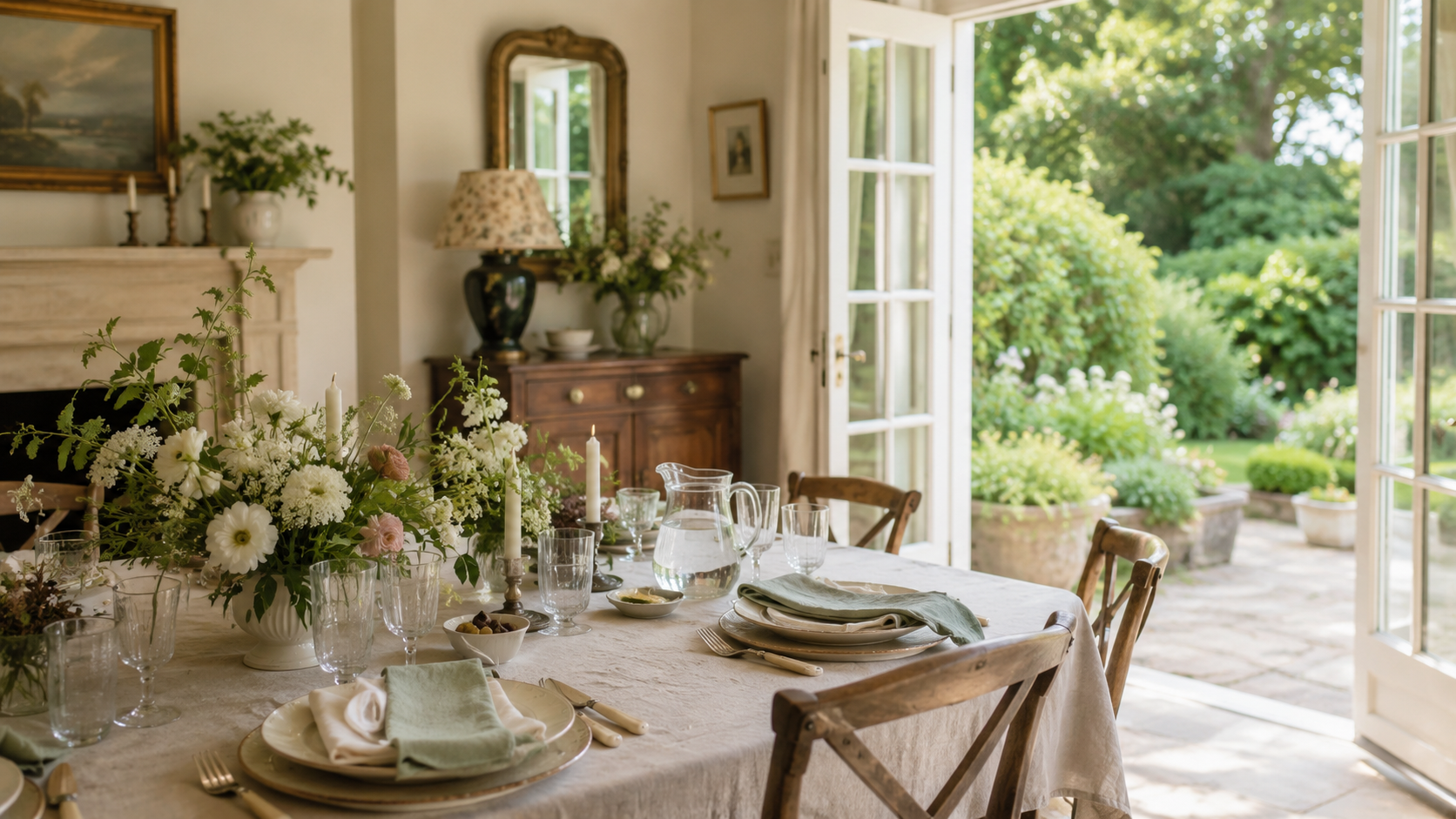
Summer hosting often begins before anyone arrives.
It begins with the doors opened early, the table cleared, the guest room checked and the flowers cut from the garden. It is in the quiet details that help a home feel settled before the first person steps through the door.
A home prepared for guests does not need to feel formal. It should not feel overworked, fragile or staged. The best summer hosting feels easy, generous and quietly considered. People know where to sit. Glasses are ready. The table can be used. The bathroom feels fresh. The garden is part of the day. The home carries the gathering naturally.
This is why preparation matters.
Not because everything needs to be perfect, but because small interruptions can change the feeling of hosting. Searching for a clean towel, clearing a table at the last minute, realising there are not enough glasses, or finding the guest bathroom has been forgotten can make the home feel rushed.
A thoughtful summer hosting checklist helps remove those small moments before they happen. It allows the home to feel ready for the people arriving, the meal being served, the doors staying open and the day unfolding at its own pace.
Preparing Your Home for Guests
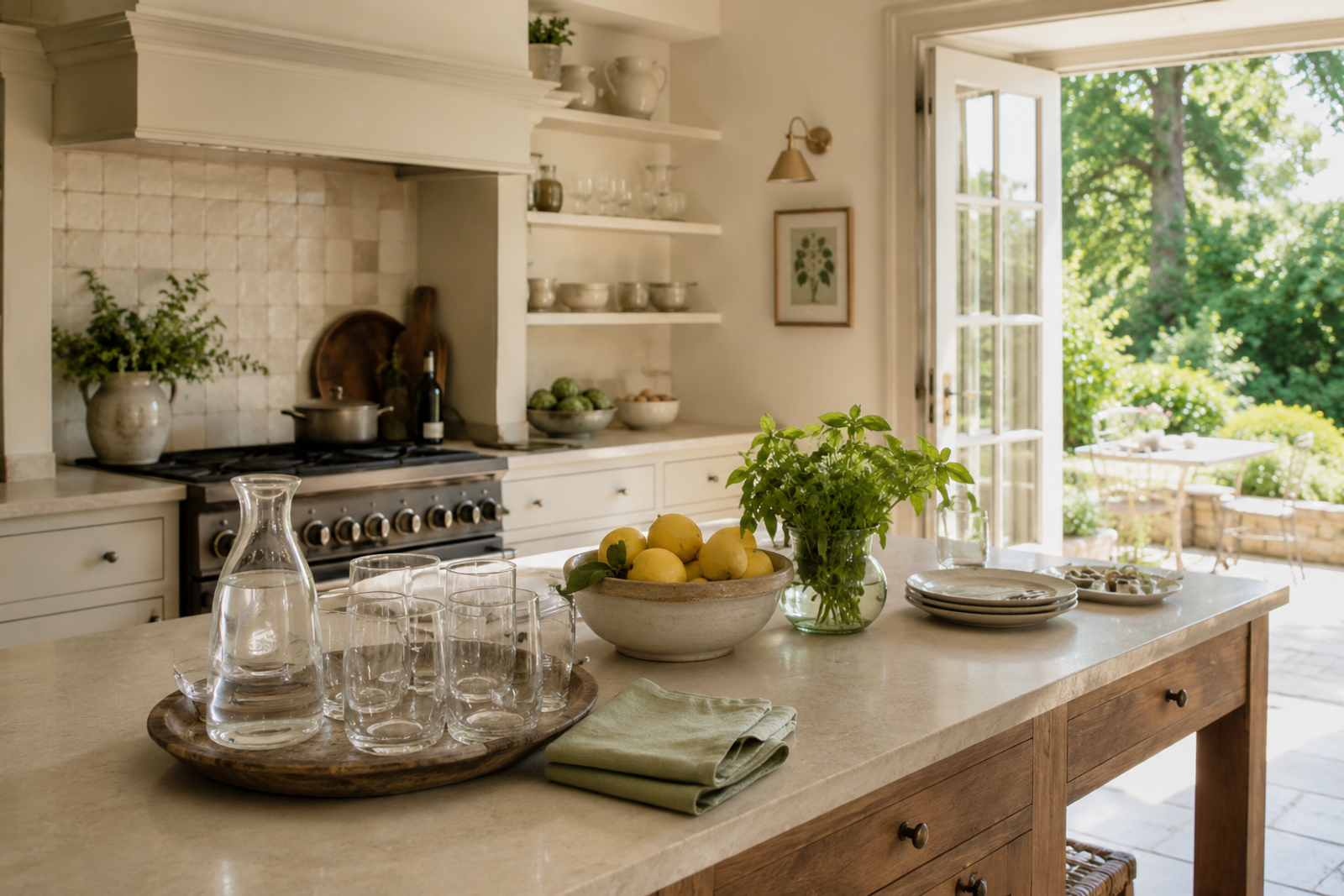
The aim is not to create a show home.
The aim is to create a home that feels easy to arrive into and comfortable to stay in. Summer hosting asks the home to work slightly harder than usual. Rooms are used differently. The kitchen becomes a place for gathering. Doors open onto the garden. Sitting rooms become cooler places to pause. Bathrooms are noticed more. Guest bedrooms may be used. Tables carry lunch, drinks, coffee, flowers, plates, books and the signs of the day.
A little preparation allows all of this to happen more naturally.
The summer hosting checklist below is designed as a practical, room-by-room guide for preparing the home before guests arrive.
1. Start With the Arrival
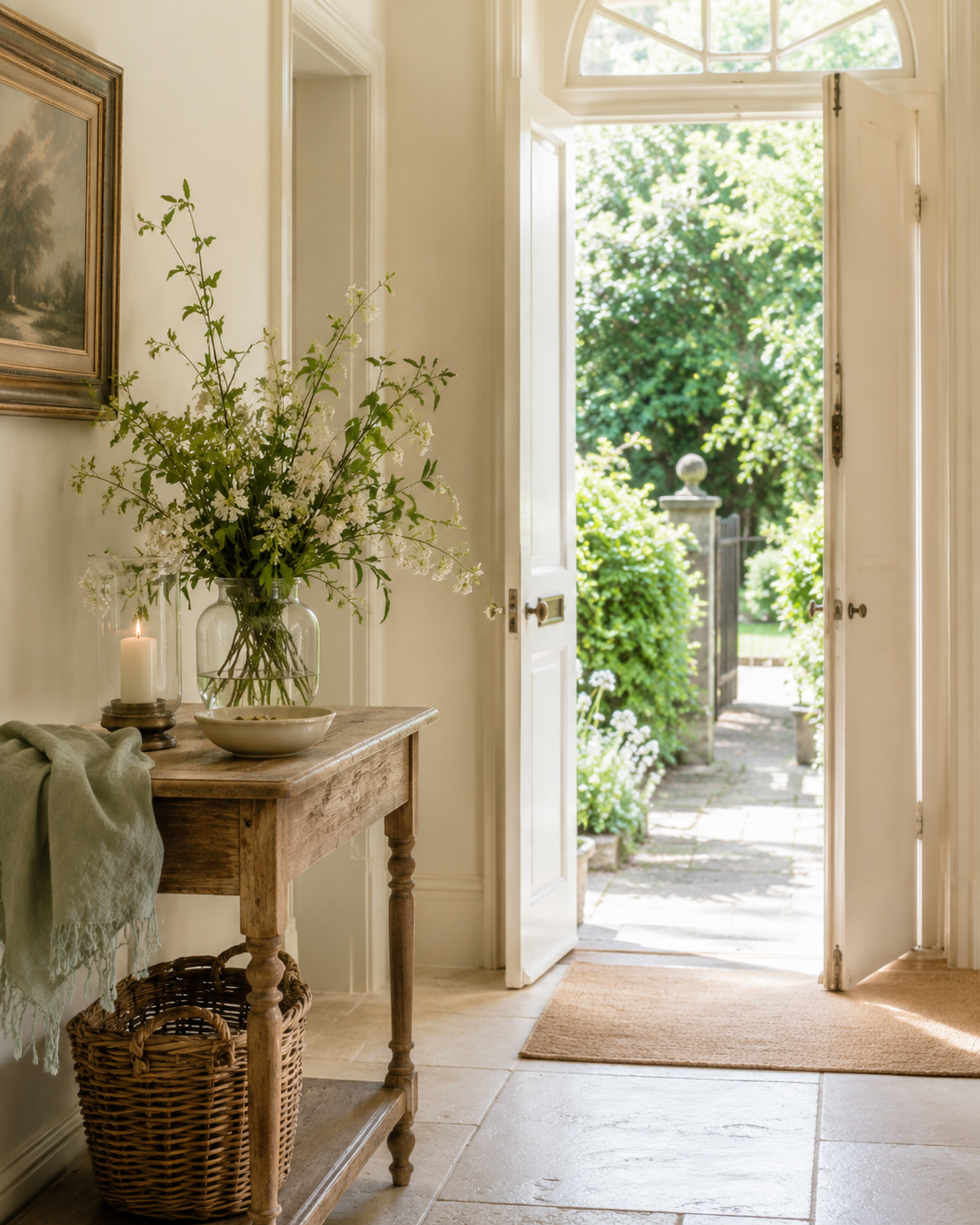
The way a home feels on arrival sets the tone for the rest of the visit.
Begin with the spaces people see first. This might be the front path, entrance hall, porch, boot room or the route through from the driveway to the kitchen. These areas do not need to be over-styled, but they should feel clear, fresh and easy to move through.
Check that coats, shoes, post, bags and everyday clutter have been moved away from the main arrival point. If guests are likely to come through a side entrance or garden gate, make sure that route feels considered too.
A clean doormat, a clear console, a vase of seasonal stems or a candle in the hallway can make the home feel ready without feeling formal.
Arrival checklist
Clear the entrance hall or main arrival point.
Check the front door, path or side gate.
Move everyday clutter from consoles and benches.
Add flowers, greenery or a simple seasonal detail.
Make sure guests have somewhere obvious to place bags or coats.
2. Prepare the Guest Bathroom
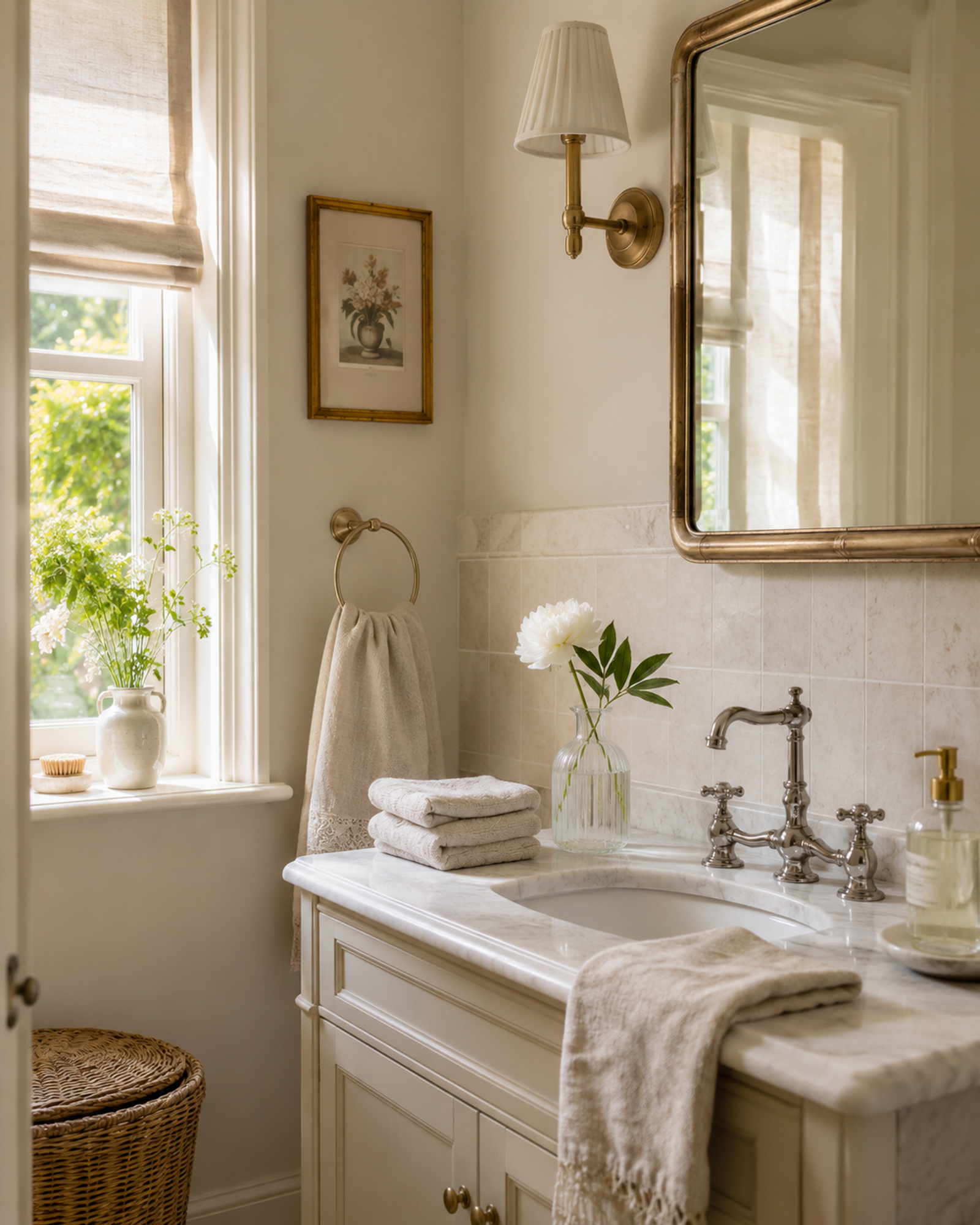
The guest bathroom is one of the most important spaces to prepare before hosting.
It is small, easy to overlook and often used by everyone. A well-prepared bathroom should feel fresh, simple and complete. This is less about decoration and more about care.
Check hand towels, soap, toilet roll, bins, mirrors, surfaces and scent. Remove anything too personal from visible areas and keep the room feeling calm and clean. If the bathroom has a window, open it before guests arrive. If not, allow the room time to feel aired and fresh.
A small vase, folded hand towel or neatly placed soap can make the room feel more considered.
Guest bathroom checklist
Replace hand towels.
Check soap, toilet roll and tissues.
Empty the bin.
Wipe mirrors, taps and visible surfaces.
Remove unnecessary products from sight.
Add a small flower, candle or simple detail if appropriate.
3. Set the Table Before It Is Needed
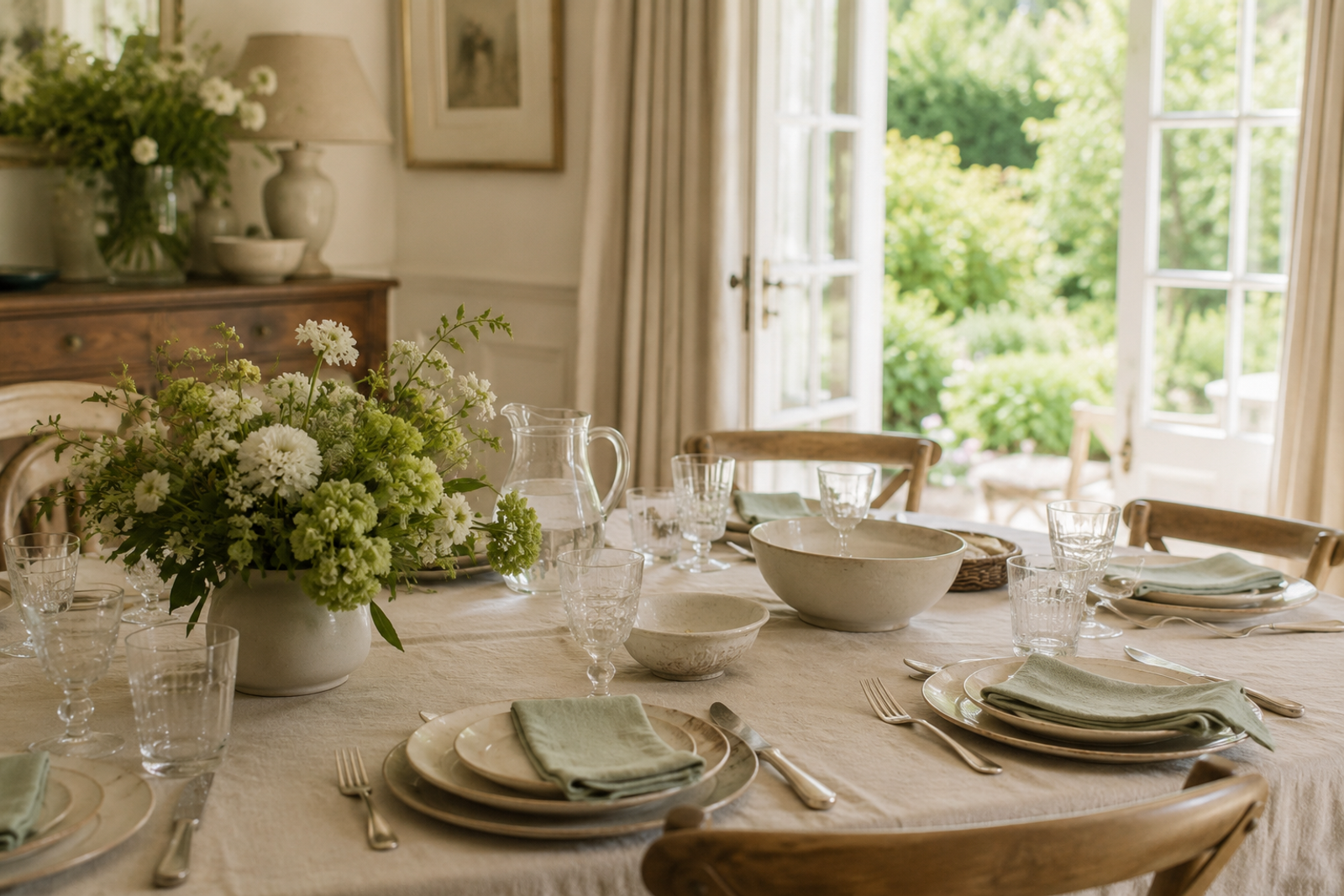
A table that is ready changes the way hosting feels.
It gives the day a centre. It allows food, drinks and conversation to gather naturally. It also removes one of the most common last-minute jobs.
The table does not need to be fully dressed hours in advance, but the foundations should be ready. Clear the surface, check seating, place linen or mats if using them, and make sure glasses, plates, cutlery and serving pieces are easy to reach.
For summer, keep the table relaxed. Linen, ceramics, garden flowers, water glasses and simple serving pieces are often enough. The best summer tables feel generous without feeling overly arranged.
Summer table checklist
Clear the table completely.
Check there are enough chairs.
Set out plates, glasses and cutlery if helpful.
Prepare serving bowls, jugs and trays.
Add garden flowers or seasonal stems.
Keep space available for food and drinks.
4. Make the Kitchen Easy to Move Through
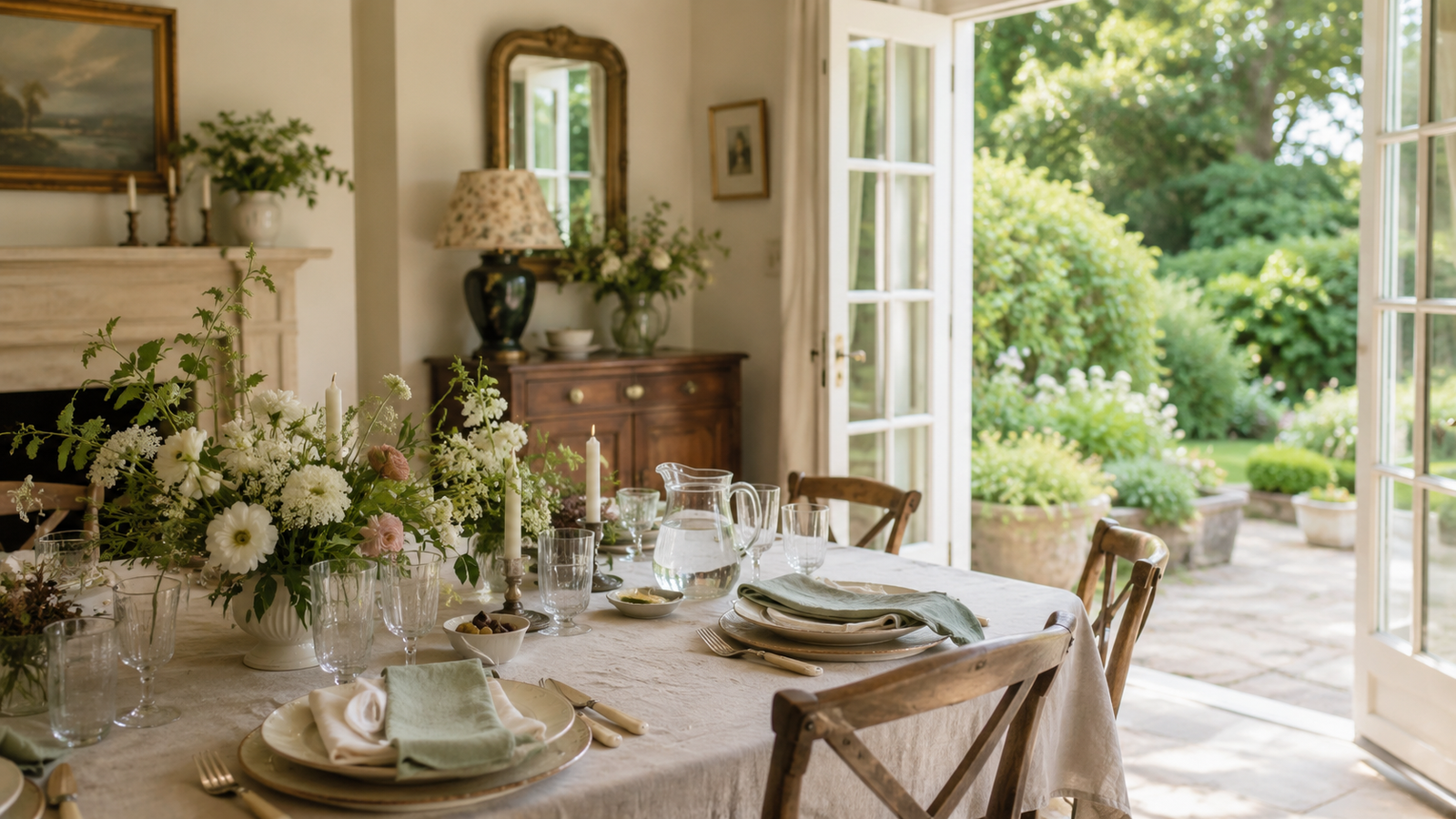
The kitchen often becomes the busiest room during summer hosting.
Even when the meal is served outside, people naturally gather in the kitchen. Drinks are poured, food is finished, plates are collected and conversations begin before everyone moves elsewhere.
Before guests arrive, clear the key working surfaces. Put away anything that does not need to be out. Empty or load the dishwasher. Make sure bins are not full. Check that glasses, plates, napkins, water, ice and serving pieces are easy to access.
A kitchen prepared for hosting should not feel empty. It should feel ready to be used.
Kitchen checklist
Clear main worktops and kitchen island surfaces.
Empty or load the dishwasher.
Check bins and recycling.
Prepare water, ice, glasses and serving pieces.
Keep tea, coffee or after-meal drinks easy to access.
Make space for dishes returning from the table.
5. Think About the Garden Route

In summer, guests often move between the house and garden throughout the day.
This means the route between the kitchen, dining space, sitting room and outdoor area matters. Open doors, clear thresholds and remove anything that makes the movement feel awkward.
If people will be eating outside, check the table, chairs, cushions, lighting and surfaces in advance. If the garden is being used more informally, make sure there are places to sit, places to set down drinks and a clear sense of where people should gather.
The garden does not need to be immaculate. It simply needs to feel usable.
Garden route checklist
Open or check garden doors before guests arrive.
Clear thresholds and walkways.
Wipe outdoor tables and chairs.
Check cushions, blankets or seat pads.
Place a tray or side table where drinks may gather.
Check outdoor lighting if guests may stay into the evening.
6. Refresh the Rooms People Will Use

Hosting does not mean preparing the whole house.
Focus on the rooms guests are most likely to use. This may be the kitchen, sitting room, dining room, garden room, guest bathroom and one guest bedroom.
In each space, remove obvious clutter, clear surfaces and check how the room feels when someone enters. Open windows if possible. Adjust cushions, throws and lighting. Add flowers or greenery only where they feel natural.
The aim is to make each room feel settled, not styled.
Room refresh checklist
Clear visible clutter from key rooms.
Open windows or air rooms where possible.
Straighten cushions, throws and chairs.
Check lamps and lighting.
Add flowers or greenery where appropriate.
Make sure each space has somewhere to sit or pause.
7. Prepare the Guest Bedroom

If guests are staying, the bedroom should feel calm, fresh and easy to use.
Clean bedding is the starting point, but the details around the bed matter too. Clear the bedside table. Add a lamp, water glass, tissues and space for a book or phone. Make sure there is somewhere to place a bag and enough room to hang or fold clothes.
The best guest bedrooms are not overly decorated. They simply make the guest feel considered.
Guest bedroom checklist
Change or refresh bedding.
Clear bedside tables.
Check lamps and plug sockets.
Add water, tissues or a small carafe.
Make space for luggage.
Check towels are ready if guests are staying overnight.
8. Check the Small Practical Details

Practical details are often what make hosting feel calm.
Before guests arrive, check the things that interrupt the day if they are missing. Ice, water, napkins, serving spoons, hand towels, candles, matches, bin bags, dishwasher tablets and extra glasses are all worth thinking about.
These are not glamorous details, but they allow the host to stay present rather than disappear into small tasks.
Practical details checklist
Check ice, water and soft drinks.
Prepare napkins and serving spoons.
Make sure enough glasses are available.
Check candles, matches or outdoor lighting.
Have spare towels or cloths ready.
Make sure bins and dishwasher are ready to be used.
9. Add One Seasonal Detail

A home does not need many decorative gestures to feel ready.
One thoughtful seasonal detail is often enough. This could be flowers from the garden, a bowl of lemons, a jug of herbs, fresh linen, a candle in the hallway, a folded blanket near the garden doors or a tray prepared for drinks.
The detail should feel useful, natural and connected to the way the home is being used.
Seasonal detail checklist
Add flowers, herbs or greenery.
Place a bowl of fruit or lemons on the table.
Use linen, ceramics or glassware that suits the season.
Prepare a drinks tray if helpful.
Keep the detail simple and easy to live with.
10. Do the Final Walkthrough
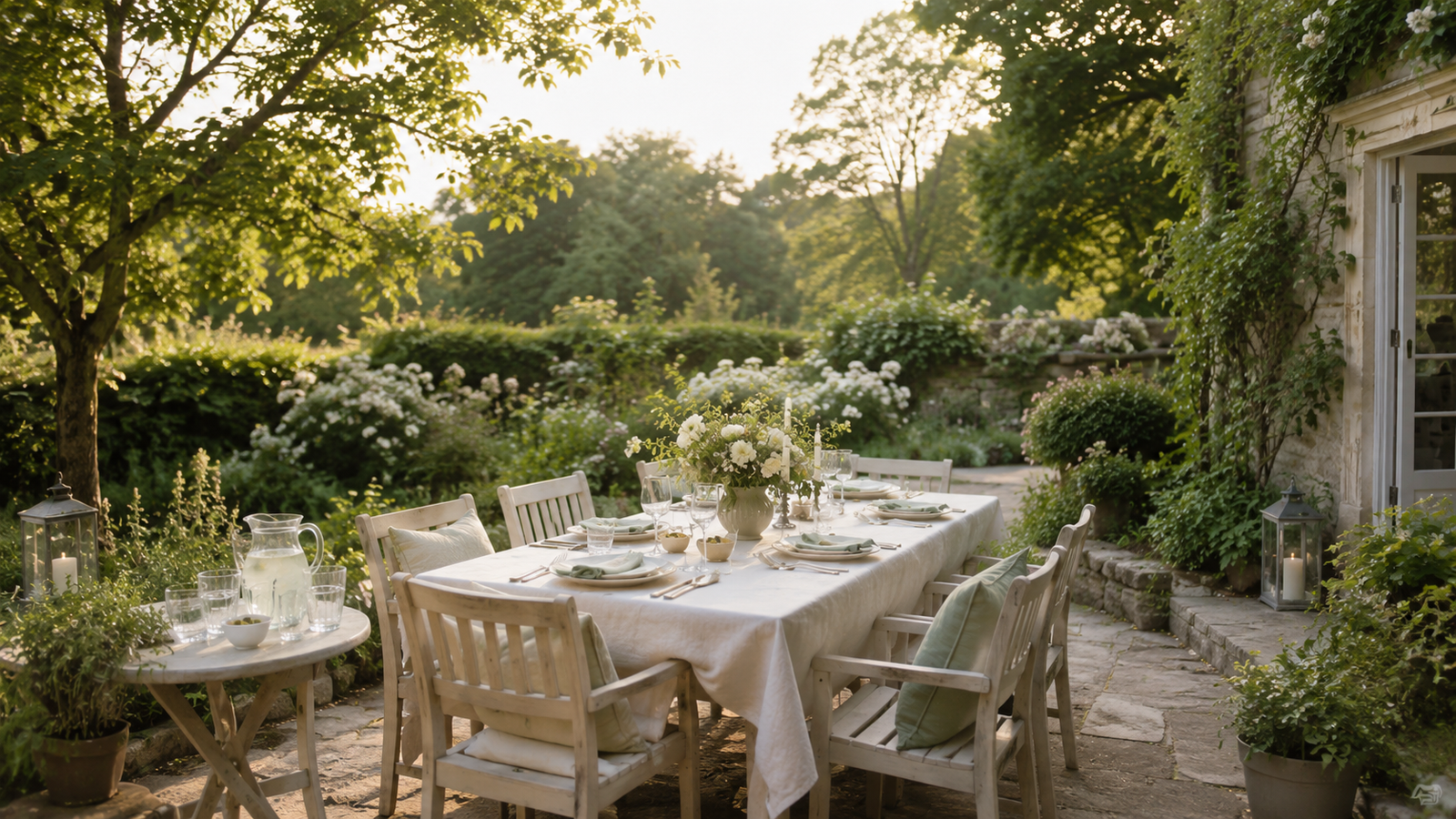
Before guests arrive, walk through the home as they will experience it.
Start at the entrance. Move through the hallway, kitchen, bathroom, sitting room, table and garden. Notice what feels unfinished, awkward or cluttered. This final check helps you see the home with fresh eyes.
The goal is not to find fault. It is to make small adjustments that allow the home to feel ready.
Open the doors. Clear the last surface. Light the candle. Place the flowers. Pour the water. Then let the home be lived in.
Final walkthrough checklist
Walk through the guest route.
Check the entrance, bathroom, kitchen and table.
Open doors or windows where needed.
Clear any final clutter.
Check drinks, glasses and towels.
Make sure the home feels ready, not perfect.
A Home Ready for Summer Hosting
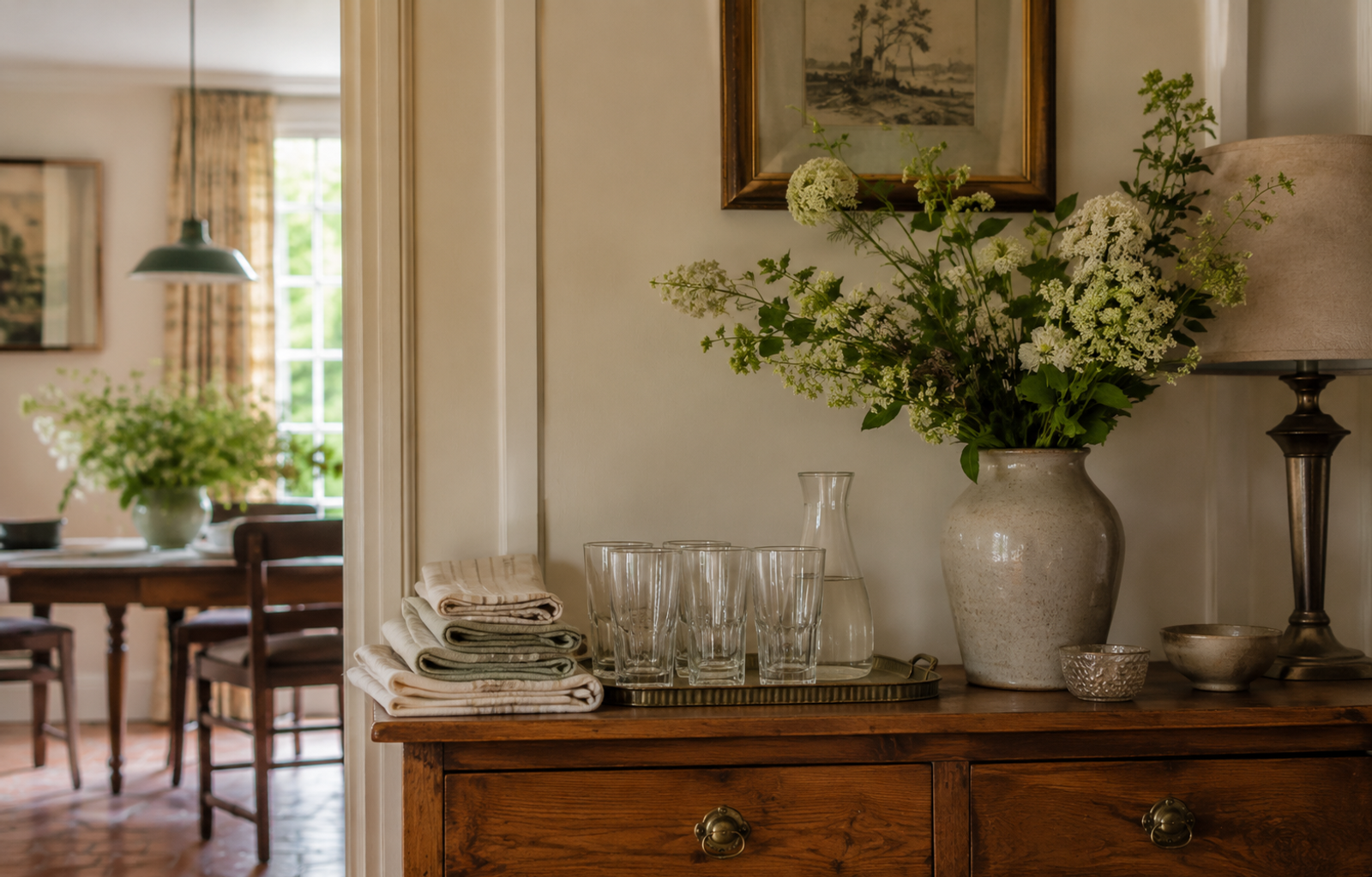
The best hosting does not feel overworked.
It feels easy, generous and considered. The kind of home where people know where to sit, where to put a glass, where to move next and where to linger.
A little preparation allows the home to carry the day more naturally, from the first arrival to the last open door.
That is the purpose of the summer hosting checklist. Not to create perfection, but to help the home feel ready for the life taking place within it.