Kent Home Interiors: Inside a Home Designed to Be Lived In
Kent home interiors often balance heritage with modern living, but few do so with the quiet confidence of this early twentieth-century house – a place defined not by display, but…
House of Willow Alexander·
Kent home interiors often balance heritage with modern living, but few do so with the quiet confidence of this early twentieth-century house – a place defined not by display, but by longevity, restraint and the way it has been lived in over time.
Believed to date from the early twentieth century, the house sits comfortably within its landscape – a place of quiet confidence rather than display. Its colourwashed lower elevations and tile-hung upper storey place it firmly within the language of English domestic architecture of the period: practical, regional, and built to endure. Yet what defines the house today is not its origin alone, but the way it has been extended, inhabited and gradually composed over time.
The approach – through a five-bar gate, across gravel edged with lawn and planting – sets a familiar rhythm. But inside, that rhythm shifts. The house moves between periods: from the proportions and materiality of its original rooms to a contemporary extension that opens upwards and outwards, trading enclosure for light, and tradition for volume. It is within this dialogue – between then and now – that the objects of the house begin to take on meaning.
This is not a house that has been styled. It has been assembled – slowly, practically, and with intent.
Light as Material
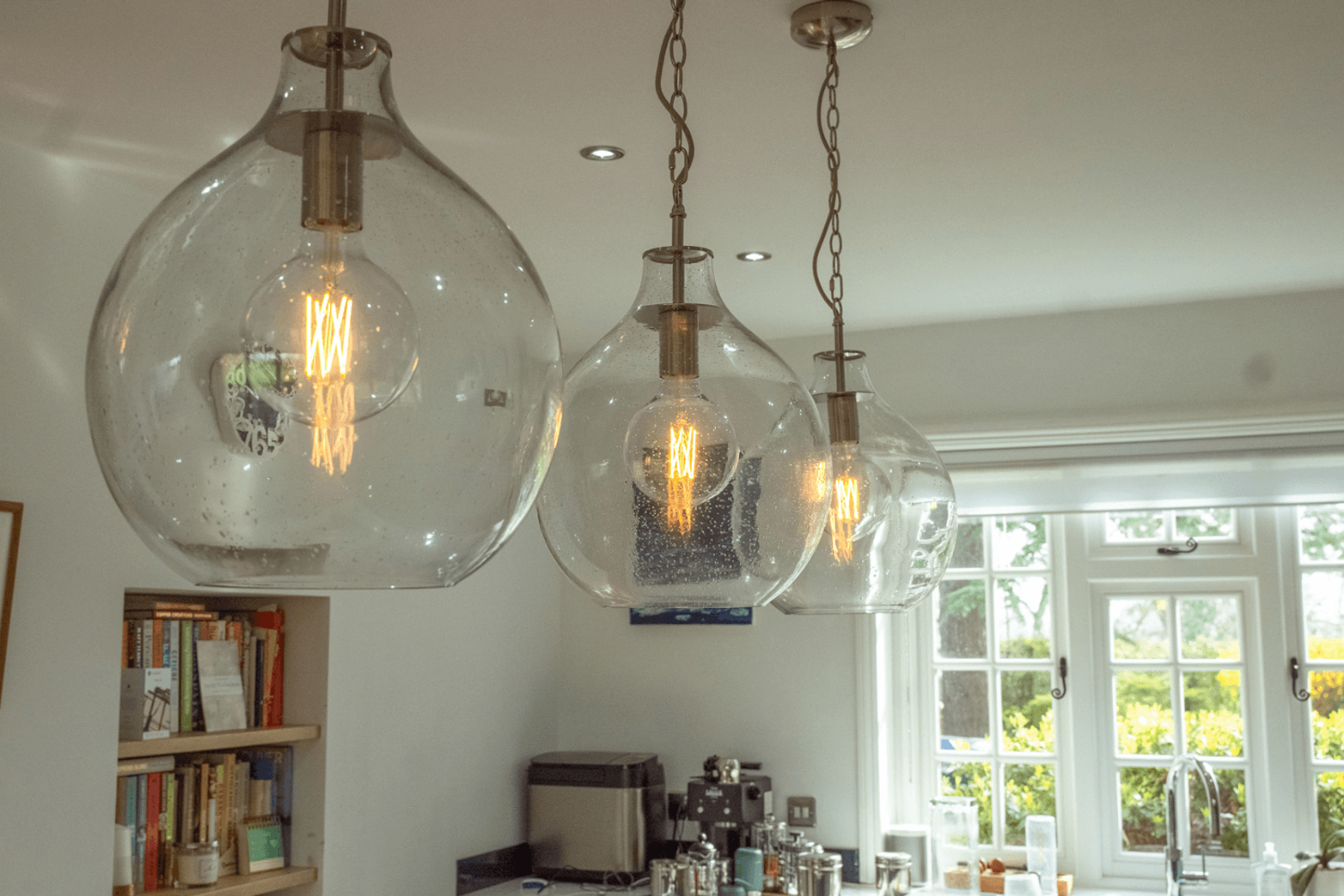
Hand-blown glass pendants with exposed filament bulbs bring warmth and subtle irregularity to the kitchen, balancing function with atmosphere.
In the kitchen and adjoining living space, light is treated not simply as illumination, but as a material in its own right.
Suspended above the island, a series of large hand-blown glass pendants introduce a quiet irregularity. Their softly rounded forms – faintly bubbled, subtly imperfect – reveal the hand of the maker. This is glass that holds its process within it. The scale is generous, almost architectural, recalling the oversized utilitarian shades of early industrial interiors, yet refined here into something more domestic.
Within them, exposed filament bulbs emit a warm, amber glow – a reference to the earliest days of electric light, when the mechanics of illumination were still visible, even celebrated. What was once necessity has become aesthetic: a deliberate return to warmth in an age of precision.
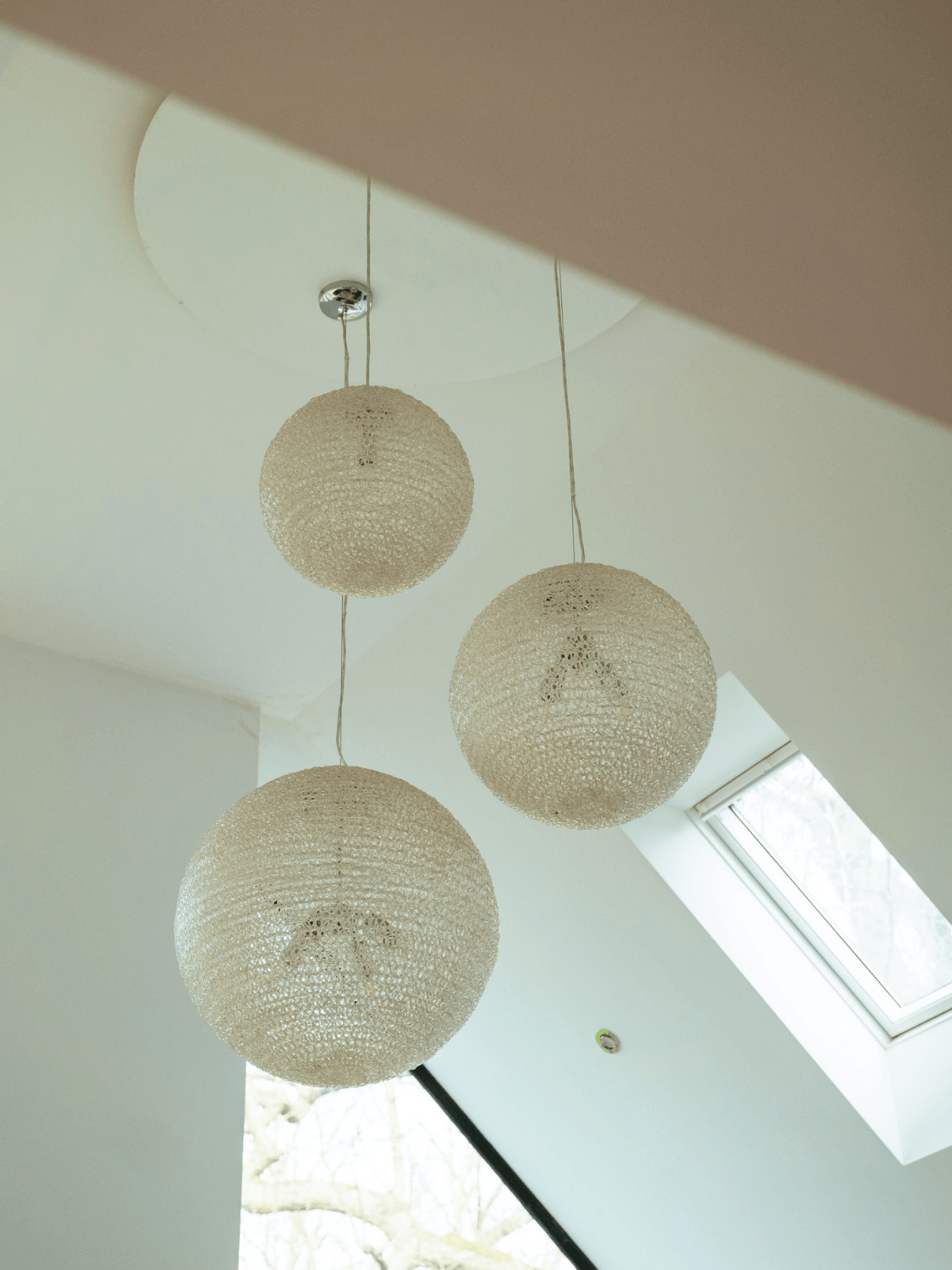
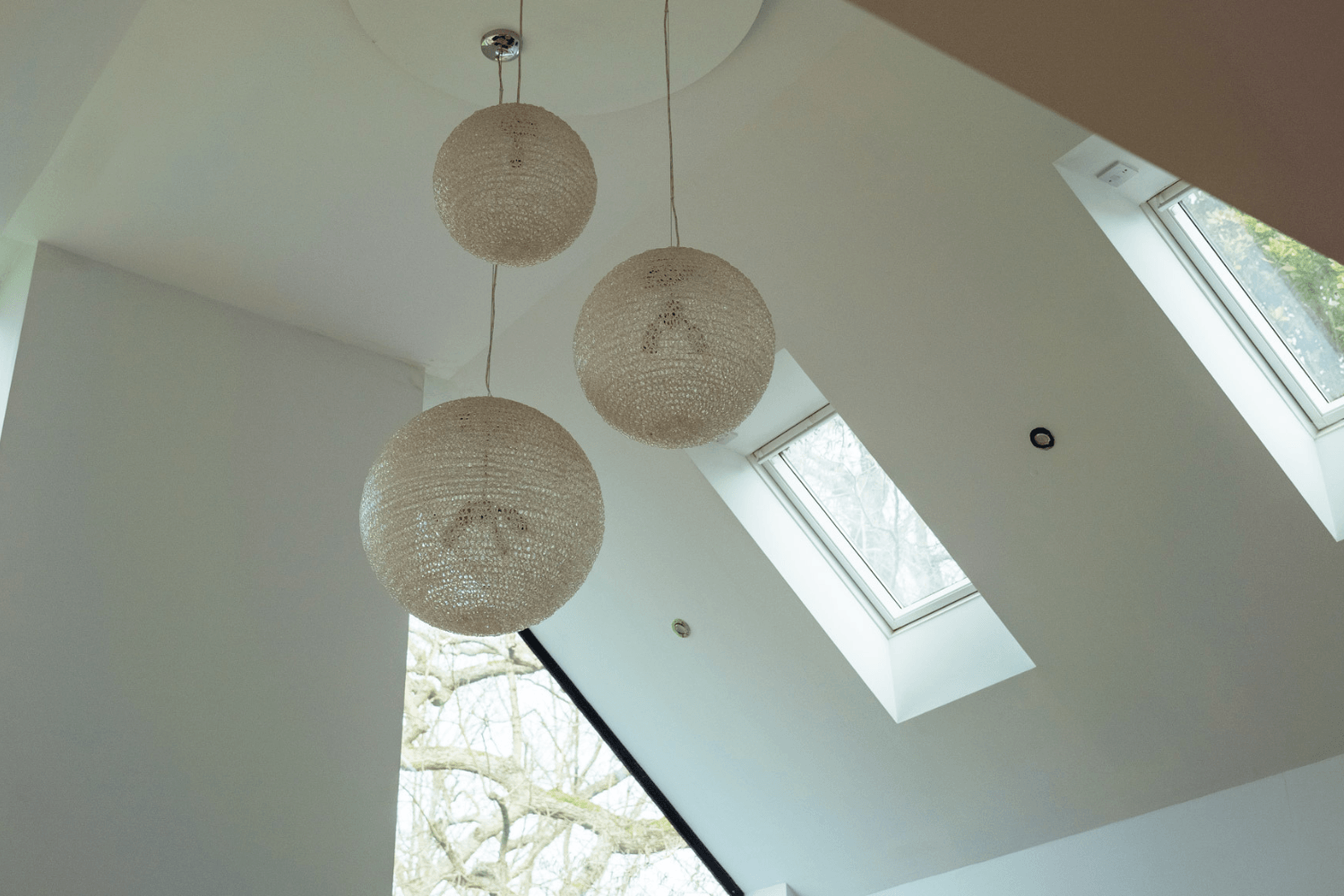
Suspended within a double-height space, textured globe pendants soften the architecture, diffusing light gently across clean lines and angled glazing.
In contrast, the lighting in the double-height sitting room moves towards diffusion. A cluster of woven, globe-like pendants softens the space, their textured surfaces scattering light rather than directing it. Where the kitchen prioritises clarity and function, here the emphasis is on atmosphere – on creating a room that feels held rather than lit.
Together, these two approaches trace a subtle evolution: from task to mood, from brightness to depth. The architecture – with its apex window and expansive glazing – completes the effect, allowing daylight to shift continuously across surfaces, animating the space throughout the day.
Grounding the Room
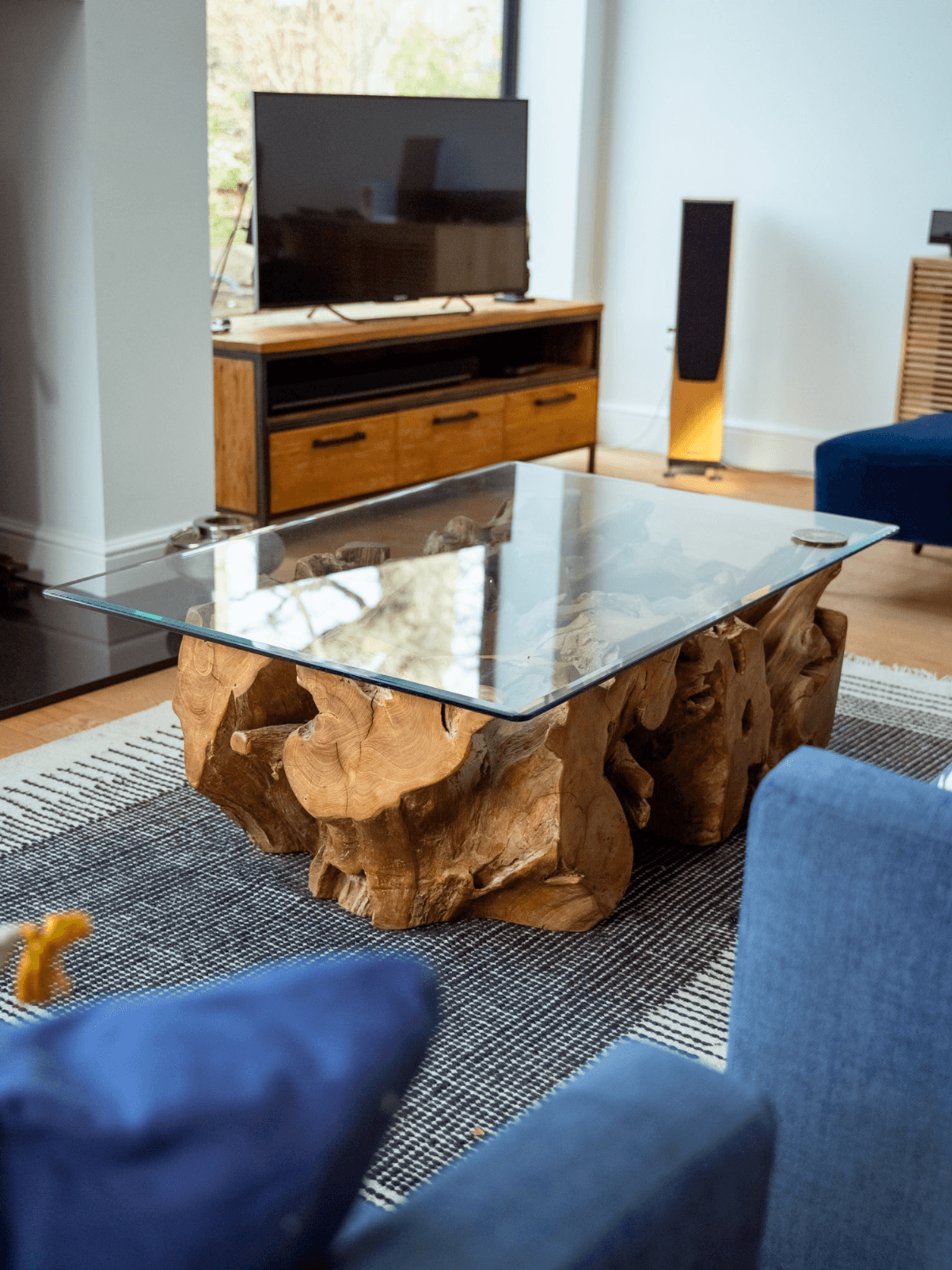
A sculptural root wood coffee table anchors the room, its organic form contrasted by a precise glass surface that reflects light and structure.
If light defines the upper reaches of the extension, it is the furniture that anchors it.
At the centre of the sitting room sits a substantial coffee table formed from root wood, its natural structure preserved rather than reshaped. The surface undulates, knots and voids intact, the history of the tree legible in its form. Above it, a plane of clear glass introduces a counterpoint – precise, controlled, and entirely man-made.
This juxtaposition – organic base, refined top – reflects a broader design movement that emerged in the latter half of the twentieth century, where nature was not stylised but presented directly, its irregularities embraced. Such pieces resist uniformity; they are singular by definition.
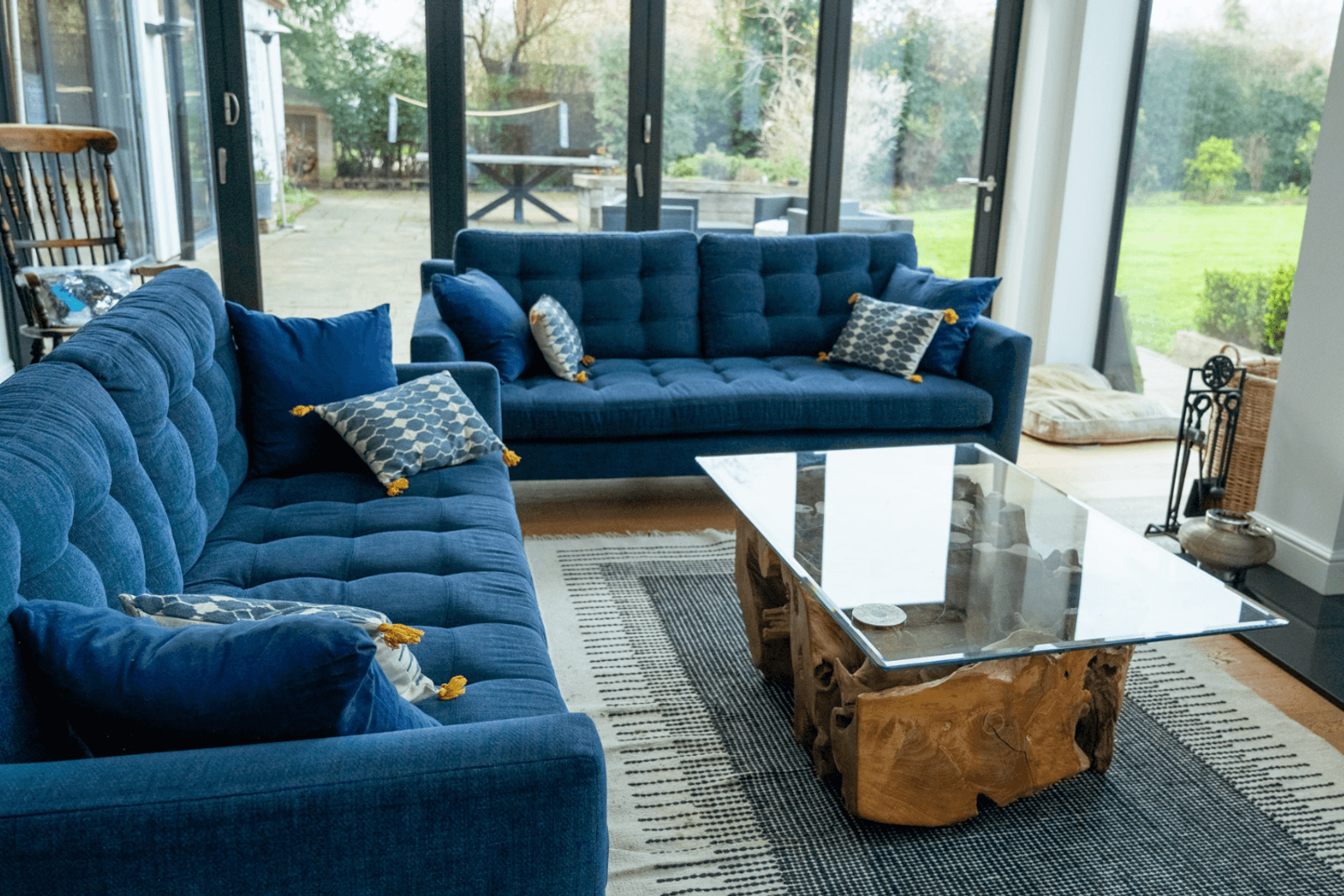
Deep blue sofas frame the space, grounding the room against expansive glazing, while a sculptural wood and glass coffee table introduces contrast and texture.
Around it, the seating is more disciplined. Deep blue upholstered sofas, with their structured frames and gently tufted backs, draw from mid-century modern principles – comfort without excess, form without ornament. The choice of colour is deliberate. Navy absorbs light, lending weight to the room and balancing the openness of the glazing beyond.
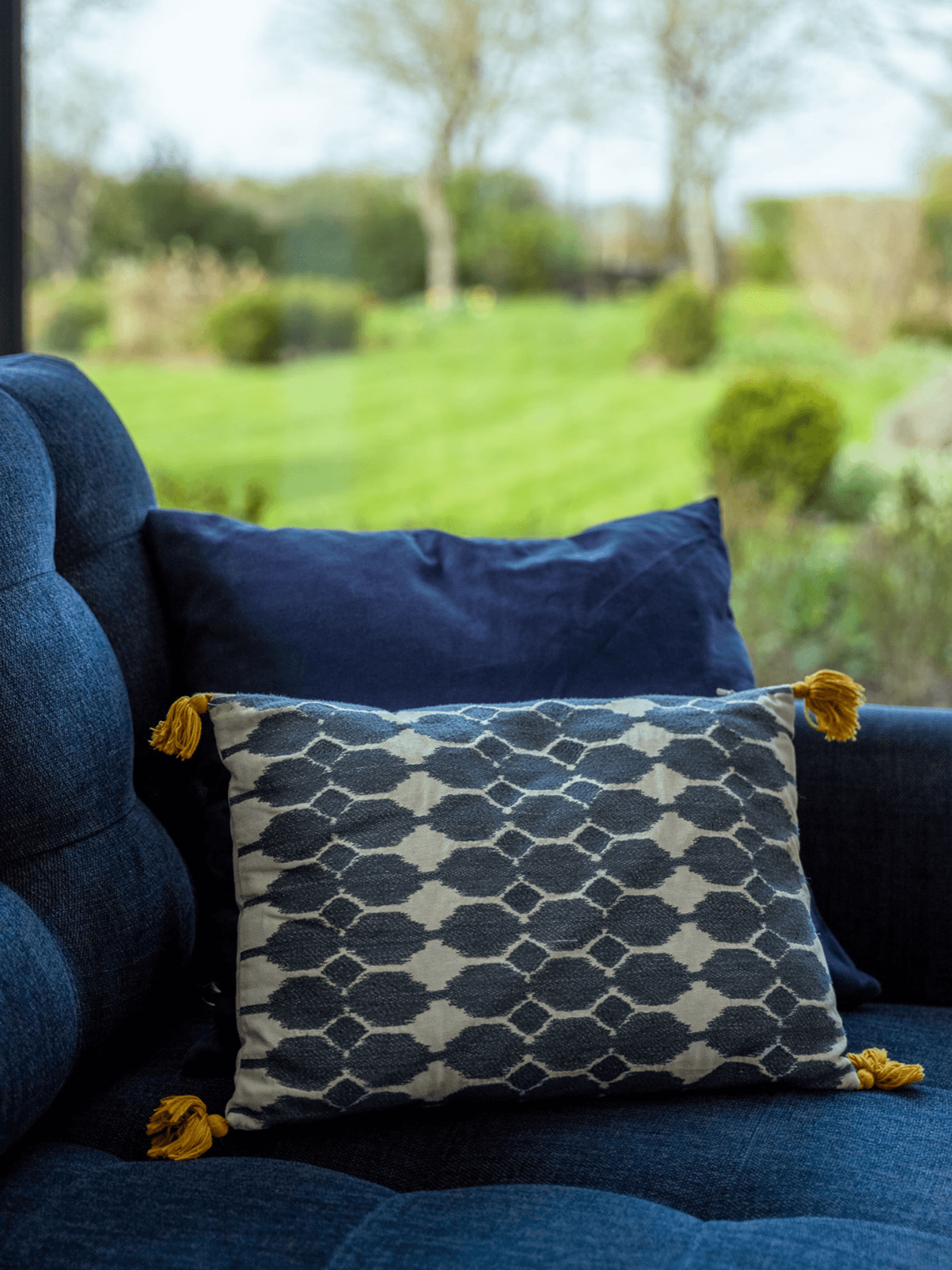
A patterned cushion with subtle geometry and tasselled edges introduces texture and softness against the structured lines of a deep blue sofa.
Textiles introduce a quieter layer. Cushions with geometric patterns and small tasselled edges soften the composition, adding tactility without disrupting the palette. Beneath, a woven rug defines the seating area, its linear pattern providing subtle order beneath the more expressive forms above.
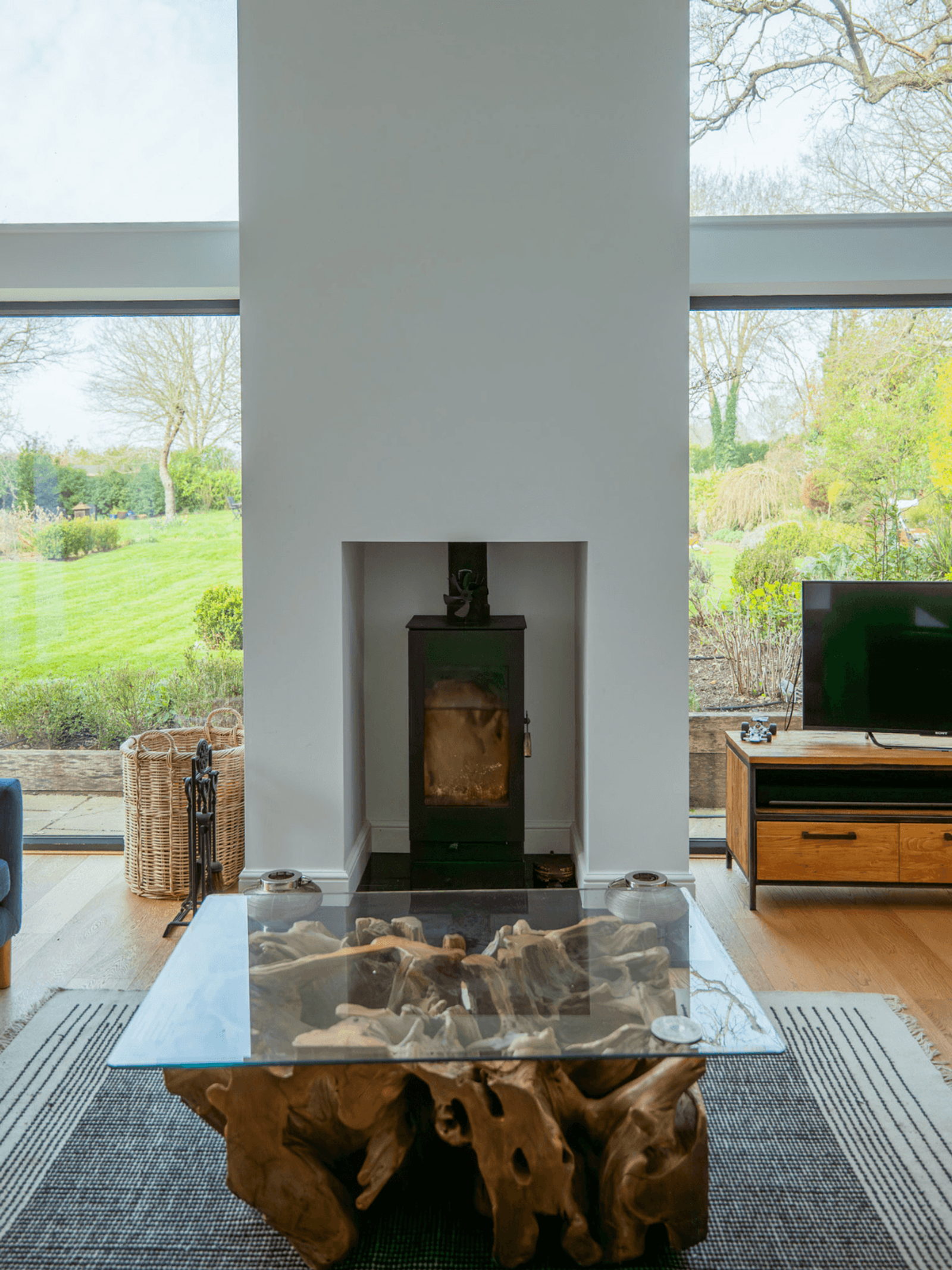
A wood-burning stove sits within a pared-back recess, framed by double-height glazing that draws the landscape into the room.
At the far end, a wood-burning stove sits within a pared-back recess. Fire, in domestic space, is both ancient and immediate. Whether framed by an ornate mantelpiece or set within a contemporary aperture, its role remains unchanged – a point of focus, of gathering, of warmth that is as much psychological as it is physical.
Time as a Presence
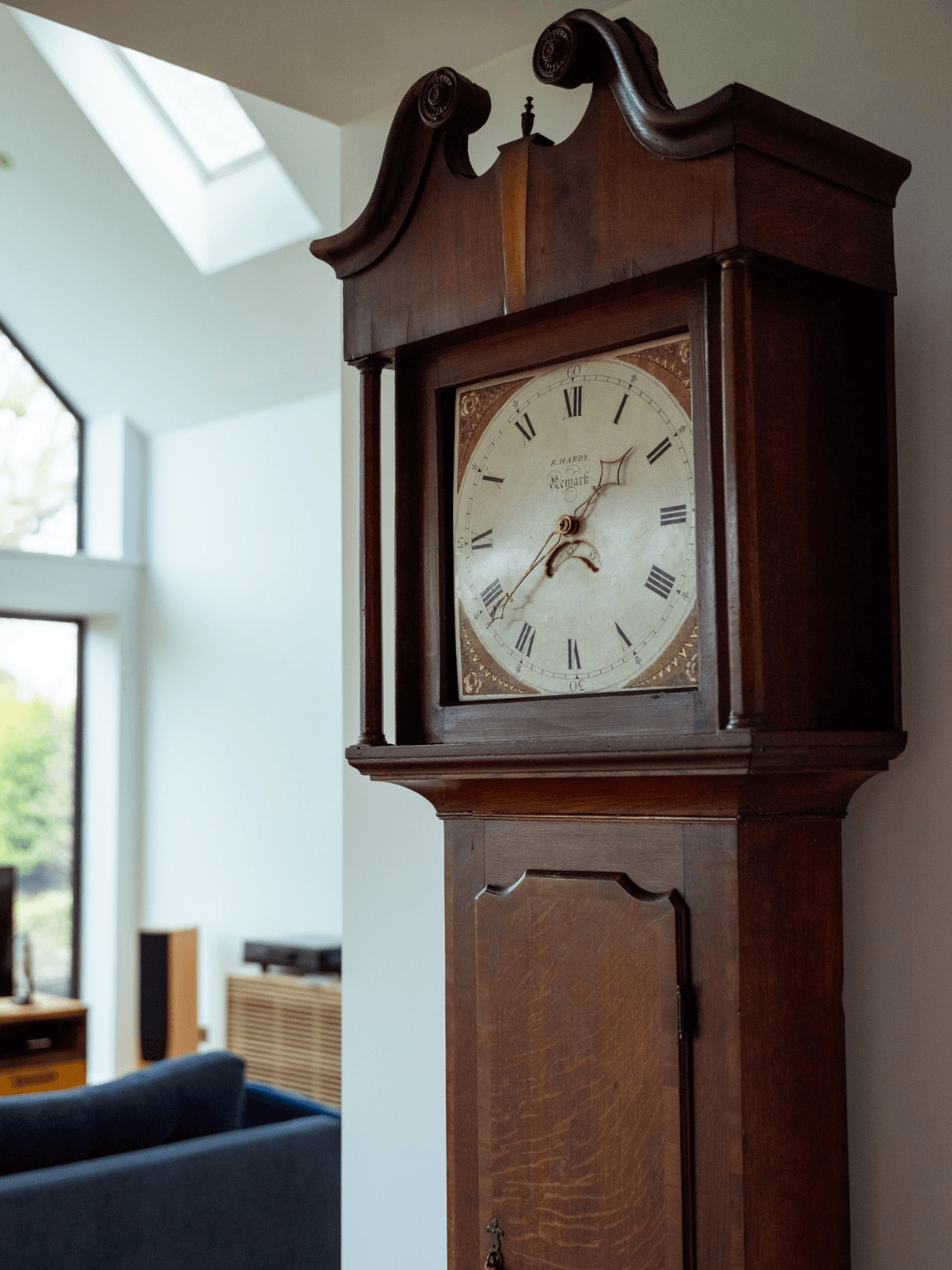
An antique longcase clock introduces a quiet sense of history – a form that has marked time in British homes since the late 17th century, here set against a clean, contemporary backdrop.
Mounted prominently, the clock becomes more than a functional object – it acts as a visual anchor within the space.
Its oversized numerals and pared-back composition place it firmly within a contemporary European design language, reminiscent of brands such as Karlsson, where timekeeping is reduced to its most legible form. This approach has its roots in mid-century modernism, when designers began stripping objects back to clarity and function – removing ornament in favour of proportion, scale and graphic simplicity.
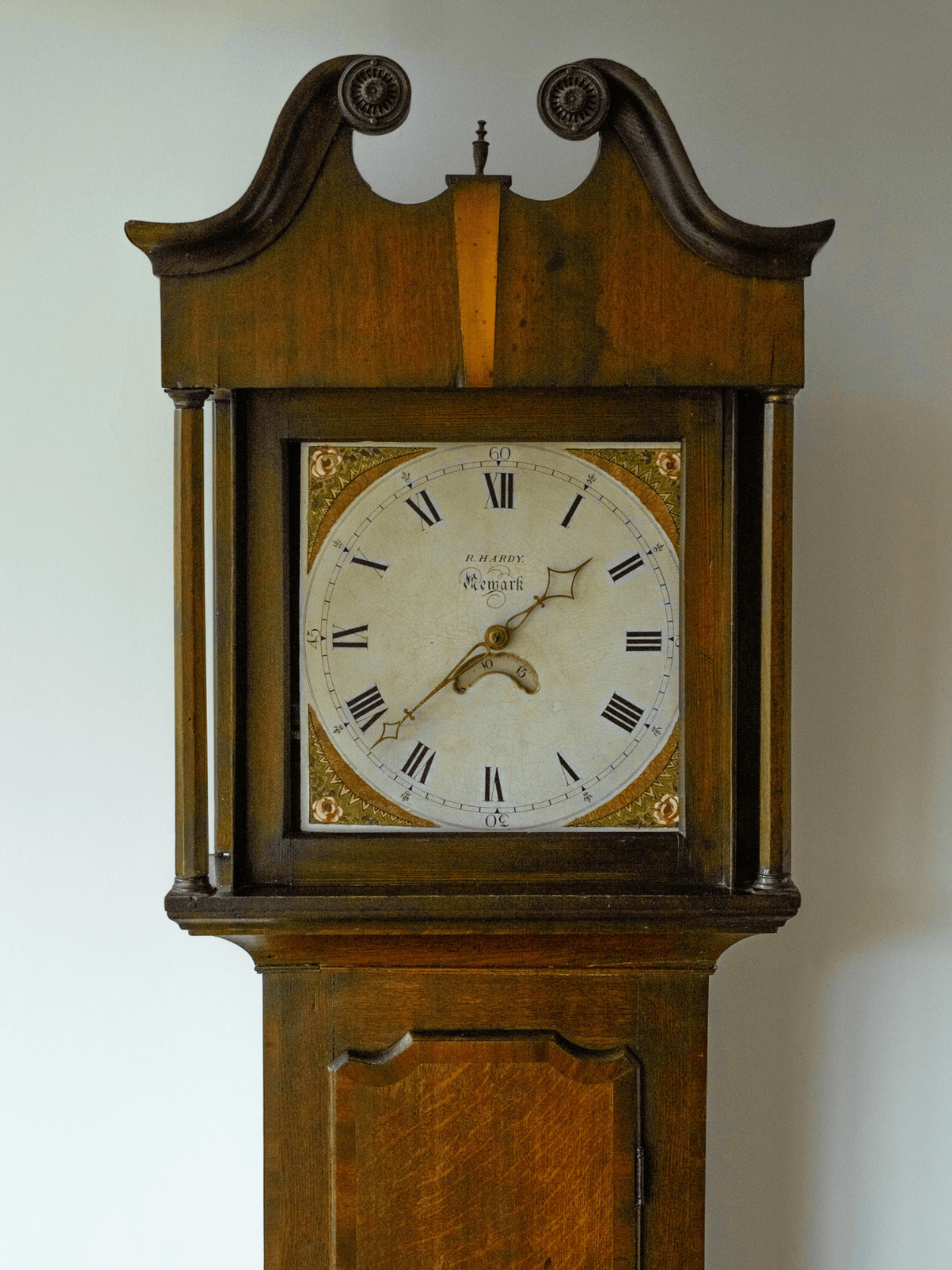
A closer look at the painted dial of a traditional longcase clock – Roman numerals, decorative spandrels and fine hands reflecting the craftsmanship typical of 18th-century English clockmaking.
Unlike traditional domestic clocks – where carved cases, painted dials and mechanical complexity once defined their presence – this iteration is intentionally direct. Time is not hidden within craftsmanship, but brought forward, made immediate and visible.
Its placement reinforces this. Elevated and central, it becomes part of the architecture of the room – not an accessory, but a fixed point within it. It quietly structures the space, marking the rhythm of daily life without demanding attention.
In a house shaped by objects that evolve over time, the clock plays a different role. It does not reference the past, but the present – measuring time as it is lived, moment by moment, within the home.
The Kitchen as Working Library
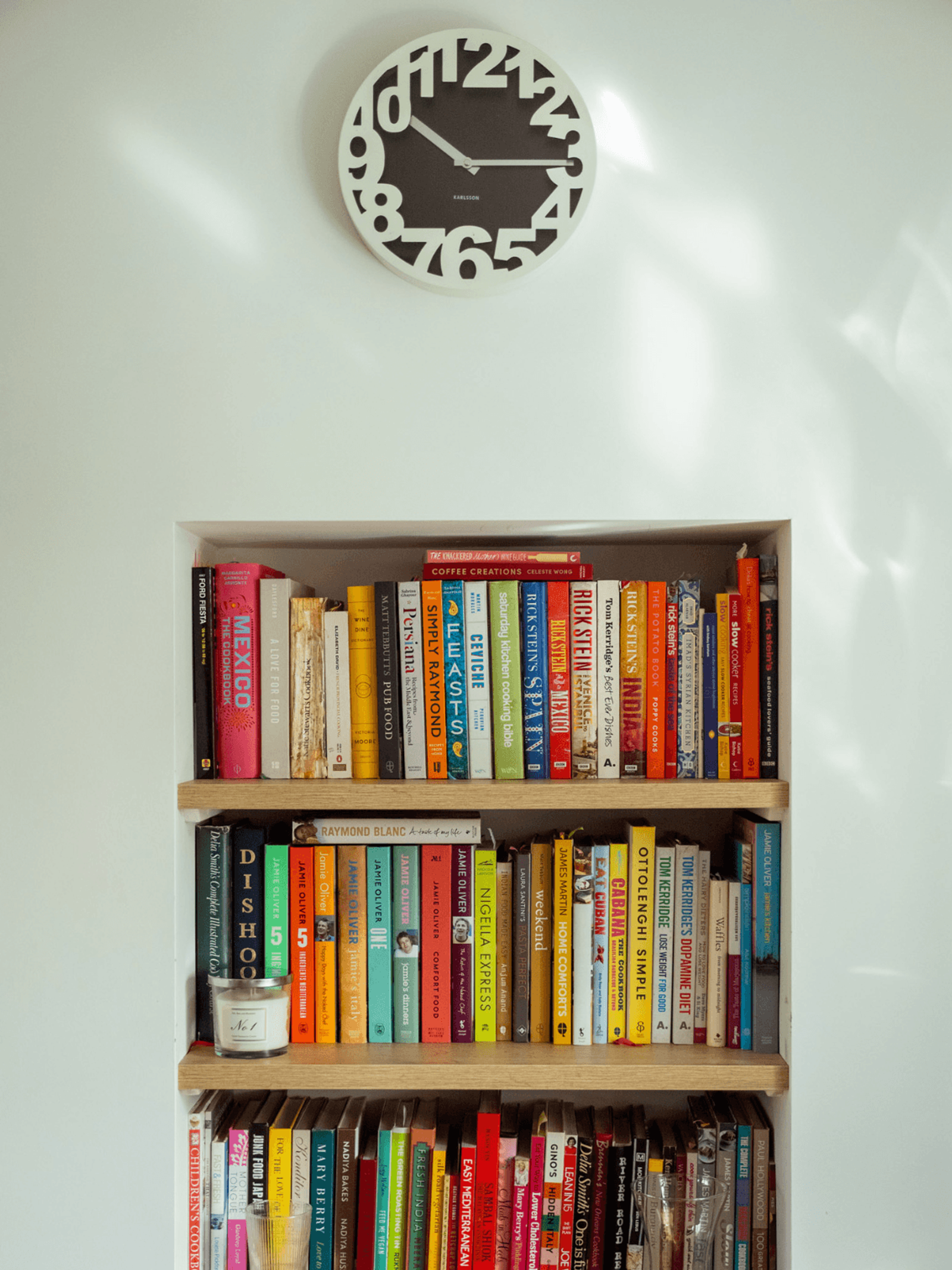
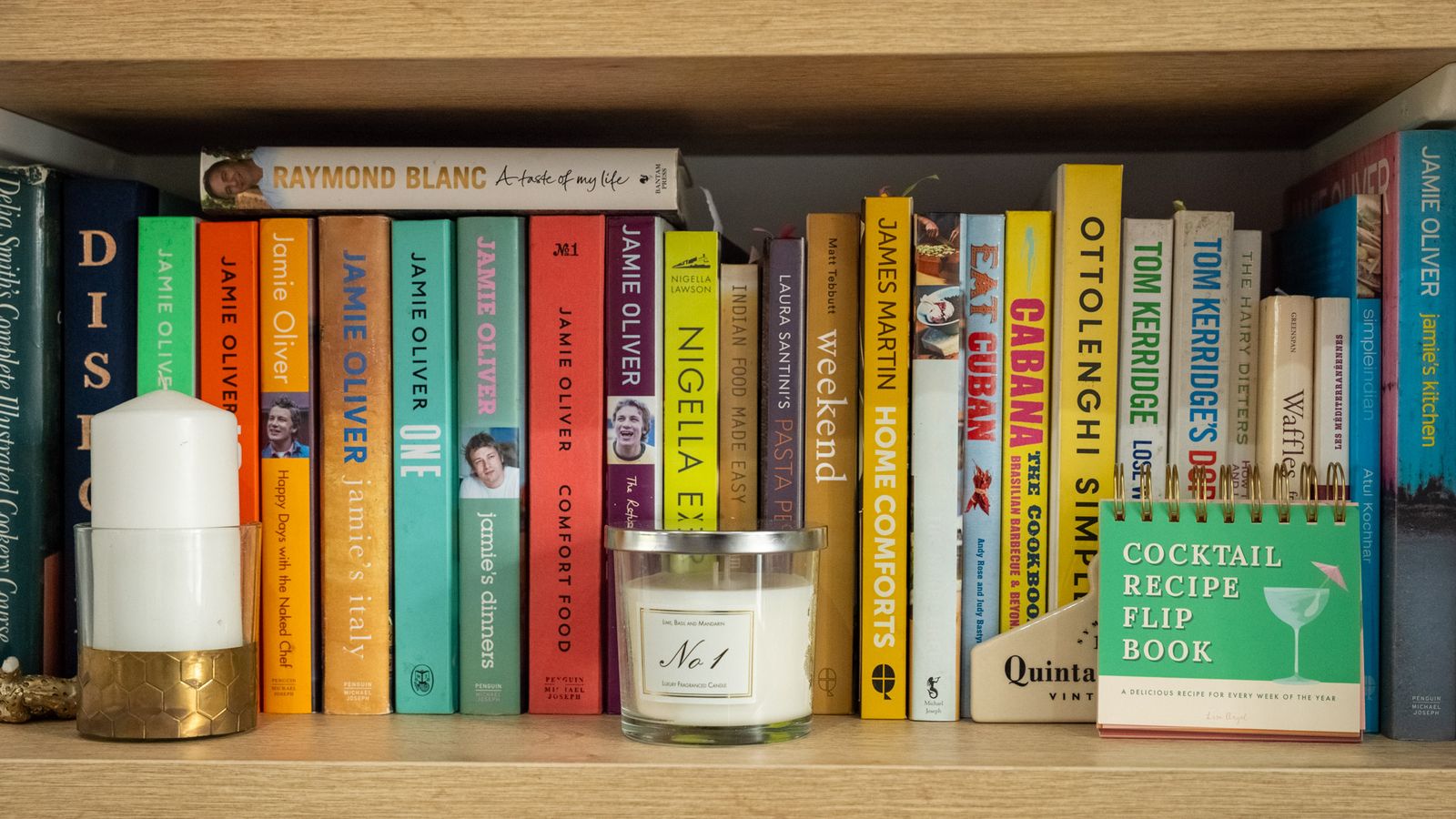
A wall of well-used cookbooks brings colour and character to the space – a quietly practical collection that speaks to how the home is actually lived in, rather than simply styled.
The kitchen shelves reveal another layer of the house – one defined not by form, but by habit.
Cookbooks line the shelves in dense, colourful rows: Jamie Oliver, Nigella Lawson, Yotam Ottolenghi, Tom Kerridge, Raymond Blanc. Together, they trace the evolution of modern British cooking – from the accessibility championed by early television chefs to a more global, ingredient-driven approach.
This is not a curated display, but an active archive. The books are positioned for use, not symmetry. Their spines – worn, bright, varied – form an accidental palette, a visual record of years of cooking, experimentation, and repetition.
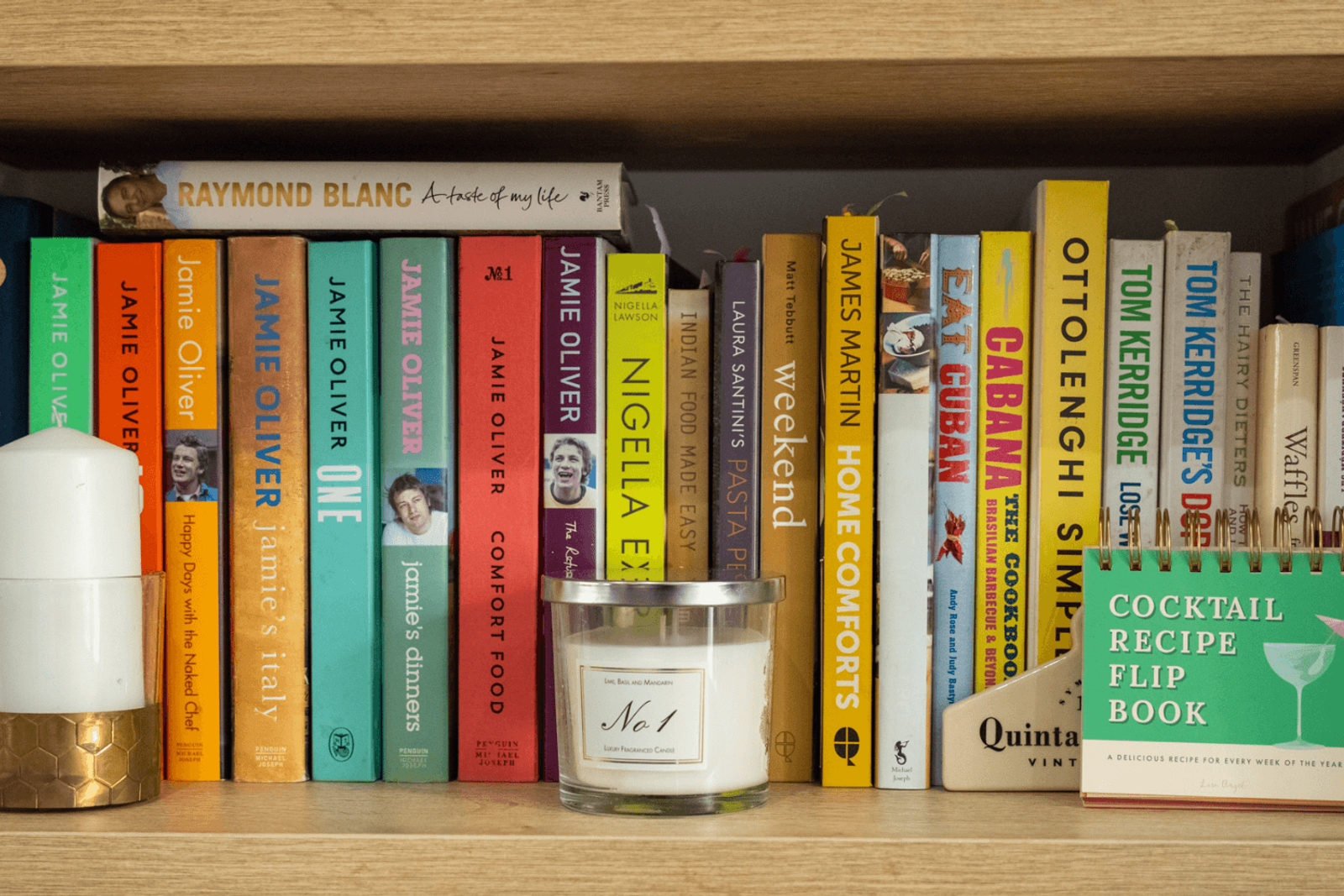
A closer look at the kitchen shelves reveals a well-thumbed collection of contemporary cookbooks – from Jamie Oliver to Ottolenghi – suggesting a space shaped as much by daily rituals as by design decisions.
Cookbooks occupy a particular place within the home. They are both practical tools and aspirational objects. Some are returned to repeatedly, their pages marked by use; others remain as potential – recipes waiting to be realised.
Among them, smaller details – a candle, a piece of glassware – soften the arrangement. They interrupt the purely functional, reminding us that even the most utilitarian spaces are still part of the home’s wider aesthetic.
Sound and Permanence
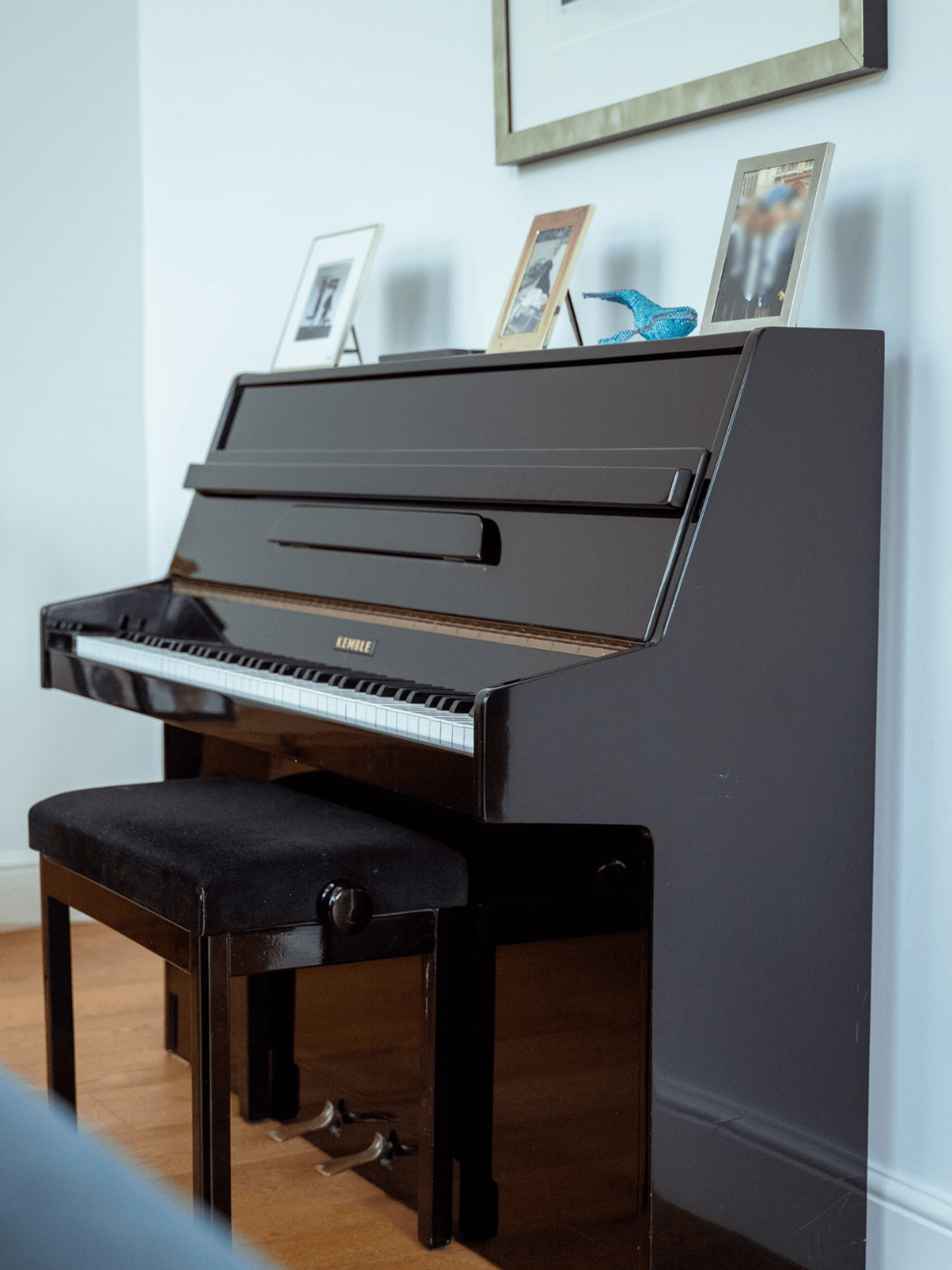
An upright piano, simply styled with framed photographs, introduces a personal rhythm to the room – a reminder that the most enduring interiors are shaped as much by memory and routine as by design.
In a quieter corner, an upright Kemble piano introduces another dimension: sound.
Kemble, a British piano manufacturer established in the early twentieth century, became known for producing reliable, well-crafted instruments suited to domestic interiors. Before recorded music became ubiquitous, the piano was central to home life – an object that required participation rather than passive listening.
Its presence here carries that legacy forward. The polished case reflects its surroundings; the keys show the subtle signs of use. It is at once instrument and object, functional and decorative.
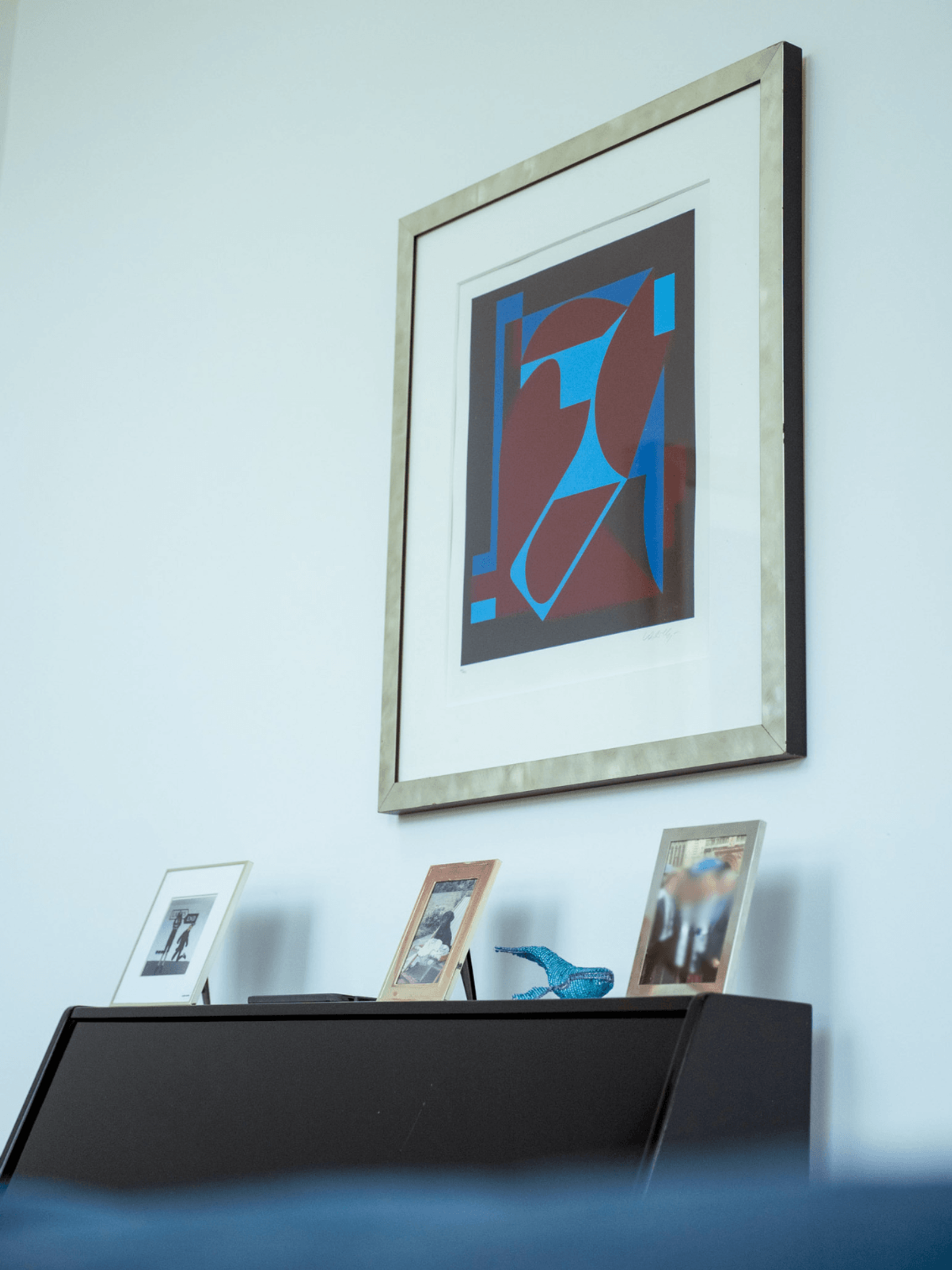
A bold abstract print introduces colour and contrast above the piano, balanced by a row of personal photographs – a composition that blends considered design with everyday life.
Above it, framed artworks and photographs introduce a more personal register. These are not statements in the conventional sense, but markers — of memory, of experience, of moments that extend beyond the visual.
The Accumulation of Meaning
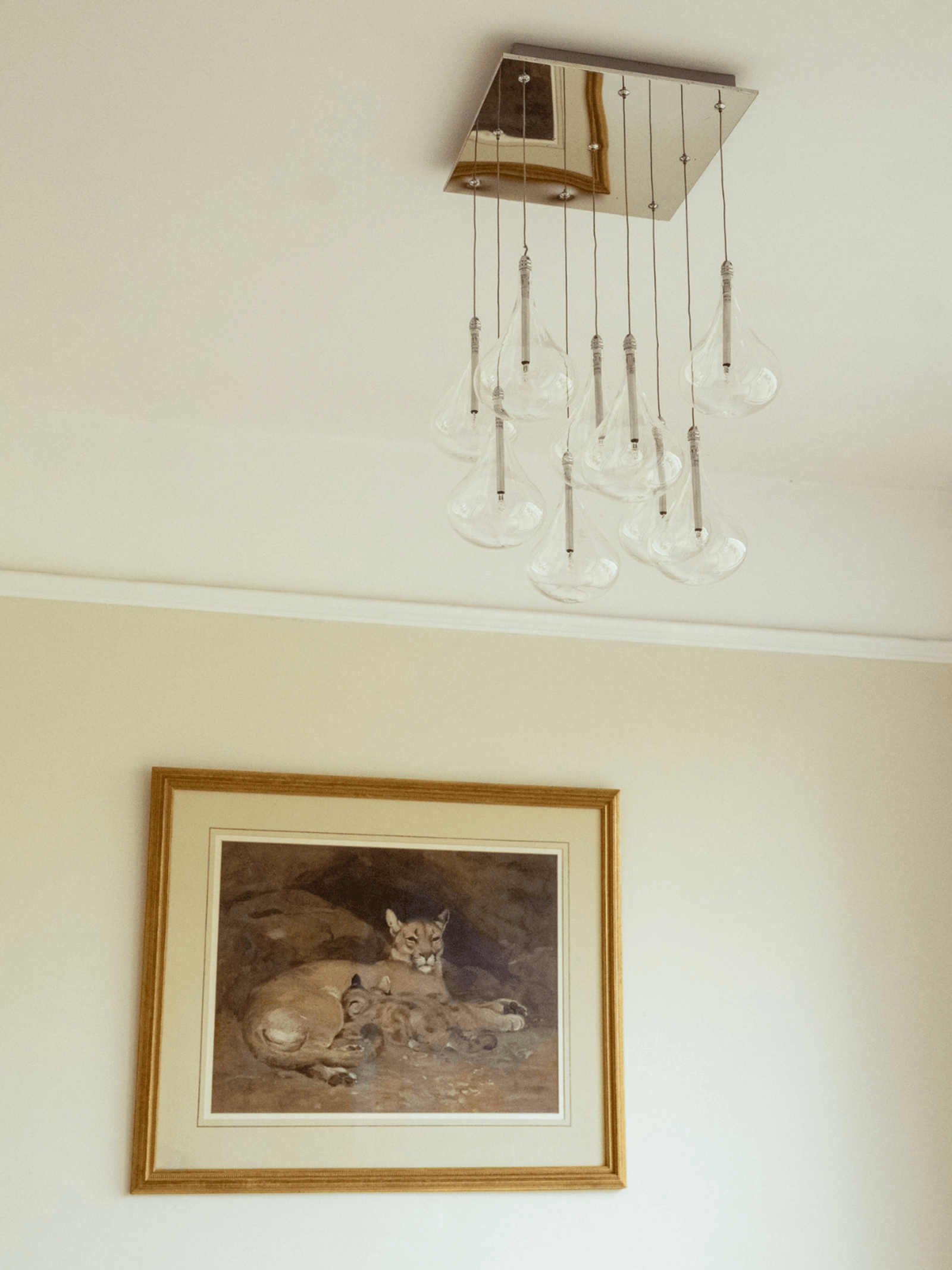
A cluster of glass pendant lights hangs above a softly framed artwork, balancing modern design with more traditional elements – a subtle interplay that runs throughout the home.
It is in the smaller details that the house reveals itself most clearly.
A glass bird placed casually on the piano. A framed print with abstract forms. A bedroom vignette – a simple daybed, a soft throw, a quiet composition of space and light. None of these elements demand attention, yet each contributes to the overall atmosphere.
These are objects that have not been selected all at once, but gathered over time. Their significance is not fixed; it evolves with use, with context, with memory.
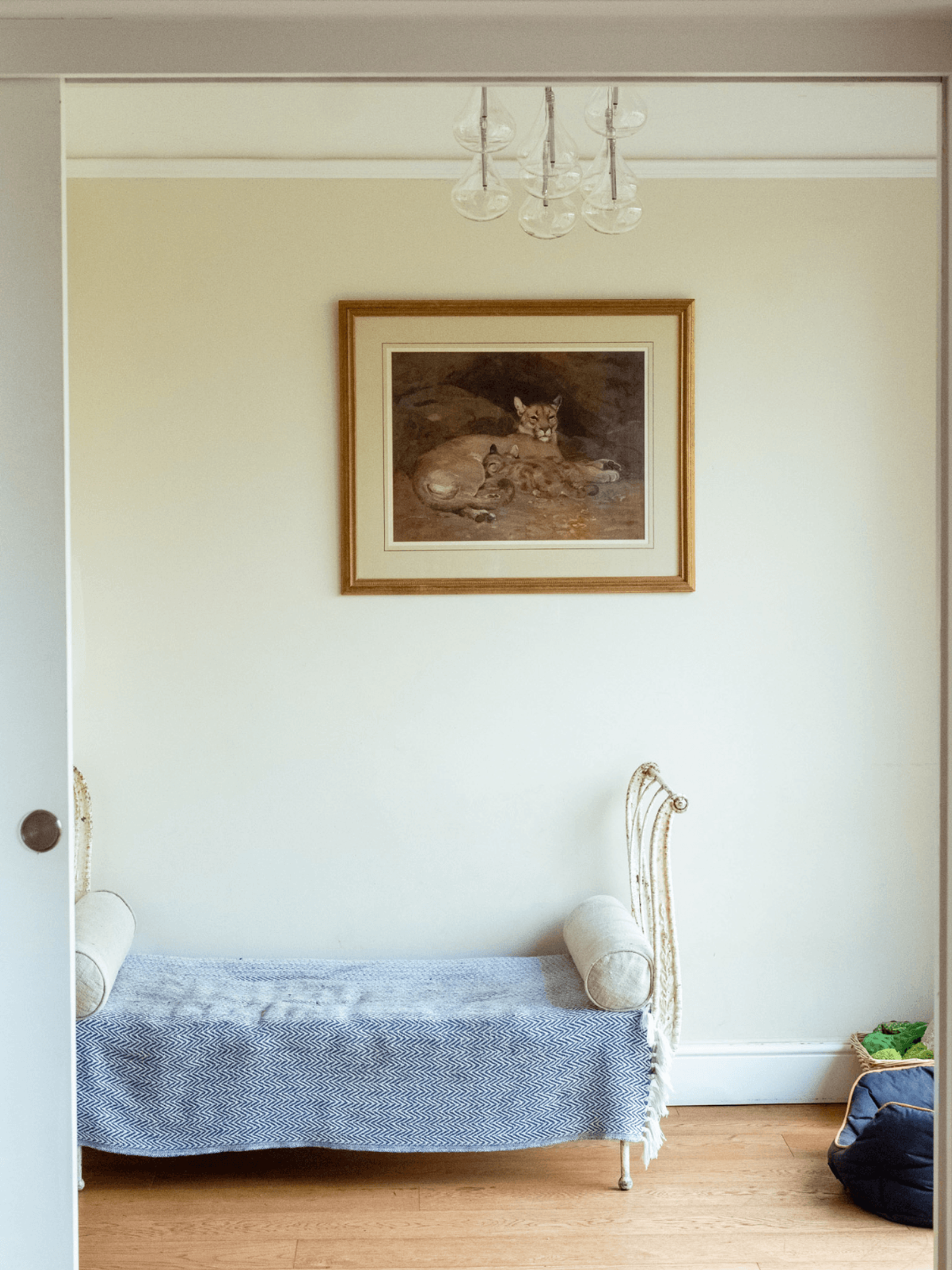
A simple upholstered daybed sits beneath a softly framed artwork, where muted tones and natural materials create a calm, considered corner for rest.
This is the distinction that defines the house. It is not resolved into a single style, nor does it attempt to be. Instead, it allows for layering – for different periods, materials and intentions to coexist without hierarchy.
A House Completed by Living
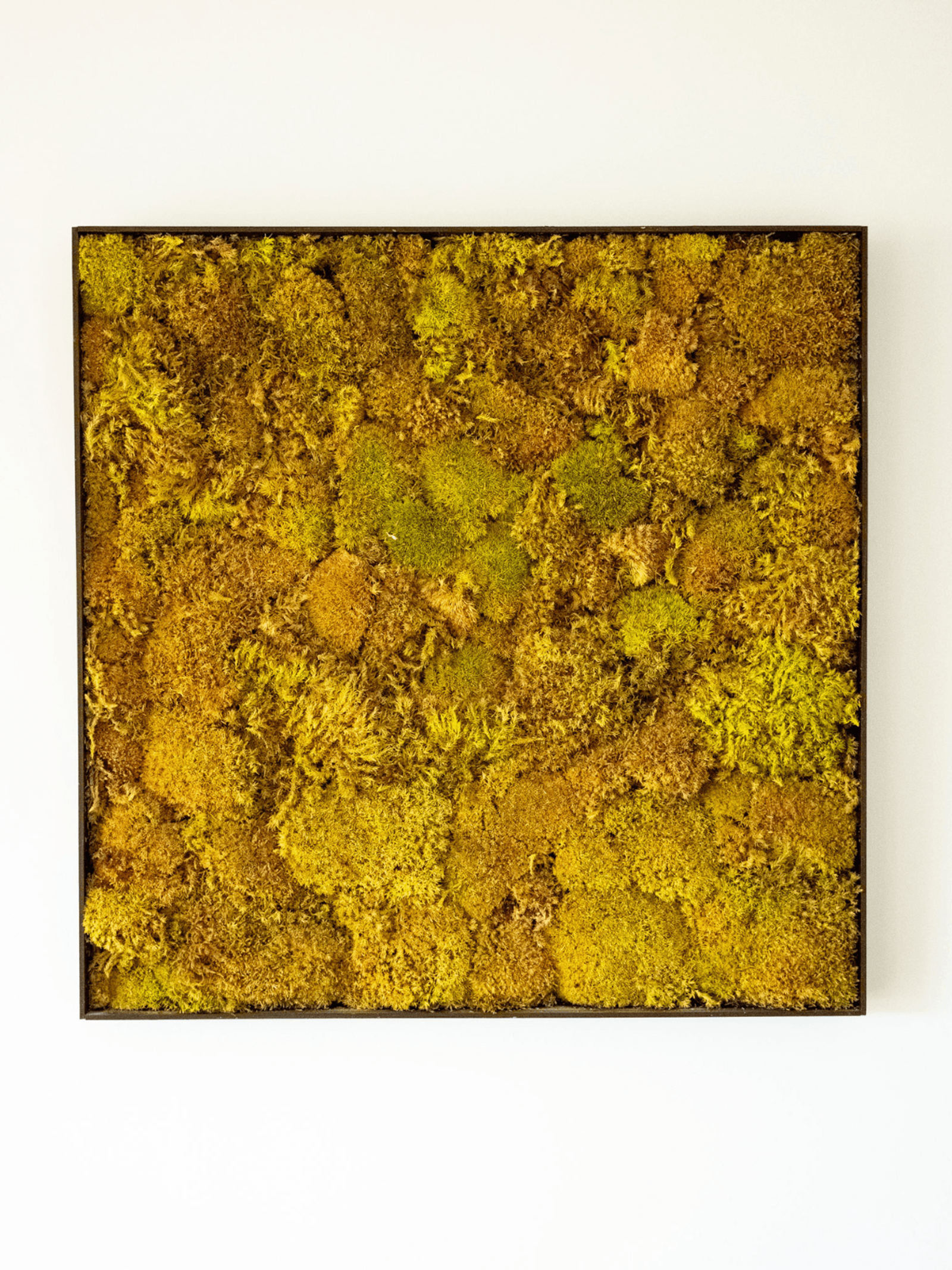
A framed panel of preserved moss introduces texture and a subtle connection to nature, its soft tonal variation echoing the surrounding landscape beyond the windows.
What emerges is not a singular vision, but a continuity.
Early twentieth-century architecture sits alongside contemporary intervention. Crafted objects exist next to functional ones. Materials shift – from glass to wood to textile – without discord.
There is no attempt to smooth these contrasts into uniformity. Instead, the house embraces them, allowing each element to retain its identity while contributing to the whole.
Over time, the house becomes something more than composed – it becomes lived in, its character defined not just by design, but by the rhythms, objects and histories it holds.