Beckenham Home Interiors: A House Designed for Work and Family Life
Set within Beckenham, this home offers a considered example of Beckenham home interiors – one shaped not by a single design idea, but by the realities of how it is…
House of Willow Alexander·
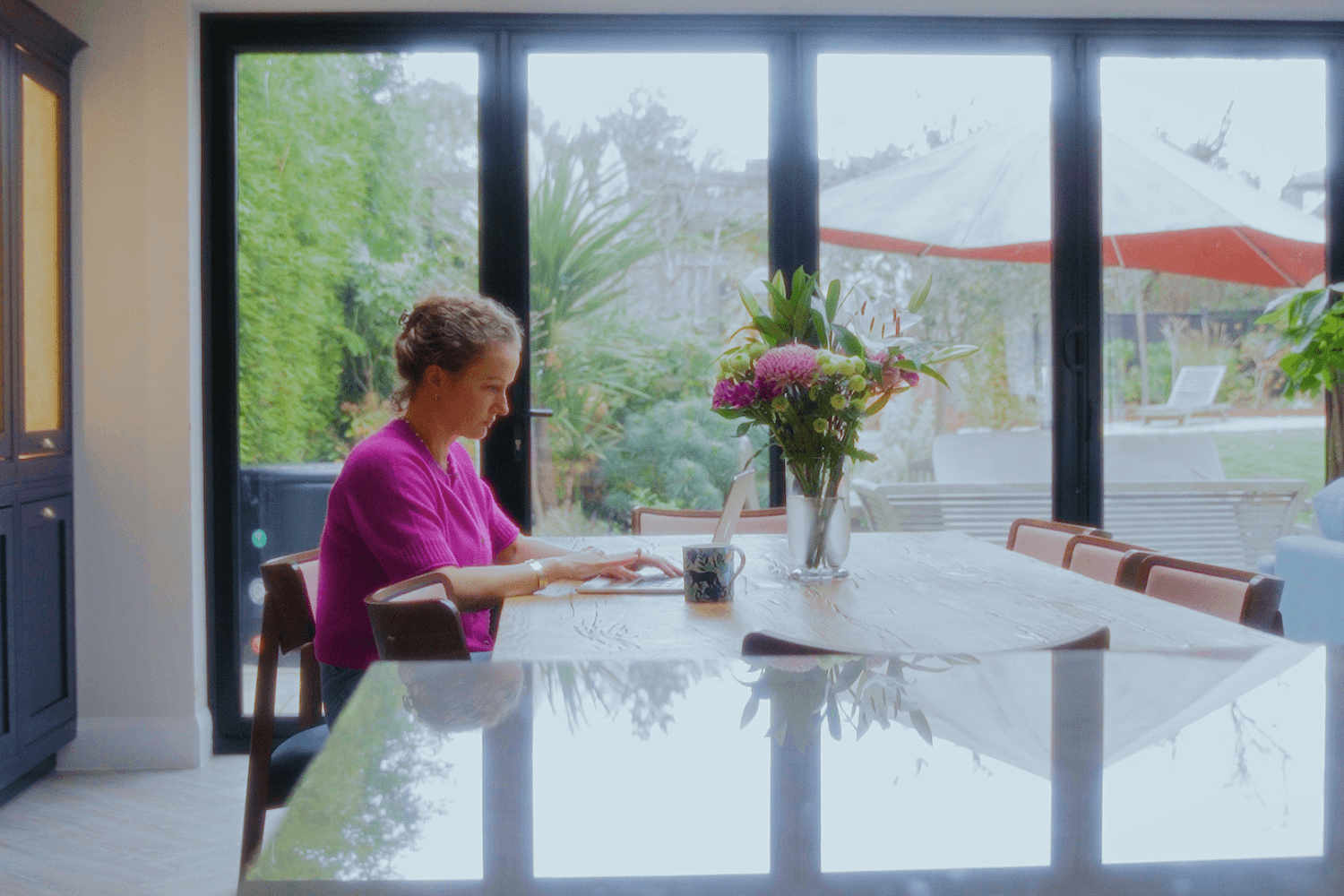
Set within Beckenham, this home offers a considered example of Beckenham home interiors – one shaped not by a single design idea, but by the realities of how it is lived in.
For writer Katherine Slee, home is not defined by style alone. It is defined by function, by family, and by the need to balance both within a single space.
Some homes are shaped around routine. Others are shaped around the lives within them.
This home sits between the two.
There is a quiet order throughout – not imposed, but inherent. Rooms are defined by how they are used as much as how they appear. Movement through the space feels natural, almost instinctive.
Doors close when they need to, and open when they don’t.
It is this balance – between separation and connection – that allows the home to function not just as a place to live, but as a place that supports how life unfolds within it.
Beckenham Home Interiors: A Layout Shaped by Living
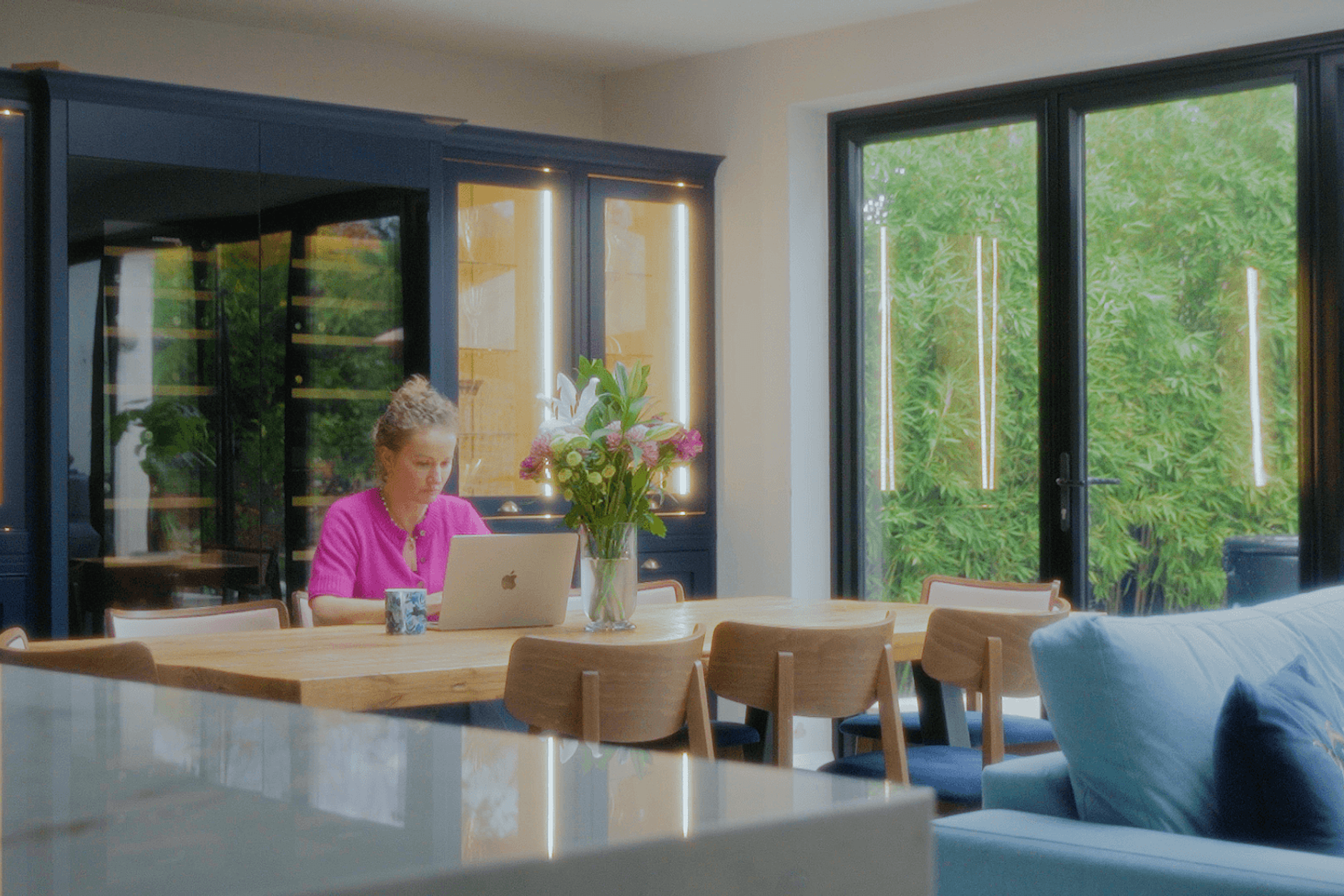
The dining space balances structure and softness – anchored by timber, framed by cabinetry, and quietly connected to the garden beyond.
The organisation of the home is its defining gesture.
The ground floor opens into a large, continuous kitchen and living space – a volume shaped by light, proportion and connection to the garden beyond. Full-height glazing draws the outside inward, softening the edges of the architecture and allowing the space to shift throughout the day.
Yet despite this openness, there is clarity.
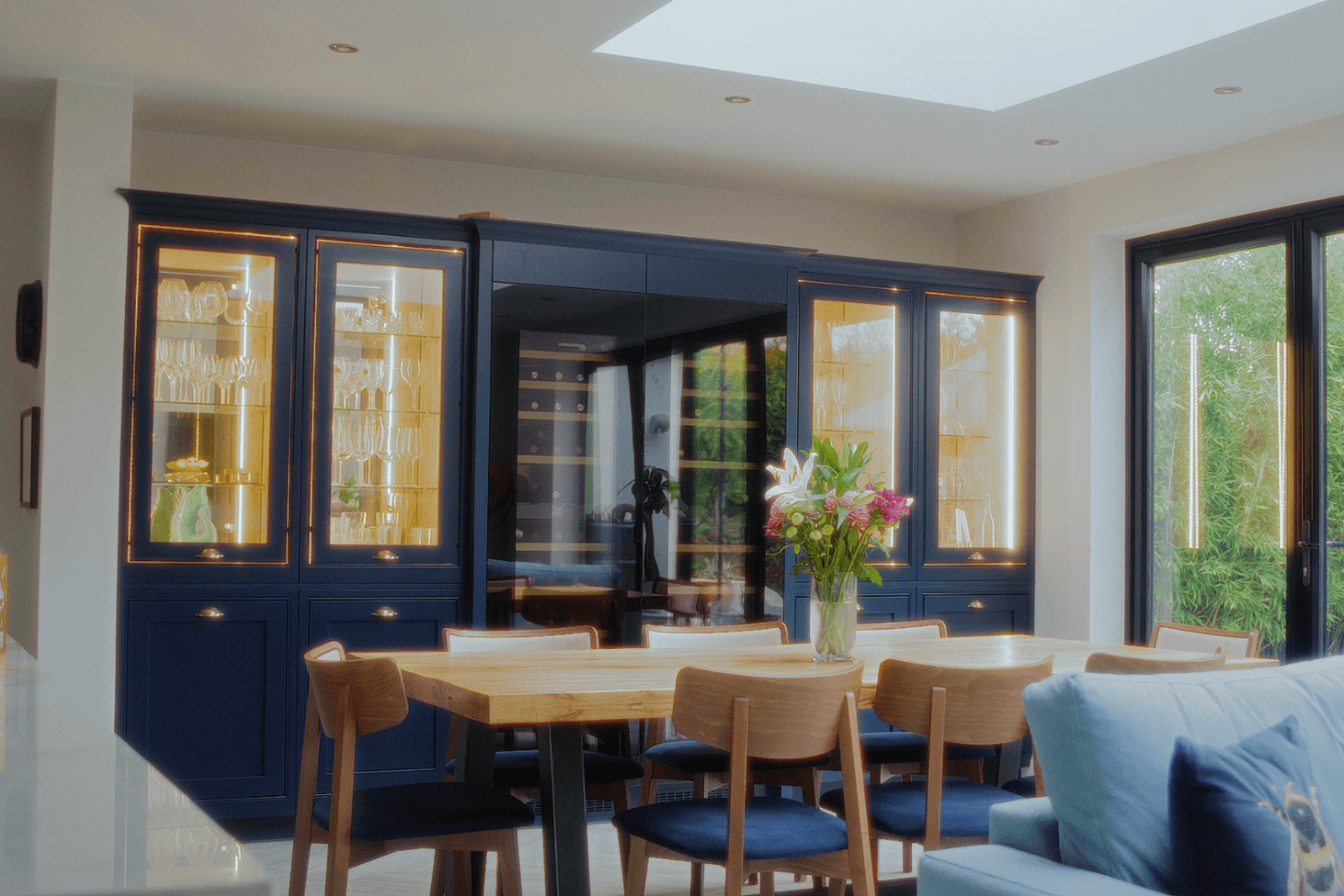
A darker cabinet anchors the dining space – glass, light and reflection bringing both function and quiet presence to the room.
The kitchen, dining and living areas are distinct without being divided. Each has its own rhythm, its own purpose, yet none feel isolated from the others.
This is not open-plan as a visual statement, but as a functional one – designed to support everyday life as it happens.
Cooking, working, talking, resting – all unfold within the same continuous space, without conflict.
The Living Space: Softness and Connection
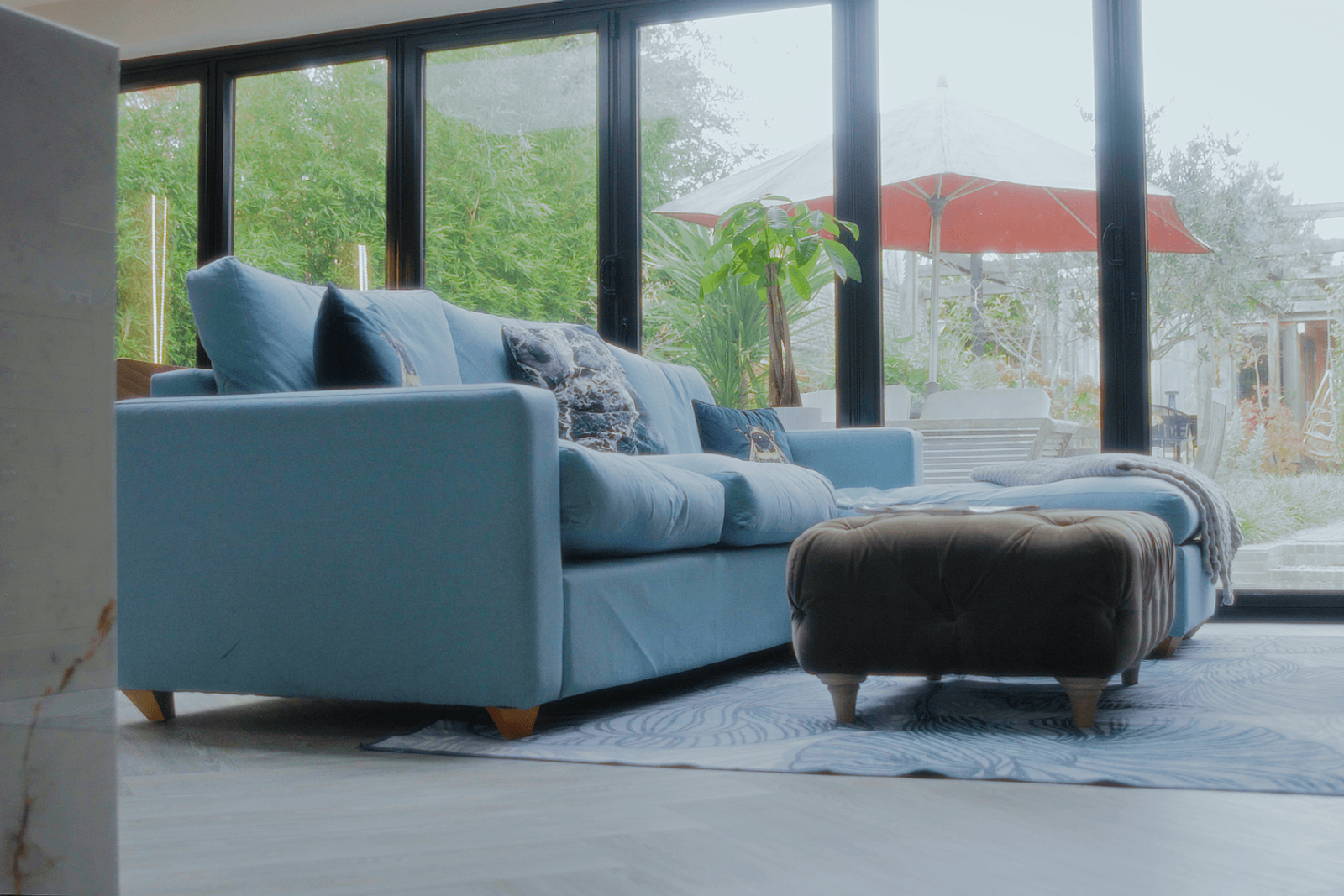
A softer moment within the home – where seating, light and the garden beyond come together in a space shaped for slowing down.
Within the living area, the atmosphere shifts.
A pale blue sofa introduces softness against the clean architectural lines, its tone reflecting the light that moves through the glazing. Positioned towards the garden, it reinforces the outward focus of the room – a space that feels as connected to what lies beyond as it does to what surrounds it.
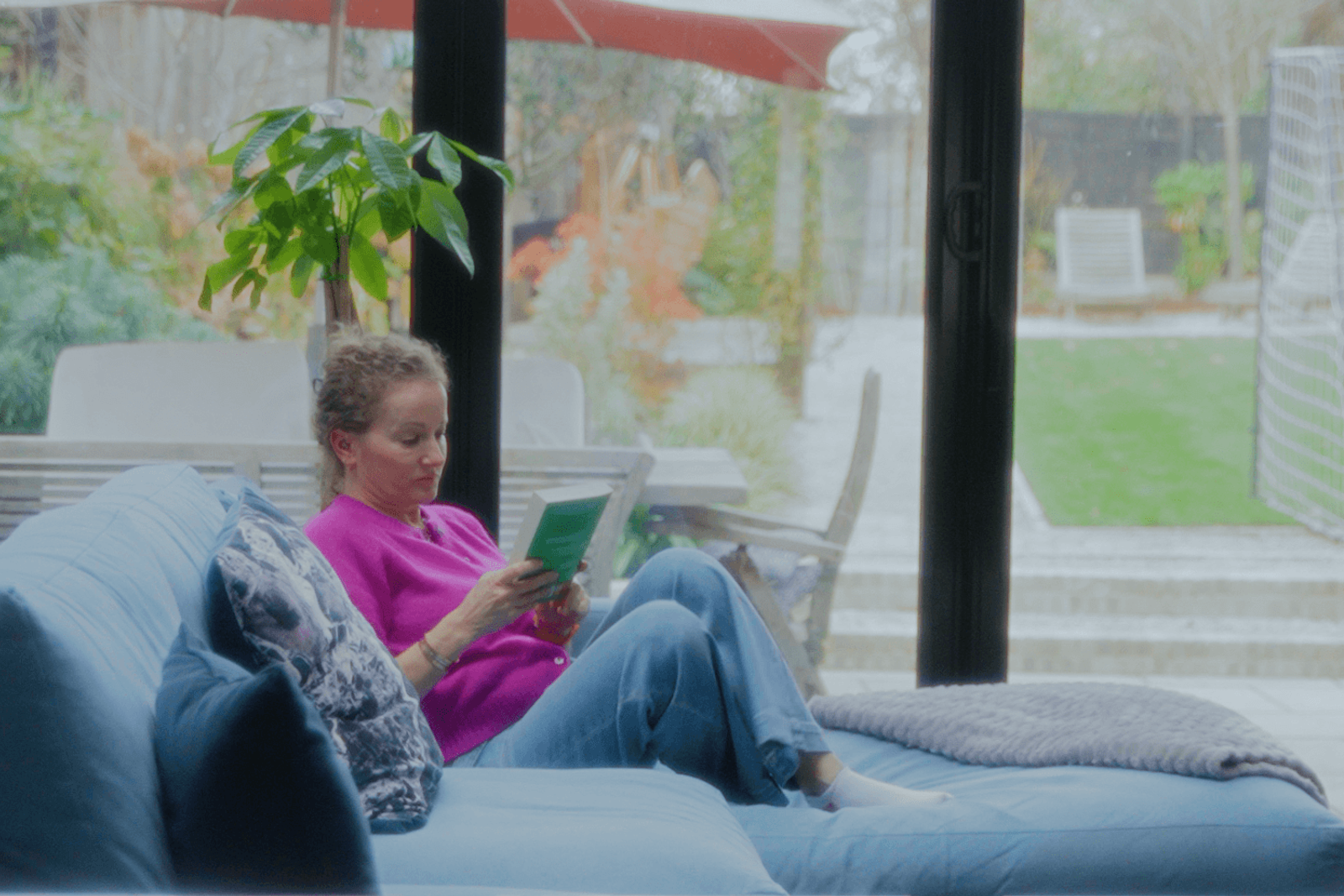
A quieter moment – where the space shifts from shared living to something more personal, shaped by stillness and routine.
A low ottoman anchors the seating area, its tufted form introducing texture and weight. Beneath, a patterned rug provides a subtle geometry – enough to define the space without overwhelming it.
Here, comfort is prioritised, but never at the expense of clarity.
Everything sits easily.
Objects and Everyday Rituals

Everyday objects gather at the island – where function, routine and small rituals quietly shape the space.
Character emerges not through decoration, but through objects.
On the kitchen island, a small metal bell sits among the everyday – soap bottles, cards, notes. It is used to call the children in for dinner.
It is a simple gesture, but one that introduces rhythm to the space – a moment repeated, a sound that signals gathering.
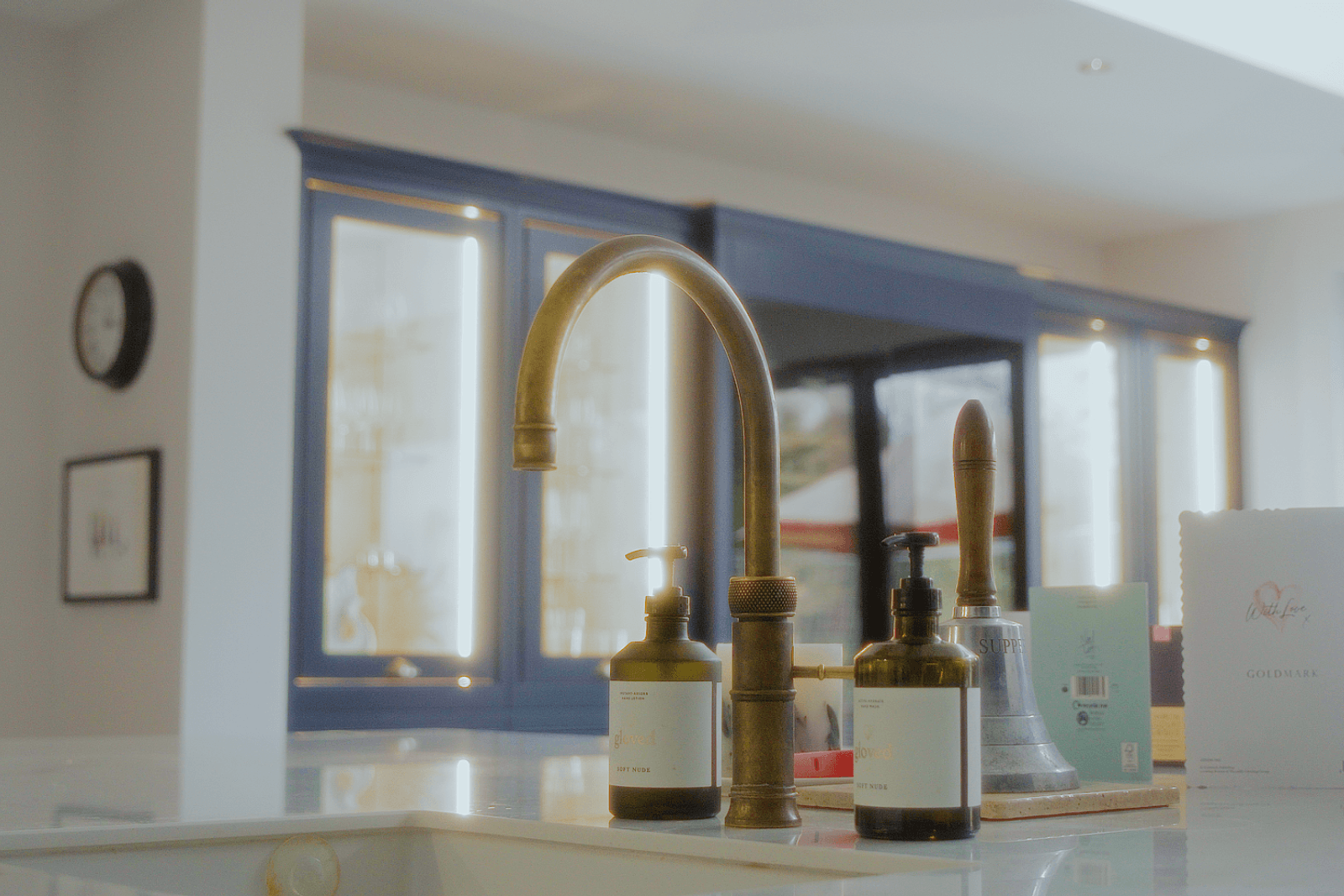
The small details hold the rhythm of the space – where everyday use becomes part of the design.
Around it, objects are placed without strict arrangement. They are not styled, but accumulated – each one carrying a function, a memory, or a purpose.
This is where the home begins to feel personal.
Not through statement pieces, but through use.
The Kitchen: Material and Function
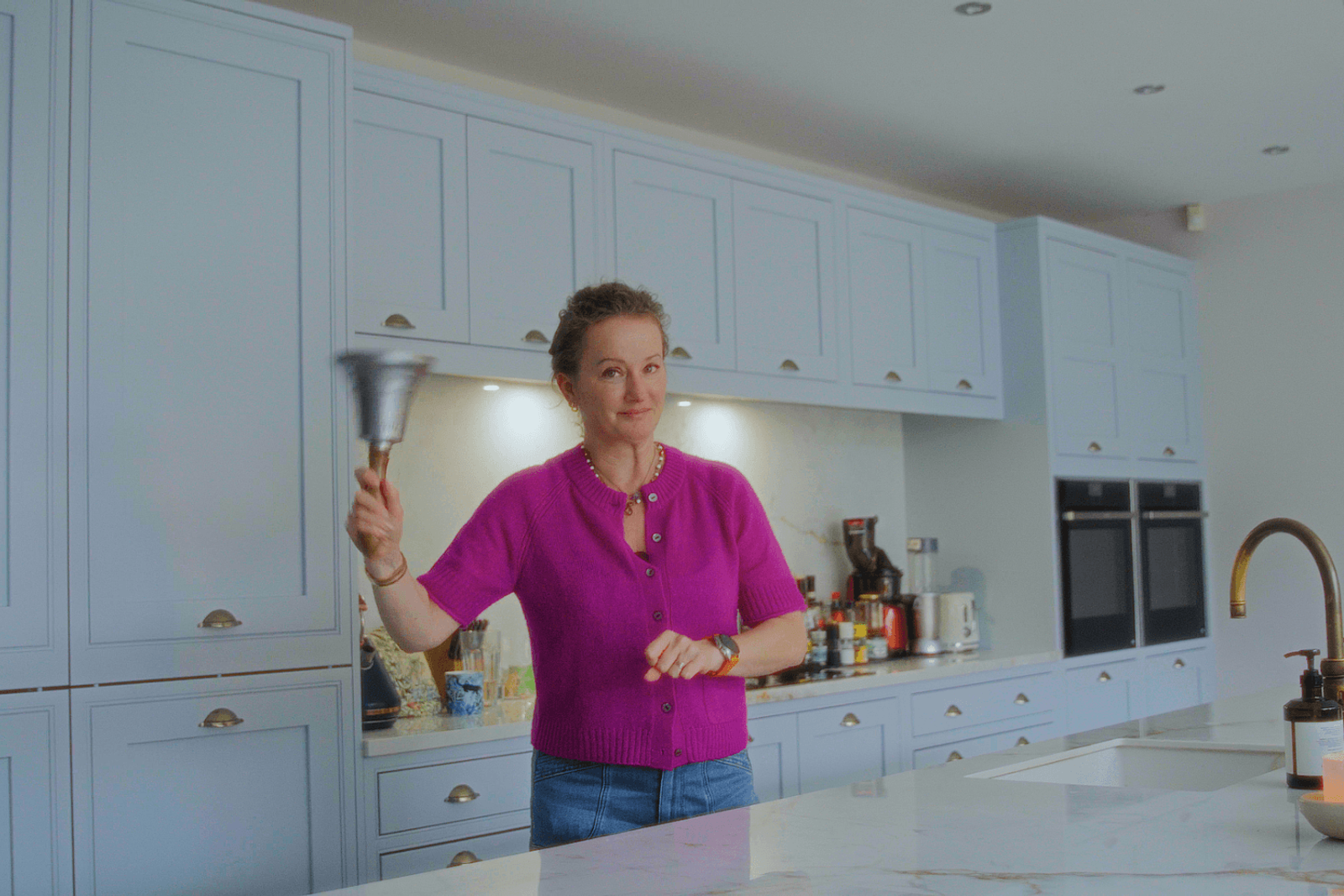
Spaces are shaped by use – where design supports the rhythm of everyday life.
In the kitchen, material does much of the work.
Cabinetry is restrained – painted in soft, neutral tones – allowing the surfaces to take focus. A marble worktop introduces subtle veining, its natural pattern shifting gently across the surface.
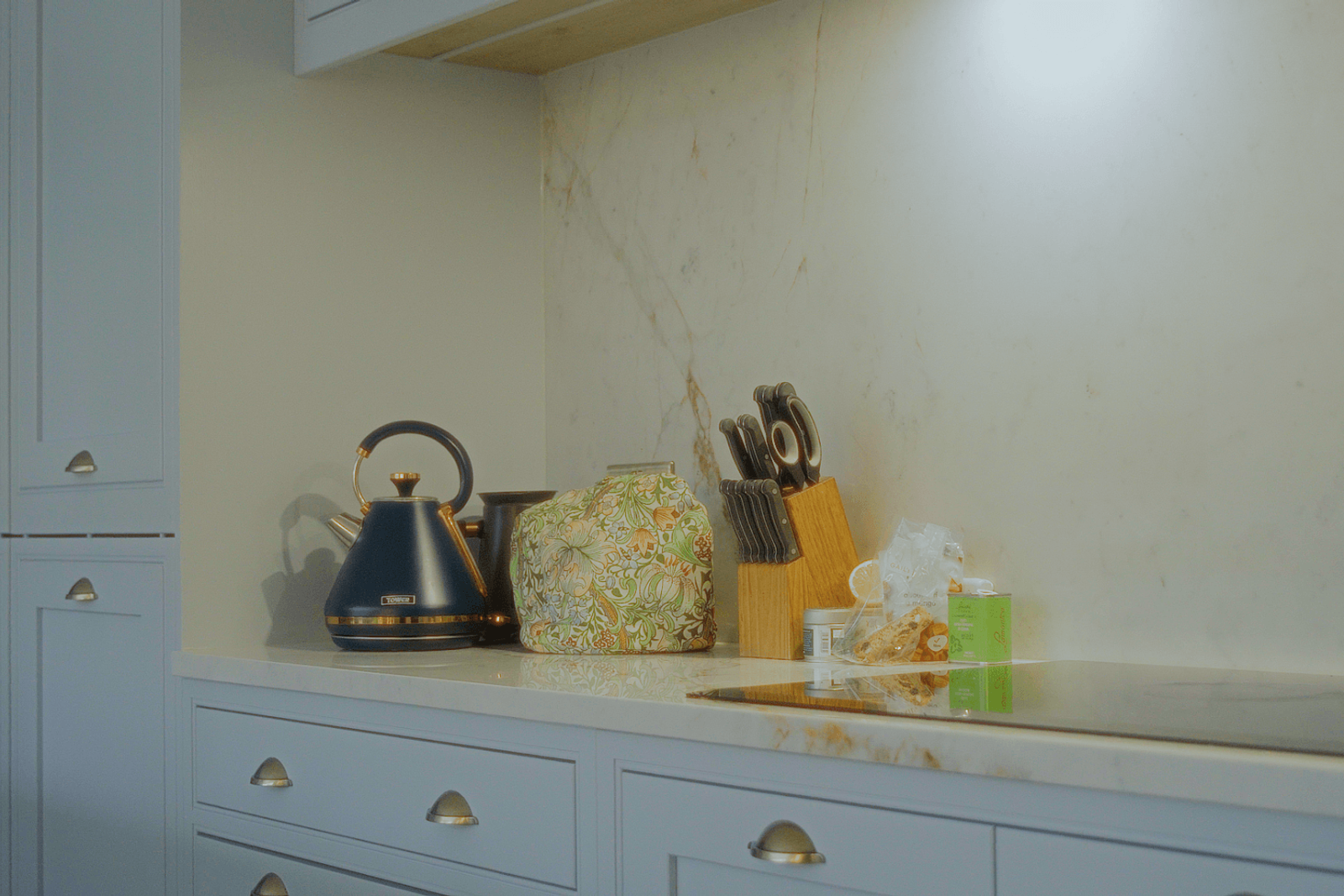
Not everything is hidden – the everyday is allowed to sit comfortably within the space.
Brass hardware adds warmth, ageing over time rather than remaining fixed. Nearby, everyday tools – a kettle, knife block, containers – are left visible, reinforcing the idea that this is a working space rather than a curated one.
There is no excess here.
Only what is needed – and what will last.
The Dining Area: Structure and Presence
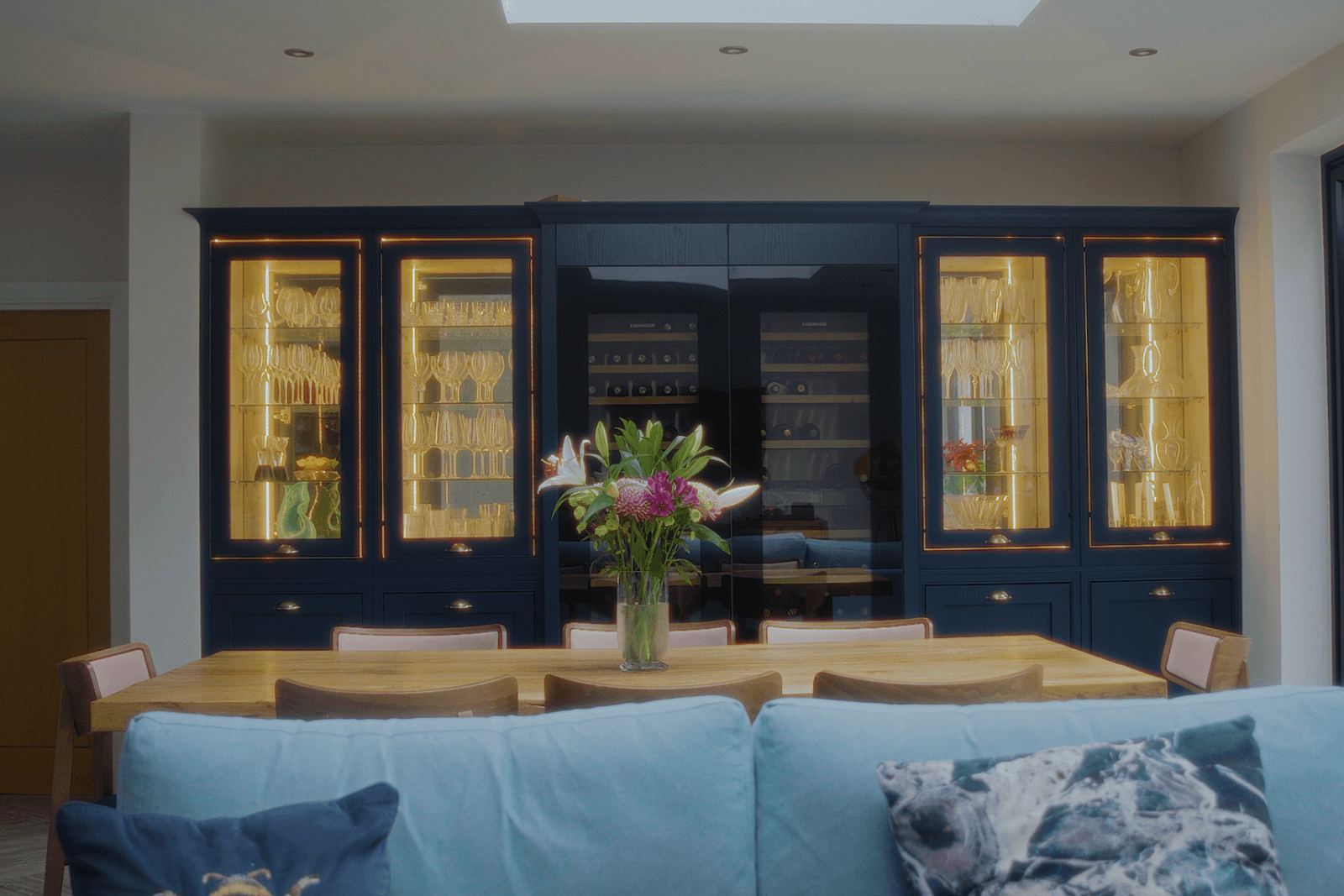
Storage becomes part of the architecture – considered, visible, and quietly defining the space.
The dining area sits at the centre of the room, both physically and socially.
A large timber table anchors the space, its surface marked subtly by use. Around it, chairs are evenly spaced – structured, but not rigid.
Behind, a deep blue cabinet introduces contrast.
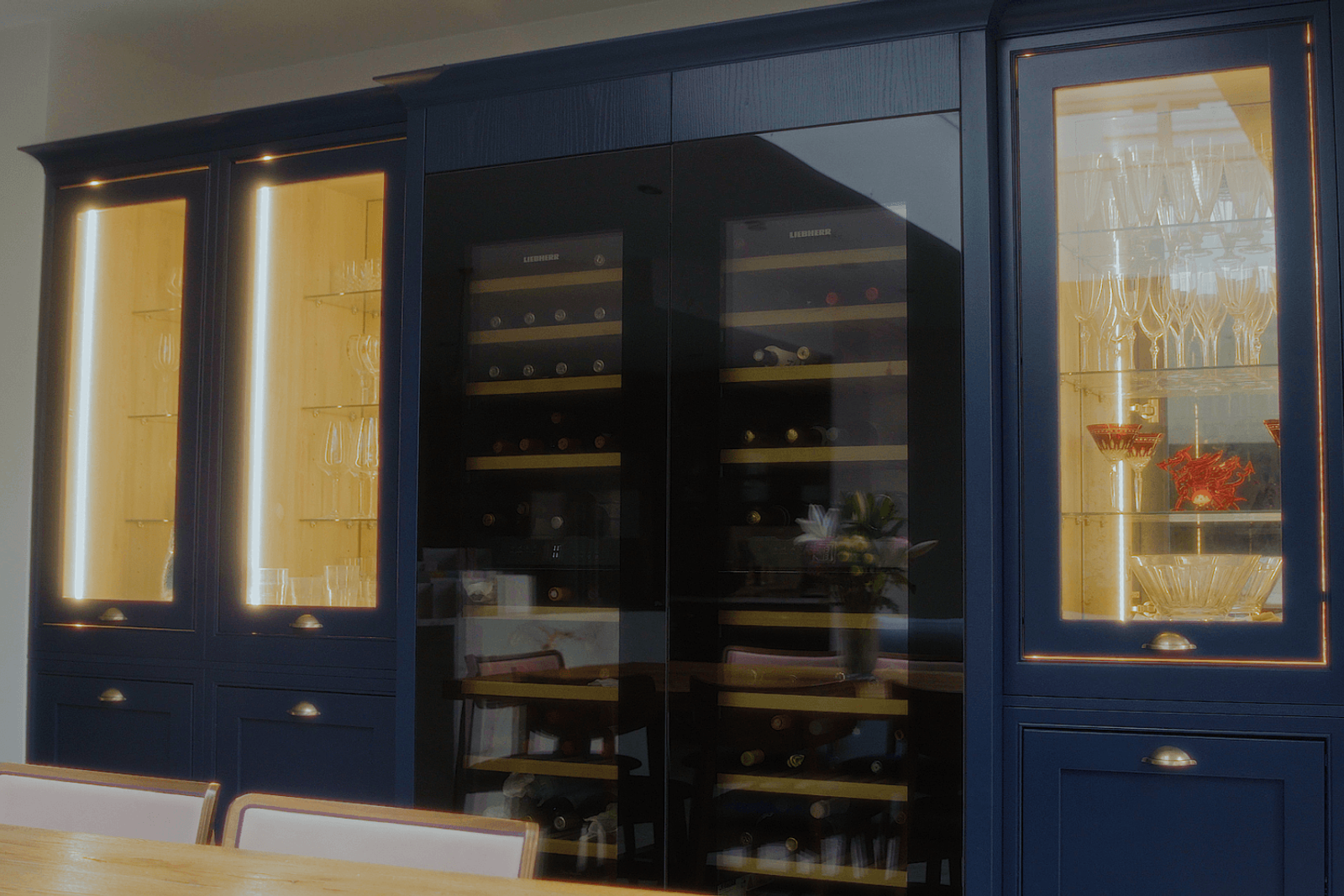
Function, storage and display come together – quietly integrated into the fabric of the space.
Glazed doors reveal glassware within, softly lit from inside. The effect is both functional and atmospheric – a piece that holds objects while also shaping the mood of the room.
It adds weight.
Not through scale alone, but through presence.
The Office: A Space Apart
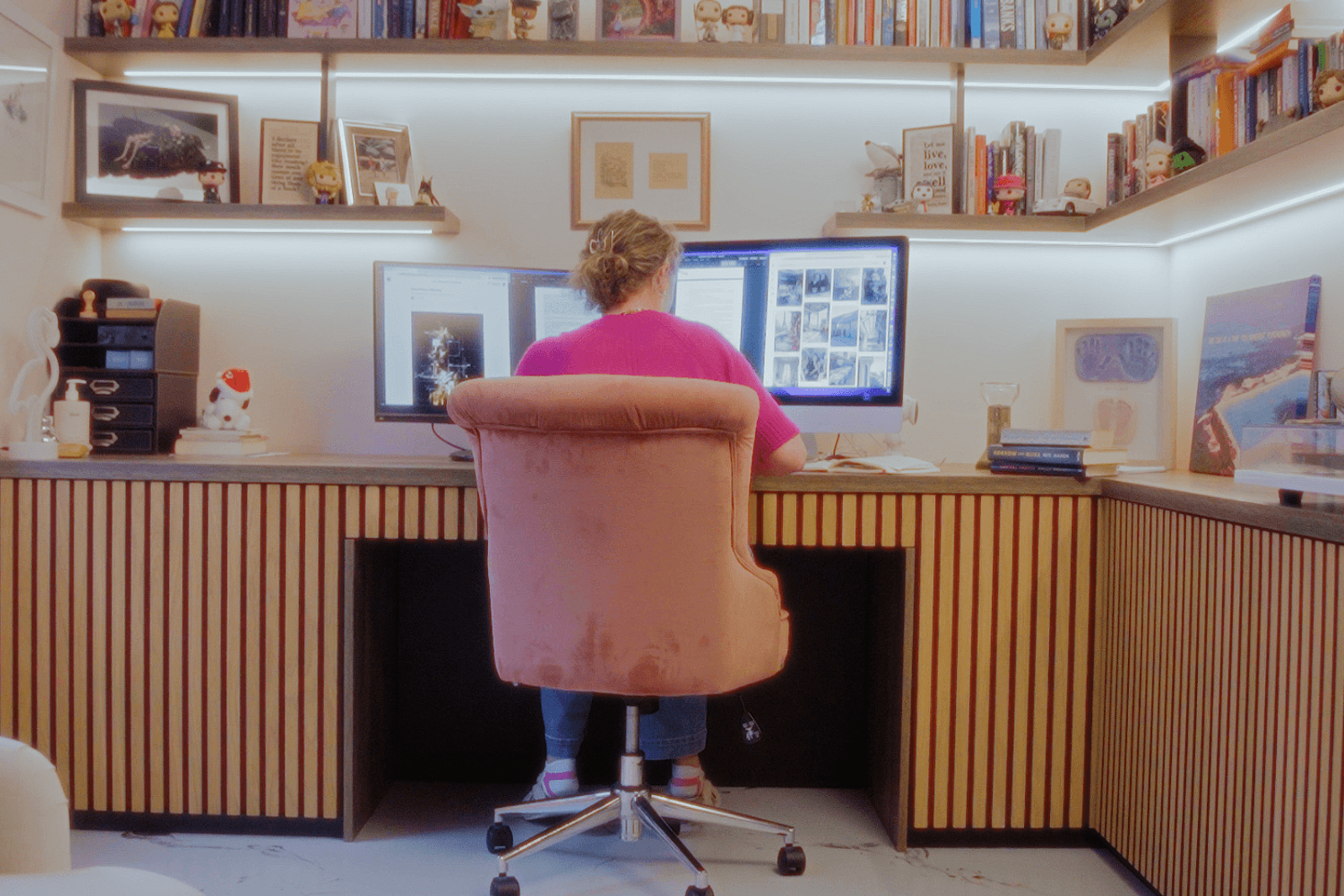
A space to focus – designed with the same care as the rooms it connects to.
Set away from the main living space, the office introduces a different rhythm.
Here, the focus is inward.
A long desk spans the wall, accompanied by dual screens and open shelving. Books, prints and objects line the surfaces – not arranged for display, but positioned through use.

Katherine reflects on the office space – designed to feel part of the home, not separate from it.
Lighting is integrated subtly, running beneath the shelves and casting an even glow across the workspace.
It is a room designed for concentration.
A place where work can exist separately, without intruding on the rest of the home.
Books as Landscape
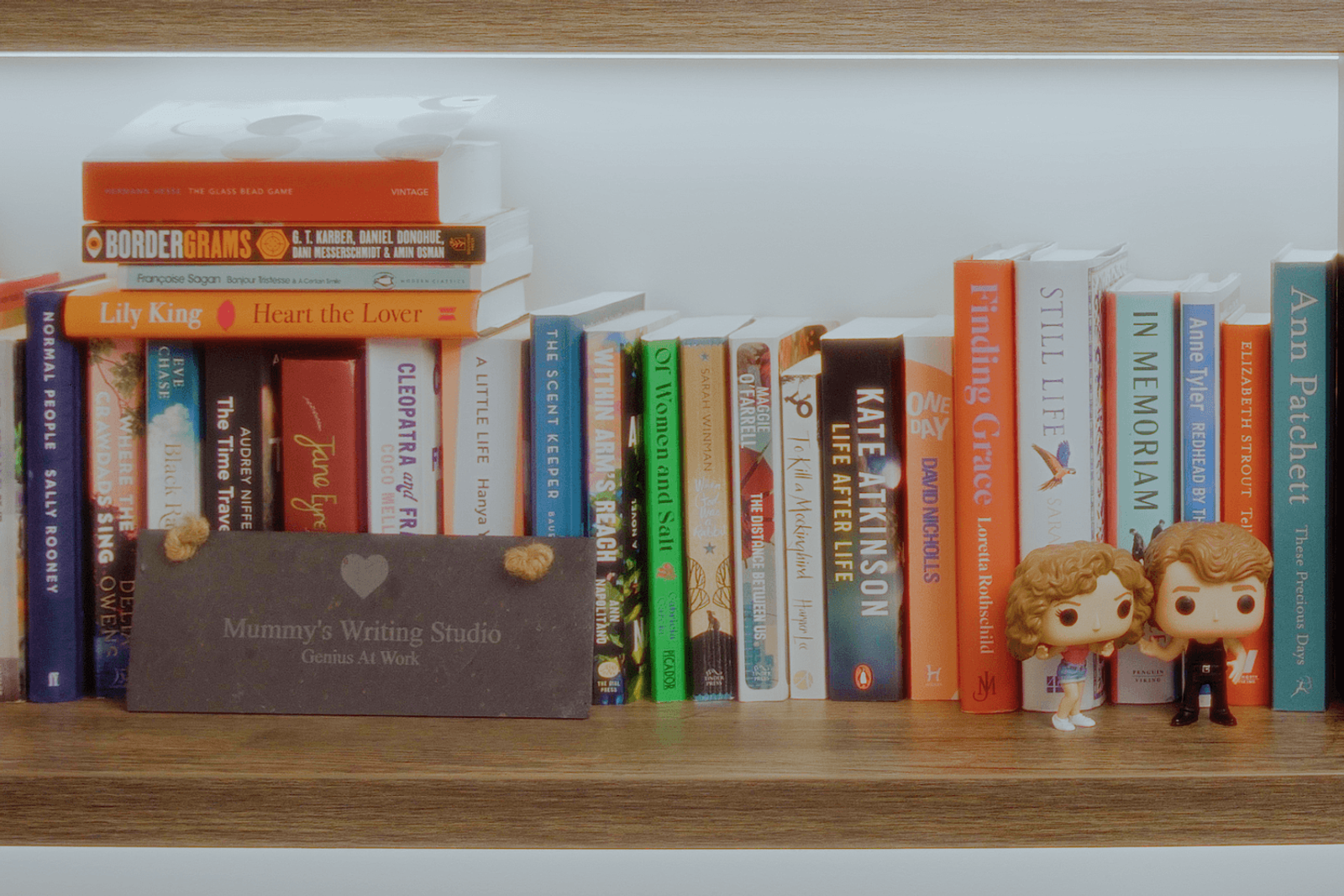
The space becomes personal over time – shaped as much by what is placed within it as how it is designed.
Books appear throughout the house, but here they take on a more defined role.
Arranged across open shelving, they form both function and backdrop. Colour, scale and subject matter vary, creating a layered composition that shifts across the wall.
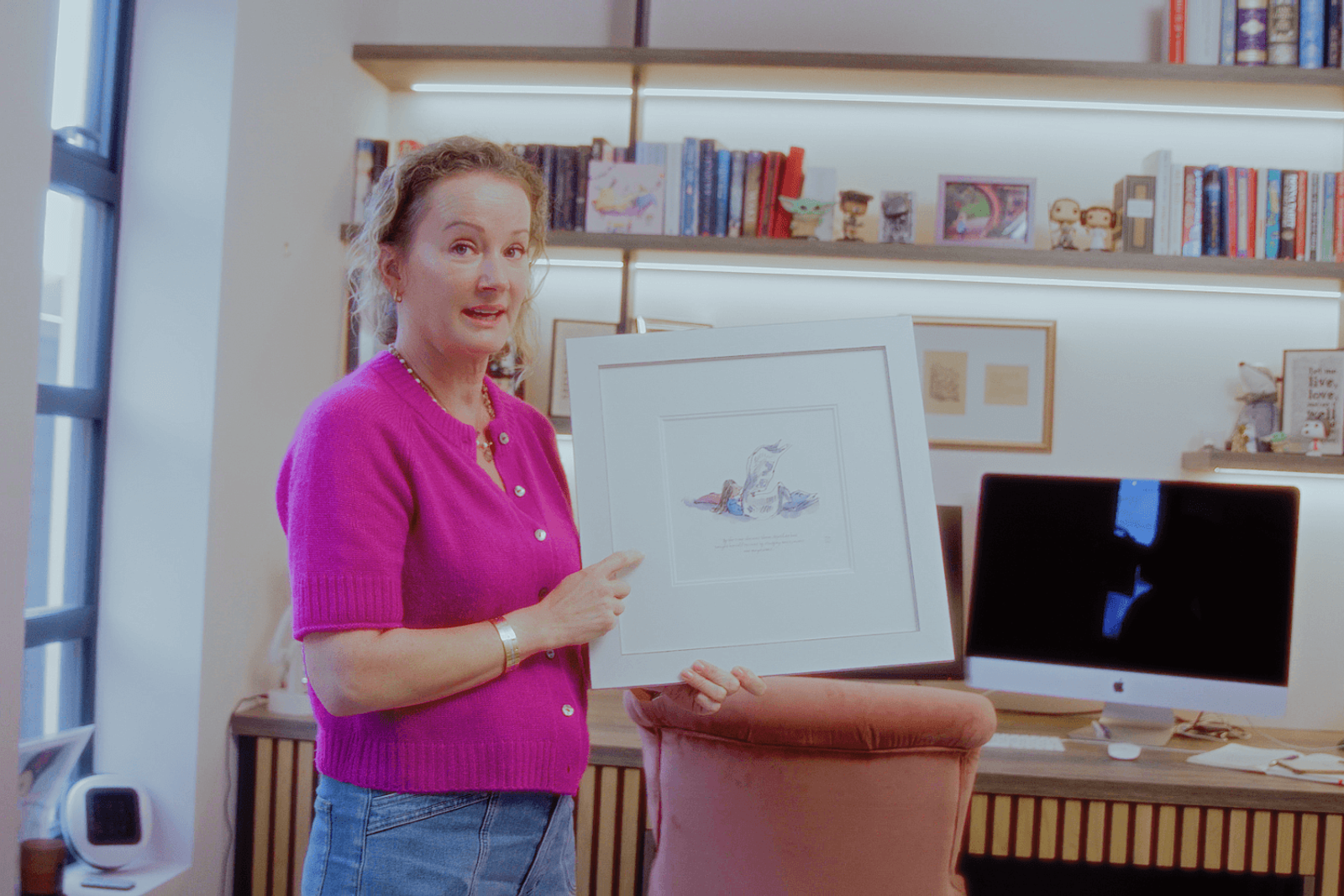
Katherine shares the pieces that make the space her own – where design meets memory and meaning.
Interspersed among them are smaller objects – figures, photographs, prints – each adding a point of interruption within the linear arrangement.
This is not a display.
It is an archive.
A reflection of interests, ideas and time spent.
Beckenham Home Interiors and Garden Design
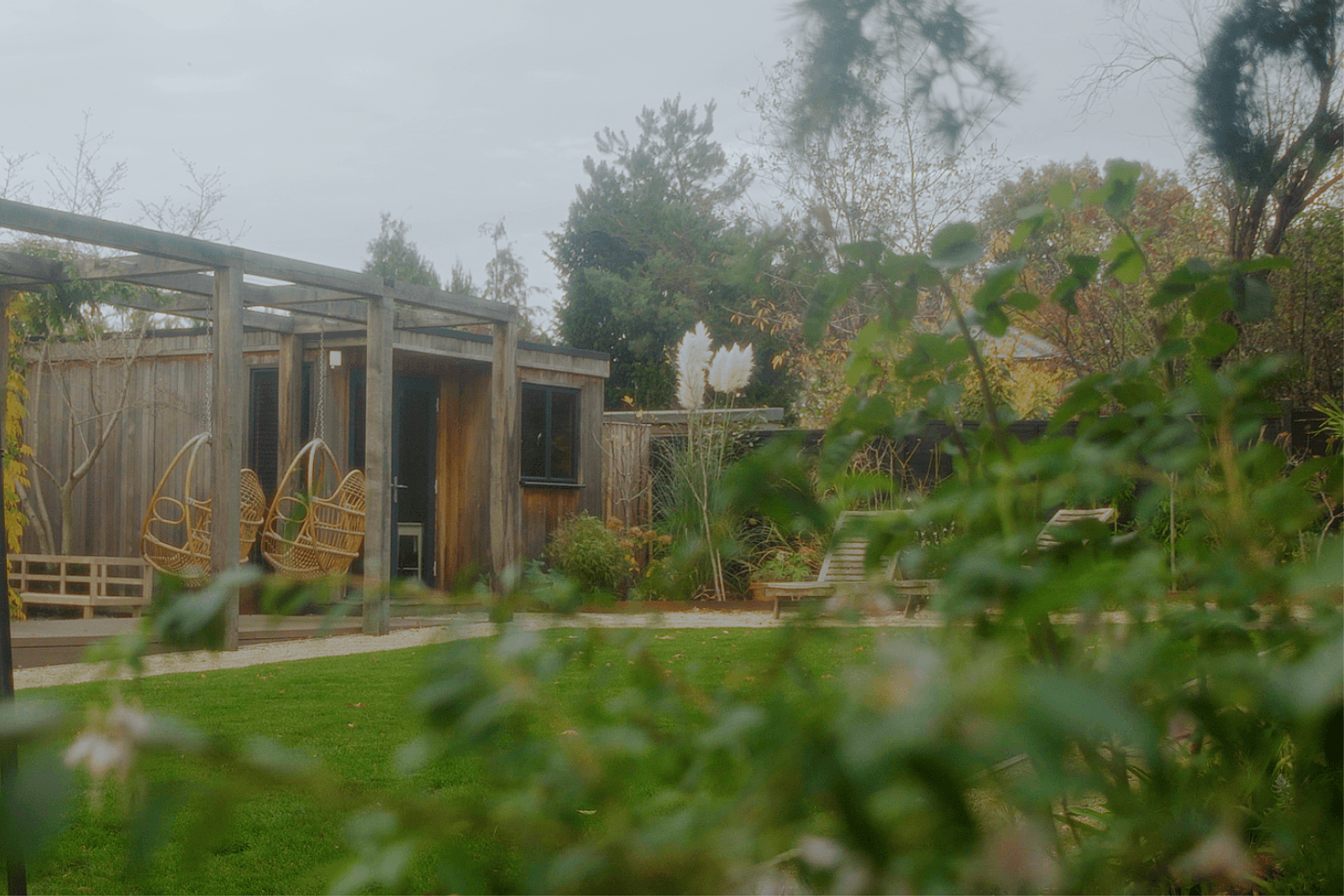
A garden designed to be lived in – where structure, planting and use come together naturally.
Beyond the glazing, the garden – designed and built by Willow Alexander Gardens– extends the logic of the interior.
Planting is layered and informal, with soft borders, mature shrubs and areas of enclosure that create privacy without rigidity. Timber structures introduce height and rhythm, shaping the space without enclosing
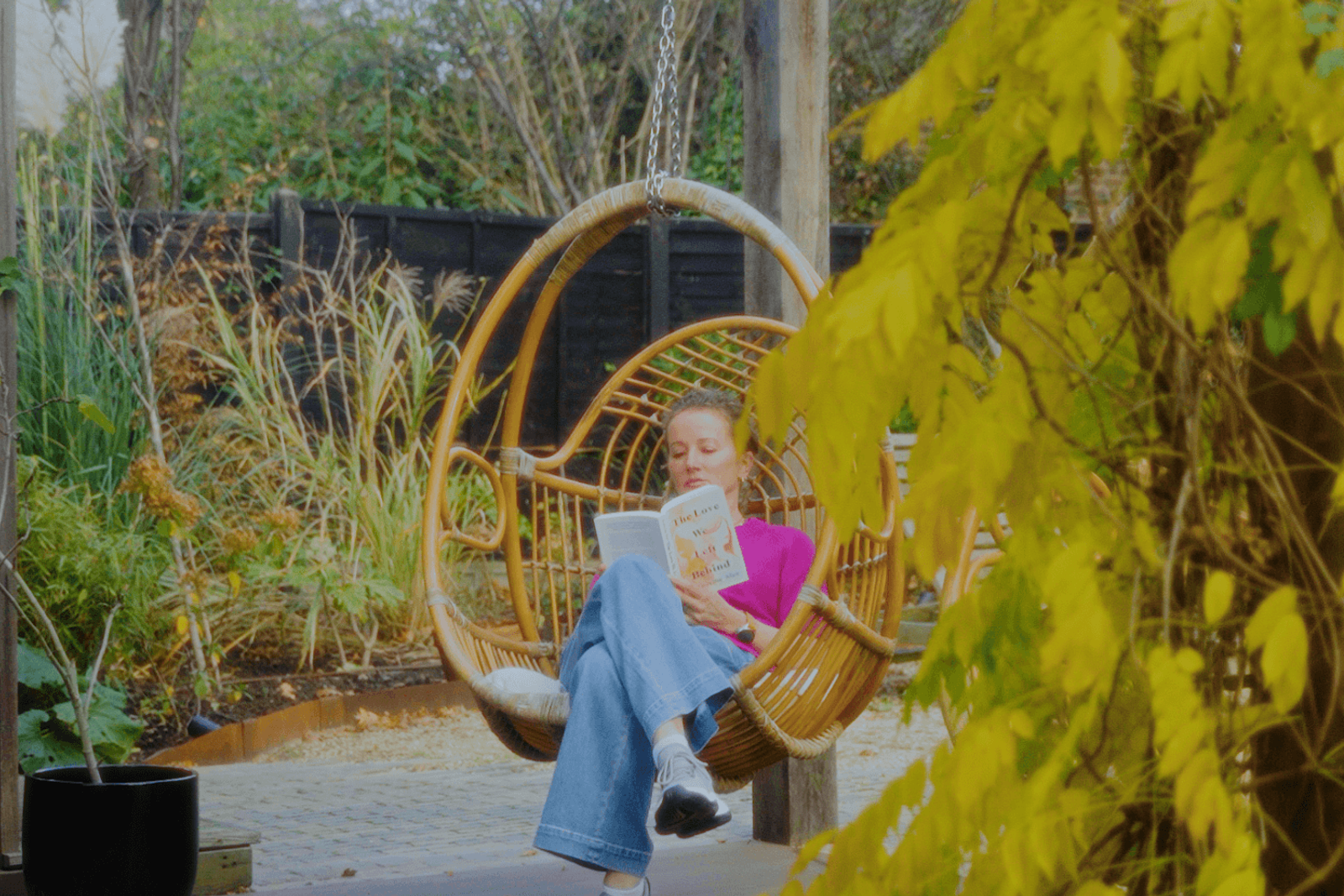
A quieter corner of the garden – designed for slowing down, reading, and spending time outside.
Seating areas are positioned to mirror the use of the rooms inside – places to gather, to pause, to spend time.
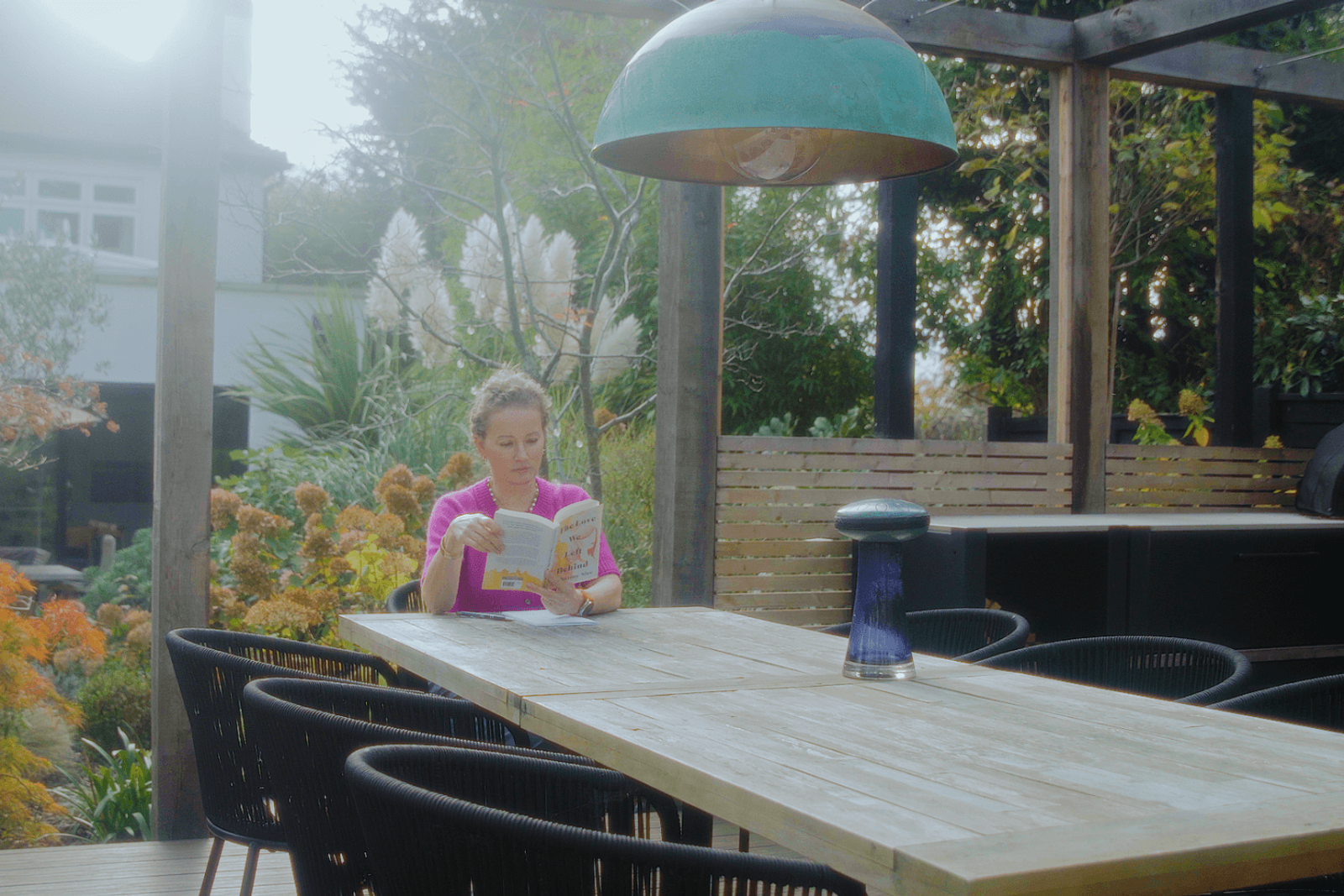
Where cooking, dining and the garden come together – an outdoor space designed to be used, not just seen.
An outdoor kitchen reinforces this continuity, allowing cooking and conversation to move freely between inside and out.
This is not a garden designed to be viewed from within.
It is a garden designed to be inhabited.
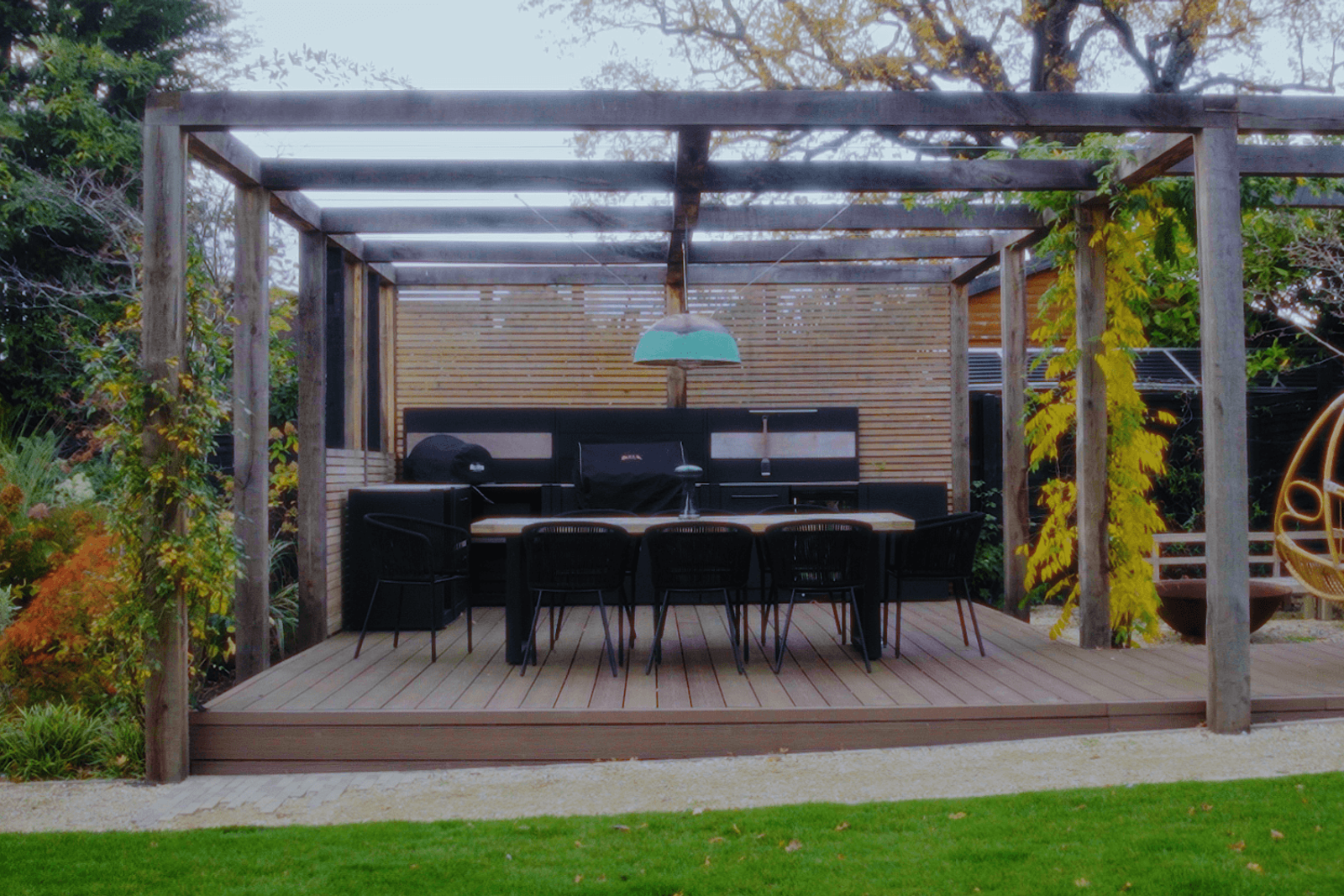
A structured outdoor kitchen space – bringing rhythm, function and everyday use into the garden.
A Space That Holds Life
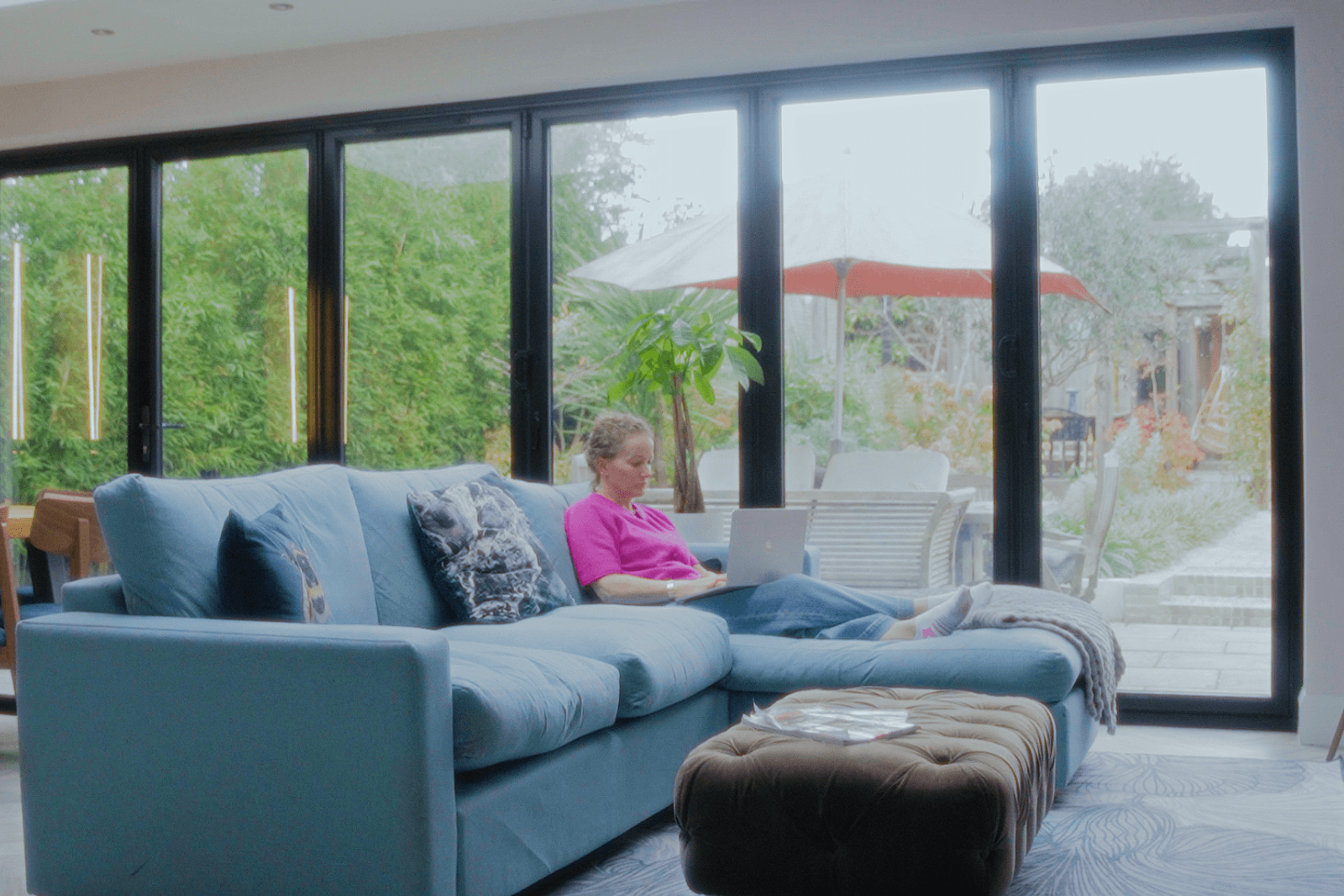
Doors close when they need to, and open when they don’t.
In the end, what defines this home is not a single element, but the way everything works together.
Architecture provides the structure.
Objects introduce meaning.
And daily life shapes how both are experienced over time.
Nothing feels fixed.
Spaces evolve, objects shift, routines change – and the home adapts alongside them.
This is what gives it its sense of permanence.
Not perfection, but flexibility.
A home designed not simply to be seen, but to be lived in – fully, comfortably, and over time.