Neuroaesthetics: The Science of Beauty in Interior Design
The intersection of neuroscience and interior design represents one of the most fascinating frontiers in our understanding of how built environments affect human experience. This emerging field, known as neuroaesthetics,…
House of Willow Alexander·
The intersection of neuroscience and interior design represents one of the most fascinating frontiers in our understanding of how built environments affect human experience. This emerging field, known as neuroaesthetics, moves beyond subjective notions of taste to explore how specific design elements trigger measurable neurological and psychological responses. By understanding the biological foundations of aesthetic perception, designers can create spaces that not only please the eye but actively support cognitive function, emotional wellbeing, and physical health.
The Neurological Foundations of Aesthetic Experience
Our response to our surroundings operates through complex brain mechanisms that evolved long before interior design existed as a discipline:
Evolutionary Perspectives
Several adaptive advantages explain our aesthetic preferences:
Prospect and Refuge
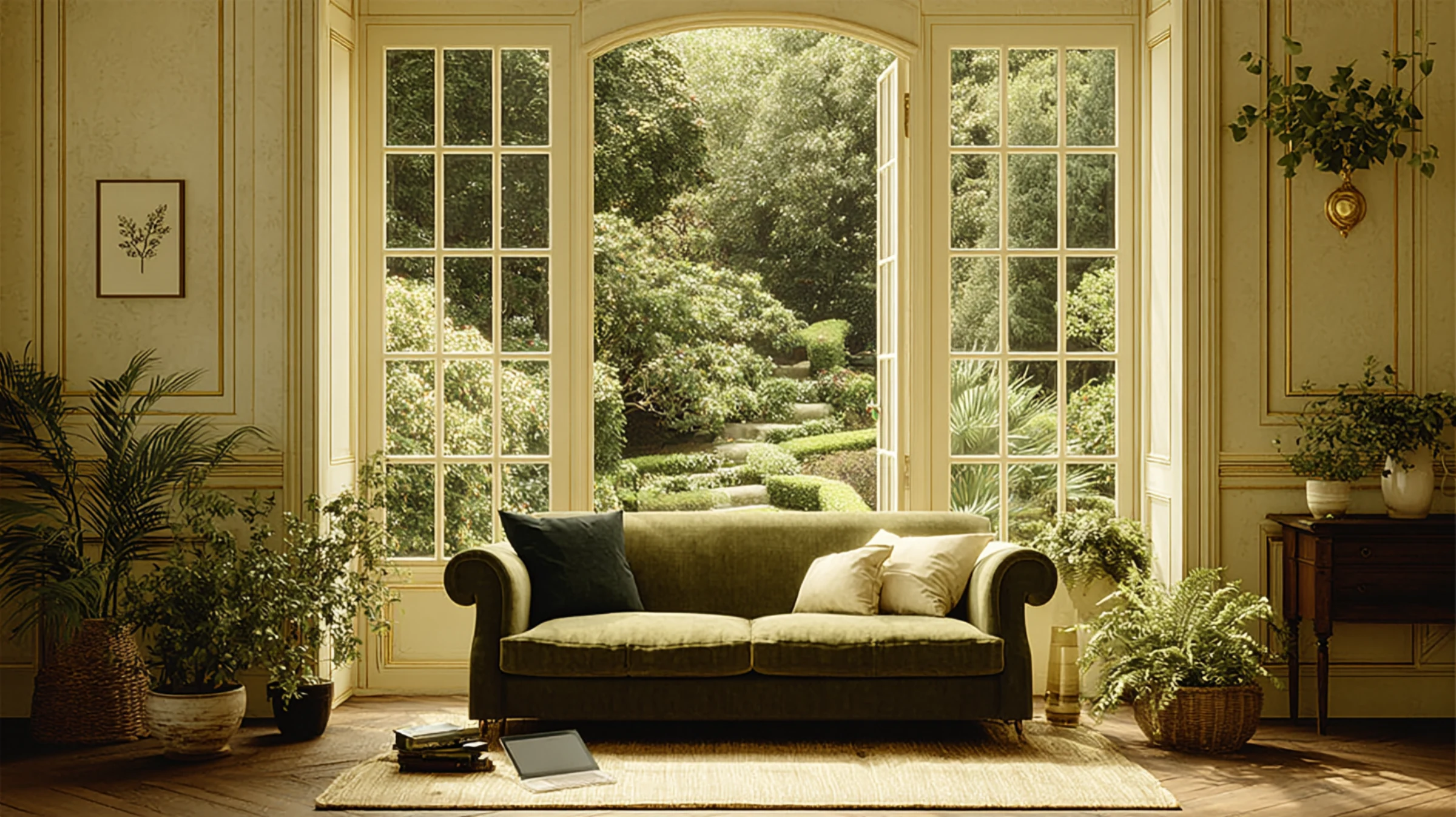
Our brains remain attuned to environmental qualities that offered survival advantages to our ancestors—specifically, spaces that provide both outlook (prospect) and protection (refuge). This explains our persistent preference for seating arrangements that offer views while providing some form of backing or shelter. Living rooms positioned to capture expansive views while maintaining a sense of enclosure satisfy this deep-seated need for simultaneous prospect and refuge.
Pattern Recognition
The human brain evolved sophisticated pattern recognition capabilities that helped our ancestors identify both opportunities and threats in natural environments. This explains our inherent fascination with patterns that offer the right balance of order and complexity—organized enough to process efficiently but complex enough to maintain interest. Textiles, wallcoverings, and architectural details that provide this optimal complexity engage our pattern-processing systems without overwhelming them.
Biophilic Response
Our neural architecture developed in natural environments over millions of years, creating inherent positive responses to natural elements, forms, and materials. This explains why spaces incorporating natural materials, organic shapes, and connections to outdoor environments consistently register as more restorative and appealing across diverse populations. Wood surfaces, plant presence, and natural light trigger positive neurological responses that synthetic alternatives rarely match.
Resource Indicators
Our aesthetic preferences often correlate with environmental qualities that signaled resource abundance to our ancestors—clear water, fertile landscapes, and material quality. This explains our persistent attraction to spaces that convey abundance through material richness, spatial generosity, and quality craftsmanship. High ceilings, natural materials, and well-crafted details signal resource availability at a neurological level beyond conscious status considerations.
Perceptual Mechanisms
Several specific neural systems process our surroundings:
Visual Processing Pathways
Different aspects of visual information travel through distinct neural pathways—the “what” pathway (ventral stream) identifies objects and patterns, while the “where” pathway (dorsal stream) processes spatial relationships and movement. This explains why successful spaces must satisfy both our need for recognizable elements and coherent spatial organization. Rooms that balance distinctive objects with clear spatial relationships engage both processing streams effectively.
Multisensory Integration
The brain integrates information from multiple senses to create unified environmental perception, with sensory inputs either reinforcing or contradicting each other. This explains why spaces that create coherent multisensory experiences—where visual, tactile, acoustic, and even olfactory elements align—register as more satisfying and memorable. Materials that deliver consistent information across senses (looking as they feel) create more neurologically coherent environments.
Embodied Cognition
Our understanding of space operates through embodied simulation—we comprehend environments by mentally projecting ourselves into them. This explains why spaces that accommodate human scale and movement patterns feel intuitively “right” even before we physically interact with them. Furniture proportions, circulation paths, and spatial dimensions that align with human bodies create environments that register as appropriate at a pre-conscious level.
Mirror Neuron Activation
Specialized neurons fire both when we perform actions and when we observe others performing similar actions, creating empathetic understanding. This explains why spaces designed with clear consideration for human activity patterns feel more intuitively usable and welcoming. Thoughtful details that anticipate needs—like appropriately positioned side tables or well-placed lighting—activate these mirror systems positively.
Emotional Processing
How environments trigger emotional responses:
Limbic System Engagement
Environmental stimuli are evaluated for emotional significance by the limbic system—particularly the amygdala—before reaching conscious awareness. This explains why certain spaces trigger immediate emotional responses before we intellectually analyze them. Elements like ceiling height, spatial enclosure, and light quality affect emotional processing at this pre-conscious level.
Reward Pathway Activation
Aesthetically pleasing environments activate dopaminergic reward pathways similar to those triggered by other pleasurable experiences. This explains the genuine neurological satisfaction derived from harmonious proportions, balanced compositions, and sensory richness. Well-designed spaces literally make us feel good through measurable neurochemical responses.
Stress Regulation Systems
Environmental qualities directly affect physiological stress responses through the hypothalamic-pituitary-adrenal axis. This explains why chaotic, unpredictable, or overstimulating environments increase cortisol levels and sympathetic nervous system activity. Spaces with appropriate complexity, coherent organization, and sensory balance support parasympathetic activation and stress reduction.
Memory Formation
Emotional responses significantly enhance memory encoding through the hippocampus, creating stronger spatial memories for emotionally significant environments. This explains why spaces that evoke emotional responses—whether through personal connection, sensory richness, or narrative elements—become more memorable and meaningful. Environments that engage emotion create stronger place attachment and spatial memories.
Key Design Elements Through a Neuroaesthetic Lens
Research reveals how specific design components affect neurological response:
Spatial Configuration
How spatial arrangements influence brain function:
Ceiling Height Effects
Higher ceilings activate concepts of freedom and abstract thinking in the prefrontal cortex, while lower ceilings enhance focus on specific details. This explains why spaces with varied ceiling heights support different cognitive modes—higher for creative ideation, lower for concentrated work. Libraries might incorporate both soaring reading rooms for inspiration and lower-ceilinged alcoves for focused study.
Enclosure Calibration
The right balance between enclosure and openness affects amygdala activation and stress response. This explains why completely exposed spaces often feel threatening while totally enclosed spaces can feel confining. Successful spaces offer graduated transitions between different degrees of enclosure, providing both security and freedom of movement.
Threshold Design
Transitional spaces between distinct areas allow the brain to prepare for context shifts, supporting cognitive function through appropriate separation and connection. This explains the importance of thoughtfully designed thresholds, hallways, and transitional zones. Well-articulated transitions between public and private spaces help the brain adjust expectations and behavioral modes.
Circulation Clarity
Easily navigable spaces reduce cognitive load by minimizing the mental resources required for wayfinding. This explains why intuitive circulation patterns contribute significantly to environmental comfort beyond mere efficiency. Spaces with clear organizational logic and natural movement paths free cognitive resources for other activities.
Light Qualities
How illumination affects neural function:
Circadian Regulation
Light exposure directly affects suprachiasmatic nucleus function and subsequent melatonin production, regulating sleep-wake cycles. This explains why spaces with appropriate natural light exposure support healthier circadian rhythms and improved sleep quality. Rooms designed to receive morning light help maintain proper circadian entrainment.
Spectral Composition
Different light wavelengths affect brain function differently—blue-rich light increases alertness through melanopsin-containing retinal ganglion cells, while warmer light supports relaxation. This explains why lighting should vary according to intended activities and time of day. Task areas benefit from cooler, brighter light while evening relaxation spaces require warmer illumination.
Shadow and Contrast
The visual cortex processes information most effectively with appropriate contrast levels, neither too uniform nor too extreme. This explains why spaces with thoughtful light modulation—creating defined but not harsh shadows—provide optimal visual information. Lighting that creates gentle gradients rather than flat illumination or stark contrasts supports visual processing.
Temporal Variation
Changing light conditions support attention restoration by providing non-taxing sensory stimulation that prevents adaptation. This explains why spaces with dynamic light qualities—whether through natural daylight variation or thoughtfully programmed artificial systems—maintain interest without requiring focused attention. Light that subtly changes throughout the day prevents sensory adaptation and maintains environmental engagement.
Color Application
How color affects psychological and physiological response:
Wavelength Processing
Different color wavelengths affect neural activity distinctly—longer wavelengths (reds, oranges) typically increase arousal, while shorter wavelengths (blues, greens) often reduce it. This explains why color selection should align with a space’s intended function and desired psychological state. Energetic social spaces might incorporate warmer hues, while restful areas benefit from cooler tones.
Saturation Effects
Color intensity affects emotional processing—higher saturation increases emotional response while more muted tones moderate it. This explains why highly saturated colors should be used strategically rather than dominantly in most environments. Accent applications of vibrant colors create emotional punctuation without overwhelming neural processing.
Value Relationships
Brightness contrasts significantly affect visual processing efficiency and cognitive load. This explains why appropriate contrast between surfaces—particularly between task areas and surroundings—supports visual function and reduces eye strain. Thoughtful value relationships between walls, floors, ceilings, and furnishings create visual clarity without excessive contrast.
Contextual Associations
Color responses are partially conditioned through cultural and personal associations stored in memory systems. This explains why color effects must be considered within specific cultural and individual contexts rather than applied universally. Colors with strong cultural or personal associations trigger memory-linked emotional responses beyond their inherent perceptual qualities.
Material Properties
How material characteristics affect multisensory processing:
Tactile Stimulation
Touch receptors in the skin respond to different material properties—texture, temperature, compliance—sending this information to the somatosensory cortex. This explains why material diversity creates more sensorially engaging environments than uniform surfaces. Incorporating varied textures—smooth wood, rough stone, soft textiles—creates richer sensory experiences that maintain interest without overwhelming.
Acoustic Qualities
Material density and surface characteristics affect sound reflection and absorption, significantly impacting stress levels and cognitive function. This explains why acoustic considerations should extend beyond technical requirements to include psychological effects of sound environments. Materials that create appropriate acoustic environments—neither too reverberant nor too deadened—support both communication and concentration.
Temporal Dimension
Materials that show evidence of time—patina, wear patterns, aging—engage memory systems and temporal processing. This explains why spaces incorporating materials that change over time often create deeper emotional connections than those that remain static. Materials that develop character through use—wood that darkens, brass that patinates, leather that softens—create environments that register as authentic and evolving.
Congruence Effects
Materials that deliver consistent information across senses—looking as they feel, sounding as they appear—reduce cognitive dissonance and processing load. This explains why authentic materials often feel more satisfying than convincing imitations, even when visual differences are minimal. Genuine materials that offer congruent multisensory information create more neurologically coherent environments than synthetic alternatives that present conflicting sensory cues.
Pattern and Complexity
How visual complexity affects cognitive processing:
Processing Fluency
The brain processes visual information most efficiently when it contains the right balance of order and complexity—organized enough to comprehend but complex enough to maintain interest. This explains why patterns with fractal dimensions similar to those found in nature (approximately 1.3-1.5 fractal dimension) consistently rate as most appealing across diverse populations. Textiles, wallcoverings, and architectural details with natural fractal qualities engage attention without overwhelming processing capacity.
Symmetry Detection
Specialized neural mechanisms rapidly identify symmetrical patterns, processing them more efficiently than asymmetrical arrangements. This explains our persistent preference for symmetry in architectural elements and formal compositions. Symmetrical components create perceptual stability while asymmetrical elements can introduce necessary visual interest within organized frameworks.
Repetition with Variation
Neural systems respond positively to patterns that combine predictable elements with appropriate variation, preventing both boredom and overstimulation. This explains why successful pattern applications—whether in textiles, tile work, or architectural details—typically incorporate recognizable repetition with subtle variation. Patterns that offer “rhyming” relationships rather than exact repetition maintain interest without creating visual chaos.
Hierarchical Organization
The visual cortex processes information at multiple scales simultaneously, from overall composition to fine detail. This explains why environments with clear hierarchical organization—where elements relate coherently across different scales—feel more satisfying and comprehensible. Spaces where details relate meaningfully to larger organizational principles create more cohesive perceptual experiences.
Practical Applications: Designing for Neurological Wellbeing
Research findings translate into specific design strategies:
Cognitive Function Support
Creating environments that enhance mental performance:
Attention Restoration
Environments incorporating “soft fascination” elements—gentle sensory stimulation that engages attention without requiring focused concentration—support cognitive recovery after periods of directed attention. This explains why views of nature, gentle movement patterns, or subtle sensory variation help restore attentional capacity. Spaces that provide visual connection to natural elements or incorporate gentle sensory rhythms support cognitive restoration between focused tasks.
Distraction Management
Controlling visual and acoustic distractions reduces demands on prefrontal inhibitory systems, preserving cognitive resources for primary tasks. This explains why environments with appropriate sensory boundaries and background conditions support concentration and performance. Thoughtful acoustic design, visual screening, and circulation planning minimize disruptive stimuli without creating sensory deprivation.
Cognitive Offloading
Well-designed environments can externalize information storage and processing, reducing mental load by embedding information in the physical environment. This explains why intuitive organization systems, visible storage, and environmental cues support cognitive function beyond mere convenience. Spaces that thoughtfully organize information and materials reduce the mental resources required to track and manage them.
State-Appropriate Stimulation
Different cognitive activities benefit from different levels of environmental stimulation—creative ideation often benefits from moderate background stimulation while detail-oriented tasks typically require less sensory input. This explains why successful environments provide varied settings with different stimulation levels rather than uniform conditions. Workspace ecosystems that offer both energizing and calming environments support different cognitive modes.
Emotional Wellbeing Enhancement
Creating environments that support psychological health:
Stress Reduction Elements
Specific environmental qualities—particularly those associated with natural settings—reduce cortisol levels and sympathetic nervous system activation. This explains why biophilic elements consistently show measurable stress-reduction effects across diverse populations. Incorporating natural materials, views of nature, and natural light patterns creates environments that physiologically reduce stress markers.
Control Provision
The ability to modify one’s environment—adjusting light levels, temperature, privacy, or position—significantly affects perceived stress and wellbeing. This explains why adaptable environments that offer appropriate user control consistently outperform fixed conditions in satisfaction measures. Providing multiple microenvironments and adjustable elements allows individuals to optimize conditions for their specific needs.
Sensory Retreat Opportunities
Spaces that offer temporary escape from overstimulation support emotional regulation and stress recovery. This explains the importance of incorporating retreat spaces within larger environments, particularly in high-stimulation contexts. Quiet alcoves, screened areas, or designated quiet zones provide necessary respite from sensory and social demands.
Positive Distraction Integration
Elements that provide gentle positive distraction—whether through natural views, artwork, or subtle dynamic qualities—reduce perceived pain and anxiety in stressful situations. This explains why healthcare environments incorporating appropriate positive distractions show improved patient outcomes beyond psychological comfort. Thoughtfully selected art, nature elements, or gentle sensory variation can reduce stress during challenging experiences.
Physical Health Support
Creating environments that promote physiological wellbeing:
Movement Encouragement
Spatial design significantly affects movement patterns, with well-designed circulation and attractive destinations increasing physical activity. This explains why environments that make movement natural and rewarding rather than obligatory show higher activity levels among occupants. Centrally located stairs with natural light, attractive walking paths, and distributed amenities naturally encourage movement without requiring conscious effort.
Ergonomic Intuition
Environments that intuitively guide healthy positioning and movement patterns support physical wellbeing beyond formal ergonomic equipment. This explains why comprehensive approaches to physical support—considering sight lines, reach distances, and natural movement patterns—outperform isolated ergonomic interventions. Spaces designed around natural human movement and positioning reduce physical strain without requiring conscious adjustment.
Circadian Support
Environments that provide appropriate light exposure patterns—particularly morning light and reduced evening blue light—support healthier sleep-wake cycles and associated physiological functions. This explains why lighting designed with circadian considerations shows measurable health benefits beyond visual comfort. Spaces that provide bright morning light exposure and warmer evening illumination help maintain proper melatonin production and release timing.
Respiratory Consideration
Material selection, ventilation design, and humidity management significantly affect respiratory health through both physical and psychological pathways. This explains why environments with appropriate air quality, beneficial microbial profiles, and perceived freshness show measurable health benefits. Natural ventilation, appropriate plant selection, and non-toxic materials create environments that support respiratory health through multiple mechanisms.
Specialized Applications: Room-Specific Neuroaesthetic Strategies
Different spaces benefit from specific neurological approaches:
Sleep Environments
Bedrooms require particular neuroaesthetic consideration:
Sensory Calming
Reducing stimulation levels—through sound attenuation, light control, and visual simplification—supports the transition to sleep by decreasing arousal in sensory processing systems. This explains why bedrooms with controlled acoustic properties, effective light blocking capabilities, and restrained visual elements typically support better sleep quality. Thoughtful material selection, window treatments, and color applications create sensory conditions conducive to sleep initiation and maintenance.
Temperature Optimization
Environmental temperature significantly affects sleep architecture, with slightly cooler conditions (around 65-68°F/18-20°C) typically supporting better sleep quality by facilitating natural core temperature reduction. This explains why bedroom thermal design should prioritize cooling capacity and temperature stability. Appropriate ventilation, bedding materials, and temperature control create conditions that support the body’s natural thermoregulation during sleep.
Circadian Alignment
Bedroom lighting significantly affects melatonin production and circadian regulation, with evening light exposure particularly impacting sleep onset. This explains why bedrooms should incorporate lighting systems that can shift to warmer color temperatures with reduced intensity in evening hours. Programmable lighting that automatically adjusts spectrum and intensity throughout the day supports healthier sleep-wake cycles.
Psychological Safety
Sleep quality improves in environments that trigger feelings of security and protection, activating parasympathetic dominance necessary for deep sleep. This explains why bedroom arrangements that provide sense of refuge—whether through bed positioning, room layout, or enclosure elements—often improve subjective sleep quality. Headboard designs, partial canopies, or alcove arrangements that create psychological shelter support the security necessary for surrendering to sleep.
Creative Spaces
Environments intended for innovation benefit from specific qualities:
Cognitive Stimulation Calibration
Moderate ambient stimulation—through appropriate background sound, visual complexity, or activity visibility—enhances creative thinking by slightly elevating arousal and reducing cognitive fixation. This explains why many creative professionals prefer environments with some background activity rather than complete isolation. Spaces with appropriate “buzz”—whether through café-like atmospheres, visible activity, or nature sounds—often support creative thinking better than silent, isolated environments.
Perspective Shifting Elements
Environmental features that encourage different viewpoints—whether literal or metaphorical—support creative cognition by facilitating mental model flexibility. This explains why spaces with varied vantage points, unexpected juxtapositions, or elements that challenge conventional perception often enhance creative output. Environments that incorporate different scales, unexpected relationships, or novel perspectives encourage the cognitive flexibility central to creative thinking.
Incubation Support
Spaces that facilitate mental incubation—allowing ideas to develop subconsciously while attention focuses elsewhere—support the non-linear aspects of creative process. This explains why environments that encourage movement, provide restorative elements, and allow attention shifting often support creative breakthroughs. Designs that incorporate walking paths, contemplative features, or varied activity zones support the mental incubation necessary for creative insight.
Collaboration Calibration
Environments that balance collaborative interaction with individual reflection support the social aspects of creativity while allowing necessary personal processing. This explains why successful creative environments typically provide both communal and private spaces with fluid transitions between them. Spatial arrangements that allow natural shifting between social engagement and individual focus support the full spectrum of creative processes.
Social Environments
Spaces designed for interaction require specific considerations:
Conversation Configuration
Seating arrangements significantly affect conversation quality through their impact on eye contact, personal space, and acoustic conditions. This explains why certain furniture configurations—particularly those placing people at 90-120 degree angles rather than directly opposite or adjacent—consistently facilitate better conversation. Arrangements that allow comfortable eye contact without forced direct confrontation create more conducive conditions for meaningful exchange.
Background Condition Management
Ambient sensory conditions—particularly acoustic properties and background activity levels—significantly affect social interaction quality through their impact on cognitive load and attention management. This explains why spaces with appropriate background sound levels (typically around 70-75 dB for energetic social environments) often support better social experiences than either too quiet or too loud conditions. Environments with appropriate “buzz” create social permission and energy without requiring raised voices or preventing conversation.
Territorial Provision
Clearly defined but permeable social territories support interaction by providing psychological security while allowing appropriate connection. This explains why successful social spaces typically incorporate semi-defined areas rather than either completely open or rigidly separated zones. Arrangements that create “sociopetal” conditions—where people can establish temporary territorial claim while maintaining visual connection to others—support both security and sociability.
Shared Focus Opportunities
Elements that provide shared attention focus—whether through views, activities, or design features—facilitate interaction by creating common reference points and reducing social pressure. This explains why conversations often flow more naturally when participants have something external to occasionally direct attention toward. Features like fireplaces, views, or subtle activity areas provide social “third points” that ease interaction by reducing constant direct focus on other participants.
Restorative Retreats
Spaces designed for recovery require particular attributes:
Fascination Elements
Components that provide “soft fascination”—holding attention without requiring effort—support attention restoration by allowing directed attention systems to recover. This explains why natural elements consistently show restorative effects across diverse populations and contexts. Water features, fire elements, wildlife activity, or plant movement create the gentle engagement that supports cognitive recovery without demanding concentration.
Extent Creation
Environments that create sense of extent—either through actual size or design elements suggesting larger context—support psychological restoration by facilitating mental escape from immediate concerns. This explains why spaces that create sense of being in “another world,” even briefly, offer particular restorative value. Design strategies that suggest continuation beyond immediate boundaries—whether through views, implied spaces, or conceptual connections—create psychological extent beyond physical dimensions.
Compatibility Provision
Spaces that align with occupants’ purposes and preferences without requiring adaptation or adjustment support restoration by reducing cognitive demands. This explains why environments that intuitively meet needs without requiring instruction or modification offer greater restorative potential. Thoughtful anticipation of likely activities, preferences, and requirements creates environments that feel effortlessly supportive rather than demanding adaptation.
Coherence Development
Environments with clear organizational logic and comprehensible structure support restoration by reducing the cognitive resources required to understand and navigate them. This explains why spaces with evident purpose and organization often feel more restful than those requiring interpretation or deciphering. Clear spatial hierarchies, intuitive wayfinding, and visible organizational principles create environments that can be effortlessly understood.
Ethical Considerations: The Responsibilities of Neuroaesthetic Application
The power of design to affect brain function carries important ethical implications:
Manipulation Awareness
Understanding the potential for unethical influence:
Unconscious Processing
Many neuroaesthetic effects operate below conscious awareness, affecting behavior and experience without explicit recognition. This creates responsibility to apply these principles ethically rather than manipulatively. Designers must consider whether their applications of neuroaesthetic principles serve occupants’ wellbeing or merely influence behavior for other purposes.
Vulnerability Variation
Different populations show varying sensitivity to environmental influences based on age, cognitive status, or psychological condition. This creates special responsibility when designing for potentially vulnerable groups. Environments for children, older adults, or those with cognitive differences require particularly careful consideration of neuroaesthetic impacts.
Consent Considerations
Unlike many interventions affecting wellbeing, environmental design rarely involves explicit consent to its neurological effects. This creates obligation to prioritize beneficial outcomes and transparent intentions. Designers must consider whether their applications would be acceptable to occupants if the mechanisms and intentions were fully understood.
Intention Examination
The same neuroaesthetic principles can serve either exploitative or supportive purposes depending on the designer’s intent and application context. This necessitates regular reflection on motivations behind design decisions. Critical examination of whether design choices primarily benefit occupants or others (owners, marketers, institutions) helps maintain ethical application.
Individual Variation
Respecting neurological diversity:
Sensitivity Differences
Individuals vary significantly in sensory processing sensitivity, with some experiencing environments much more intensely than others. This creates need for design that accommodates different sensitivity levels rather than assuming universal experience. Providing varied sensory zones and adjustment options allows individuals to find appropriate stimulation levels for their particular neurological profile.
Preference Diversity
While certain neuroaesthetic principles show statistical consistency across populations, individual preferences still vary based on personal history, cultural background, and neurological differences. This necessitates avoiding rigid application of “universal” principles without consideration for diversity. Offering appropriate choice and variation respects neurological diversity while still applying general principles beneficial to most.
Neurodivergent Consideration
Conditions like autism spectrum disorder, ADHD, or sensory processing differences create substantially different environmental needs and experiences. This requires inclusive design approaches that consider neurological diversity rather than assuming neurotypical experience. Environments that offer appropriate sensory modulation options, predictable organization, and choice support diverse neurological profiles.
Cultural Variation
While certain neurological mechanisms operate consistently across humanity, their manifestation and interpretation vary significantly across cultural contexts. This creates responsibility to consider cultural factors in applying neuroaesthetic principles. Understanding how universal mechanisms interact with cultural frameworks prevents inappropriate generalization of research findings across different contexts.
Research Responsibility
Maintaining scientific integrity:
Evidence Quality Assessment
Neuroaesthetic research varies significantly in methodological rigor, sample size, and applicability to real-world contexts. This creates obligation to evaluate evidence quality before applying findings to design practice. Critical assessment of research methodology, replication status, and contextual relevance helps prevent misapplication of preliminary or limited findings.
Correlation vs. Causation
Many neuroaesthetic studies demonstrate correlations between environmental features and responses without establishing causal relationships or mechanism understanding. This necessitates appropriate caution in making definitive claims about effects. Recognizing the preliminary nature of many findings prevents overstatement of design impacts or mechanisms.
Translation Challenges
Laboratory findings may not translate directly to complex real-world environments with multiple interacting variables. This creates need for thoughtful adaptation rather than literal application of research findings. Understanding the limitations of controlled studies when applied to multifaceted environments prevents oversimplification of complex relationships.
Interdisciplinary Collaboration
Meaningful application of neuroaesthetic principles requires collaboration between neuroscientists, psychologists, designers, and occupants. This necessitates humility and communication across disciplinary boundaries. Recognizing the limitations of any single perspective encourages the collaborative approach necessary for responsible application.
Future Directions: Emerging Research and Applications
The field continues to develop in several promising directions:
Technological Advancements
New tools are expanding research possibilities:
Portable Measurement Tools
Increasingly sophisticated portable devices for measuring physiological responses—from eye-tracking glasses to wearable EEG—allow research in actual environments rather than laboratories. This creates opportunities for more ecologically valid understanding of how spaces affect brain function in real-world contexts. Studies using mobile measurement tools provide insights into how people actually experience environments rather than how they respond in artificial settings.
Virtual Reality Applications
VR technology allows controlled manipulation of environmental variables while maintaining immersive experience, creating new research possibilities. This enables isolation of specific design elements while maintaining contextual complexity. Virtual prototyping with neurological measurement provides feedback on design impacts before physical implementation.
AI Analysis Methods
Machine learning approaches can identify patterns in complex neurological and behavioral data that might escape traditional analysis methods. This creates potential for discovering subtle relationships between environmental features and responses. Algorithmic analysis of complex datasets may reveal non-obvious connections between design elements and their neurological impacts.
Personalization Technologies
Emerging systems that adapt environments to individual preferences and needs—through automated lighting, acoustic, or spatial adjustments—create possibilities for neurologically responsive spaces. This enables environments that modify themselves based on occupant states and preferences. Responsive systems that adjust based on occupant needs rather than requiring manual control create new possibilities for neurologically supportive environments.
Emerging Research Areas
Several promising research directions are developing:
Temporal Dynamics
Increasing focus on how environmental experiences unfold over time rather than at single moments provides more nuanced understanding of neurological impacts. This creates more sophisticated approaches to designing experiential sequences rather than static conditions. Understanding how neurological responses evolve through environmental journeys informs more effective spatial narratives and transitions.
Social Neuroscience Applications
Growing research on how environments affect social cognition and interaction reveals design implications for collaborative and communal spaces. This creates evidence-based approaches to designing for social connection and collective experience. Understanding how spatial configurations affect everything from empathy to collective problem-solving informs more effective design for social environments.
Developmental Considerations
Expanding research on how environments affect developing brains—from early childhood through adolescence—reveals critical periods when design may have particularly significant impacts. This creates responsibility to design age-appropriate environments based on developmental neuroscience. Understanding how environmental exposures during different developmental stages affect long-term outcomes informs more supportive design for children and young people.
Restorative Design Mechanisms
Deepening understanding of exactly how and why certain environments support cognitive and emotional restoration informs more effective design for wellbeing. This creates more precise approaches to creating spaces that counteract mental fatigue and stress. Identifying the specific mechanisms through which environments restore cognitive function allows more targeted design interventions.
Practical Evolution
How the field is likely to develop in application:
Evidence-Based Standards
Growing research base will likely inform more specific design standards and guidelines based on neurological impacts rather than merely functional or aesthetic considerations. This creates more consistent application of neuroaesthetic principles across the built environment. Codification of key findings into applicable guidelines will make neurologically informed design more accessible to practitioners.
Outcome Measurement
Increasing focus on measuring actual neurological, psychological, and behavioral outcomes of design interventions will create more accountability for neuroaesthetic claims. This enables more precise understanding of which approaches actually deliver promised benefits. Post-occupancy evaluation that includes neurological and psychological measures will refine understanding of what works in real-world applications.
Interdisciplinary Education
Growing integration of neuroscience into design education and design awareness into neuroscience training will create more sophisticated practitioners in both fields. This enables more meaningful collaboration and translation between research and application. Professionals with understanding of both domains will bridge the gap between scientific findings and practical implementation.
Ethical Frameworks
Development of specific ethical guidelines for applying neuroaesthetic knowledge will help prevent manipulative or harmful applications while encouraging beneficial ones. This creates clearer boundaries between appropriate and inappropriate uses of this knowledge. Formal ethical frameworks will provide guidance for practitioners navigating the complex implications of design that intentionally affects brain function.
Conclusion: The Promise of Neurologically Informed Design
The integration of neuroscientific understanding into interior design represents not merely a trend but a fundamental shift in how we conceive the relationship between built environments and human experience. By recognizing that our surroundings affect not just our aesthetic appreciation but our cognitive function, emotional wellbeing, and physical health through measurable neurological mechanisms, we gain both power and responsibility.
The promise of neuroaesthetics lies in its potential to create environments that work with rather than against our neurological nature—spaces that support attention when we need to focus, restoration when we need to recover, connection when we seek to engage, and comfort when we need to rest. Rather than designing primarily for visual impact or conceptual statement, this approach prioritizes how spaces actually affect the people who inhabit them at neurological and psychological levels.
Perhaps most significantly, neuroaesthetics offers pathway beyond the false dichotomy between functional and beautiful environments. By understanding the neurological foundations of aesthetic experience, we recognize that beauty itself serves function—not merely decorative but actively supporting cognitive, emotional, and physical wellbeing through its effects on brain function. The most successful spaces work simultaneously at multiple levels, creating environments that both perform practically and nourish neurologically.
As research continues to develop and application becomes more sophisticated, the potential exists to create built environments that serve as genuine extensions of our cognitive systems—spaces that expand our capabilities, support our limitations, and enhance our experience not by chance but by design informed by genuine understanding of how our brains engage with the world around us.