Outdoor Lighting Design: Creating Atmosphere and Extending Garden Hours
Beyond mere functionality, well-designed garden lighting creates atmosphere, highlights architectural and botanical features, ensures safe navigation, and dramatically expands the usability of outdoor spaces. This exploration examines the principles, techniques,…
House of Willow Alexander·
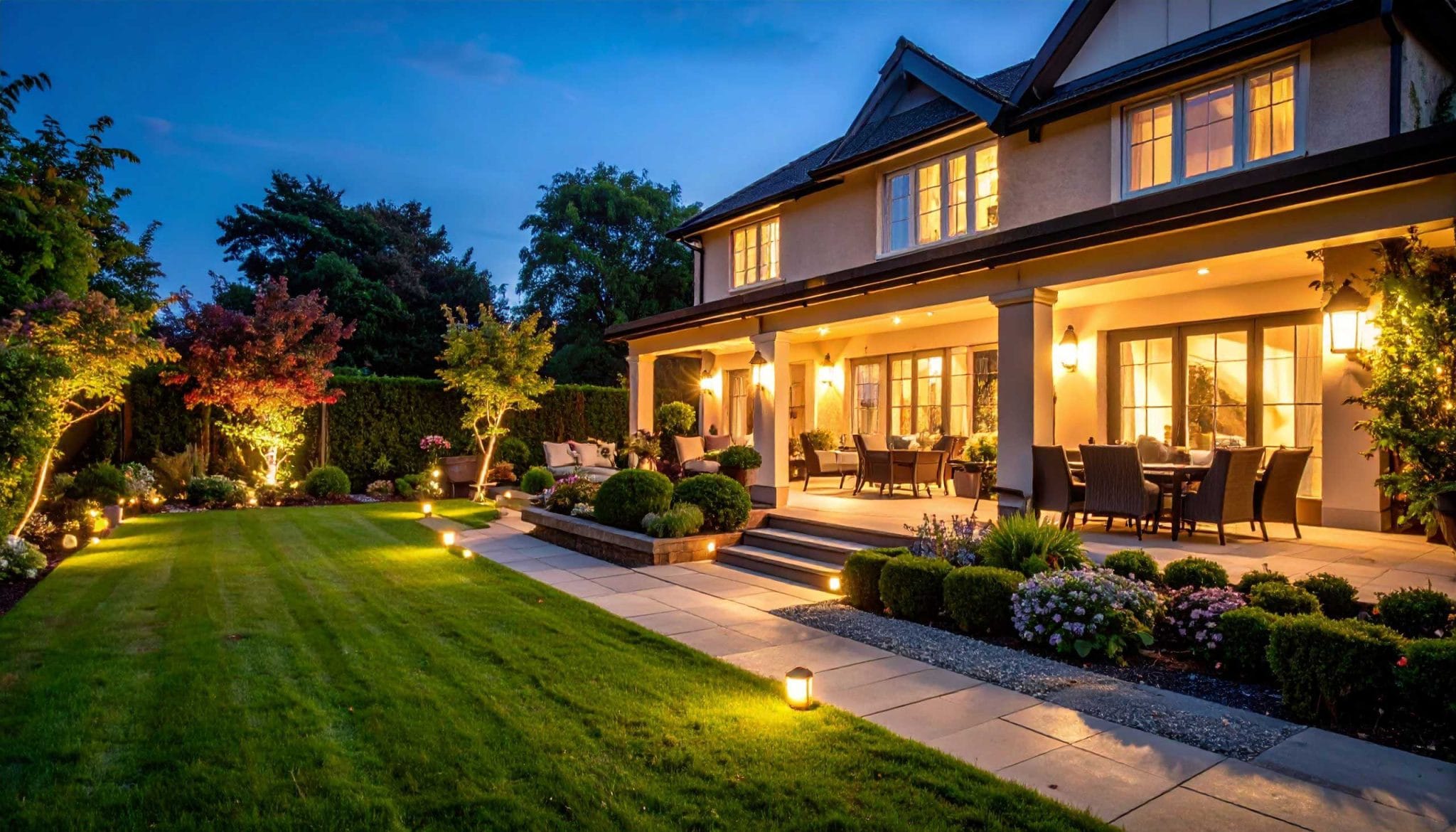
Beyond mere functionality, well-designed garden lighting creates atmosphere, highlights architectural and botanical features, ensures safe navigation, and dramatically expands the usability of outdoor spaces. This exploration examines the principles, techniques, and considerations that guide sophisticated outdoor lighting design, with particular focus on creating systems that balance aesthetic impact with energy efficiency and environmental responsibility.
Foundational Principles: Understanding Light in the Landscape
Several key principles underpin successful garden lighting:
Visual Hierarchy
Effective lighting establishes clear visual organization:
Focal Emphasis
Lighting design should guide attention to key garden elements—perhaps specimen trees, water features, or architectural details—through controlled brightness and focused illumination. This hierarchical approach prevents the visual confusion of evenly lit spaces while creating more dramatic and memorable nighttime landscapes.
Background Restraint
Successful lighting leaves some areas in darkness or subtle shadow, creating necessary contrast that makes highlighted elements stand out. This restrained approach prevents the flattening effect of over-lighting while preserving the mystery and depth that make nighttime gardens compelling.
Layered Illumination
Sophisticated schemes incorporate light at different heights—from ground-level path lights to mid-height feature lighting to overhead illumination from trees or structures. This multi-level approach creates visual depth and three-dimensionality that flat lighting schemes cannot achieve.
Transition Consideration
Thoughtful lighting acknowledges the journey between different garden areas, with gradual changes in brightness that allow eyes to adjust comfortably. This transitional thinking prevents the jarring effect of moving between overly bright and completely dark zones while creating more cohesive overall experiences.
Light Quality
The characteristics of light significantly influence atmosphere:
Color Temperature
The warmth or coolness of light dramatically affects mood and plant appearance, with warmer temperatures (2700-3000K) typically creating more inviting, relaxed atmospheres while cooler temperatures (4000K+) can appear harsh and clinical in residential settings. This temperature consideration is particularly important for entertaining areas where warm light flatters both people and surroundings.
Color Rendering
How accurately lighting reveals the true colors of plants, materials, and surfaces significantly impacts garden appreciation, with high color rendering index (CRI 90+) sources preserving the rich hues of flowers, foliage, and architectural elements. This quality consideration ensures gardens look natural rather than washed-out or artificially colored under artificial light.
Beam Characteristics
The spread, softness, and edge definition of light beams determine how natural or theatrical lighting appears, with softer-edged, gently graduated beams typically creating more sophisticated effects than sharply defined pools of light. This beam consideration affects whether lighting feels integrated with the landscape or imposed upon it.
Brightness Control
Appropriate intensity levels—typically much lower than people initially assume necessary—create more atmospheric and visually comfortable environments than overly bright installations. This restraint approach prevents the common mistake of excessive brightness that flattens texture, creates harsh shadows, and diminishes rather than enhances nighttime garden quality.
Temporal Dimension
Light changes relationship to time and season:
Dusk Transition
The most magical garden lighting responds to the gradual transition from daylight to darkness, with systems that activate progressively rather than switching abruptly from off to on. This transitional approach honors the natural rhythm of evening while creating extended periods of combined natural and artificial light that can be particularly beautiful.
Seasonal Adaptation
Thoughtful lighting acknowledges how gardens change through seasons—from bare branch structures in winter to full foliage in summer—with flexible systems that can be adjusted or reprogrammed as garden appearance evolves. This adaptive approach ensures lighting remains appropriate regardless of seasonal change.
Occasion Flexibility
Sophisticated systems offer different lighting scenes for various uses—perhaps subtle everyday illumination with enhanced brightness for entertaining or special seasonal displays for holidays. This flexible approach ensures lighting serves different needs without requiring physical adjustments to fixtures.
Duration Consideration
Responsible lighting includes appropriate time limits—whether through timers, motion sensors, or manual controls—that prevent unnecessary operation during sleeping hours or when gardens are not in use. This temporal restraint conserves energy while respecting neighbors and wildlife.
Environmental Awareness
Lighting affects broader ecological systems:
Dark Sky Respect
Considerate lighting minimizes upward light spill that contributes to sky glow and obscures stars, typically through shielded fixtures, appropriate mounting heights, and careful aiming. This respectful approach preserves the increasingly rare experience of seeing stars while reducing one form of light pollution.
Wildlife Consideration
Ecologically sensitive lighting acknowledges how artificial light affects animal behavior—from disrupting bat navigation to confusing migrating birds or interfering with insect life cycles. This wildlife-conscious approach might include amber rather than blue-rich light sources, motion activation in sensitive areas, or complete darkness in wildlife corridors during critical periods.
Neighbor Awareness
Thoughtful design prevents light trespass onto neighboring properties through appropriate fixture selection, careful aiming, and brightness control. This considerate approach maintains good relationships while respecting others’ right to darkness if they prefer it.
Energy Responsibility
Sustainable lighting minimizes energy consumption through efficient light sources, appropriate brightness levels, and smart controls that prevent operation when unnecessary. This efficient approach reduces both environmental impact and operating costs while demonstrating responsible resource use.
Lighting Techniques: Methods for Different Effects
Uplighting
Illumination directed upward creates distinctive effects:
Tree Highlighting
Positioning fixtures at ground level to illuminate tree canopies from below reveals branch structure, foliage texture, and seasonal change while creating dramatic contrast between illuminated canopies and dark sky. This botanical emphasis transforms trees into living sculptures after dark.
Architectural Grazing
Placing fixtures close to walls or structures with light directed upward at shallow angles reveals surface texture, material quality, and architectural details through dramatic shadowing effects. This textural approach brings flat surfaces to life through shadow and highlight.
Indirect Illumination
Directing light upward onto reflective surfaces—perhaps light-colored ceilings, overhangs, or large foliage—that then redirect softer, diffused light downward into living spaces. This bounced approach creates gentle, shadow-free illumination ideal for dining or conversation areas.
Dramatic Emphasis
Using narrow-beam uplights to create strong contrast between brightly lit focal elements and darker surroundings for theatrical effect. This high-contrast approach creates memorable visual moments but should be used selectively to maintain impact.
Downlighting
Illumination from above creates different qualities:
Moonlight Effect
Mounting fixtures high in trees or on structures to cast gentle, dappled light downward that mimics natural moonlight filtering through branches. This naturalistic approach creates soft, shadow-patterned illumination that feels integrated with the landscape rather than imposed upon it.
Path Washing
Positioning fixtures above walkways to provide even, glare-free illumination that ensures safe navigation without the visual clutter of numerous path lights. This overhead approach illuminates ground planes effectively while keeping fixtures less visible from primary viewpoints.
Feature Spotlighting
Directing controlled beams downward to highlight specific elements—sculpture, water features, or special plantings—with precise illumination that separates them visually from surroundings. This focused approach creates clear visual hierarchy while minimizing light spill to adjacent areas.
Task Provision
Installing targeted downlighting above outdoor kitchens, dining tables, or seating areas to provide appropriate illumination for specific activities. This functional approach ensures comfortable use while maintaining broader atmospheric lighting in surrounding areas.
Cross-Lighting
Illumination from multiple directions creates three-dimensionality:
Sculptural Revelation
Lighting three-dimensional objects from two or more directions to reveal form, prevent flat appearance, and avoid excessive shadowing on any side. This multi-directional approach creates more complete understanding of sculptural elements than single-source lighting.
Textural Enhancement
Positioning fixtures to direct light across textured surfaces at oblique angles that maximize shadow-casting from surface irregularities. This skimming approach dramatically reveals texture in stone, wood, or architectural details that might appear flat under direct illumination.
Depth Creation
Using fixtures at different distances to illuminate successive layers of the landscape—perhaps foreground planting, mid-ground features, and background elements—with decreasing intensity. This layered approach creates visual depth that prevents gardens from appearing flat or compressed at night.
Shadow Manipulation
Thoughtfully positioning fixtures to cast interesting shadows from garden elements onto adjacent surfaces, creating secondary visual interest beyond the illuminated objects themselves. This shadow-conscious approach recognizes that shadows contribute as much to atmosphere as light itself.
Silhouette and Shadow
Using darkness as deliberately as light:
Backlighting
Positioning fixtures behind objects to create dramatic silhouettes against illuminated backgrounds—perhaps architectural elements against lit walls or sculptural plants against illuminated water. This outline approach emphasizes distinctive forms while creating dramatic visual contrast.
Shadow Projection
Deliberately casting shadows of distinctive elements—perhaps finely branched trees or sculptural plant forms—onto walls or paving to create ephemeral artwork from natural elements. This projected approach uses shadows as design elements rather than trying to eliminate them.
Negative Space
Deliberately leaving certain areas unlit to create visual breathing room, preserve mystery, and enhance appreciation of illuminated elements through contrast. This restraint approach recognizes darkness as essential to successful night gardens rather than something to be eliminated.
Revealed Glimpses
Illuminating small portions of larger elements to suggest rather than completely reveal their presence—perhaps lighting the base of a large tree or one section of a long wall. This partial approach creates intrigue while allowing imagination to complete the picture.
Integrated Approaches
Building lighting into garden elements:
Recessed Integration
Incorporating fixtures directly into steps, walls, or paving to provide illumination without visible light sources. This concealed approach creates seemingly magical effects where surfaces appear to glow without apparent cause.
Water Combination
Integrating lighting with water features to utilize reflection, refraction, and movement that create constantly changing light patterns. This dynamic approach harnesses water’s natural interaction with light to create effects impossible with static illumination alone.
Structural Incorporation
Building lighting into garden structures—pergolas, arbors, or seating elements—so illumination appears to come from the structures themselves rather than added fixtures. This architectural approach maintains cleaner daytime appearance while providing appropriate nighttime function.
Planting Coordination
Positioning fixtures within planting areas where foliage naturally conceals equipment while allowing light to filter through in organic patterns. This botanical approach hides technical elements while creating more naturalistic lighting effects.
Fixture Considerations: Selecting Appropriate Equipment
Quality Factors
Several characteristics determine long-term satisfaction:
Construction Durability
Materials and assembly methods appropriate for permanent outdoor exposure—typically high-grade stainless steel, solid copper, or quality powder-coated aluminum rather than plated or painted mild steel that will deteriorate quickly. This durability consideration ensures fixtures remain functional and attractive for years rather than requiring premature replacement.
Optical Performance
Precision-engineered reflectors, lenses, and diffusers that control light accurately rather than allowing wasteful spill or glare. This optical quality ensures light goes where intended rather than being scattered ineffectively or causing discomfort.
Sealing Effectiveness
Proper gasketing and sealing that prevents water ingress, insect infiltration, and condensation problems that lead to premature failure. This weatherproofing quality is particularly important in British conditions where fixtures face frequent rain and humidity.
Corrosion Resistance
Materials and finishes appropriate for specific installation contexts—with particular attention to coastal locations where salt exposure accelerates corrosion or areas under tree canopies where organic acids affect some materials. This context-specific selection prevents premature deterioration in challenging environments.
Aesthetic Integration
Visual appearance affects daytime garden quality:
Fixture Visibility
Considering how visible fixtures will be during daylight hours, with preference for either architecturally attractive fixtures worth seeing or discreet options that disappear into the landscape. This visual consideration prevents technical elements from detracting from garden aesthetics when not in operation.
Style Appropriateness
Selecting fixtures whose design language complements rather than contradicts the architectural and landscape style of the property. This stylistic alignment creates more cohesive environments than mixing discordant design languages.
Finish Selection
Choosing appropriate colors and finishes that either blend with surroundings or intentionally complement other garden elements. This finish consideration determines whether fixtures recede from attention or become deliberate design elements in their own right.
Scale Relationship
Ensuring fixture size relates appropriately to surrounding elements—neither disproportionately large in intimate spaces nor insignificantly small in larger landscape contexts. This proportional thinking prevents the jarring effect of inappropriately scaled technical elements.
Technical Performance
Functional characteristics determine lighting success:
Light Source Options
Selecting appropriate lamp technology—typically LED for contemporary installations—with consideration for color quality, efficiency, longevity, and replacement availability. This source selection significantly influences both initial performance and long-term maintenance requirements.
Beam Control
Choosing fixtures with appropriate beam spread, cutoff characteristics, and glare control for specific applications rather than generic options. This optical selection ensures light is directed precisely where needed without wasteful spill or uncomfortable brightness.
Thermal Management
Ensuring fixtures properly dissipate heat from LED sources to maintain performance and longevity, particularly in enclosed or recessed installations where heat buildup can significantly reduce LED lifespan. This thermal consideration prevents premature failure and performance degradation over time.
Dimming Compatibility
Verifying fixtures and control systems work together properly to provide smooth, flicker-free dimming when required. This compatibility check prevents the disappointment of sophisticated systems that cannot actually deliver desired lighting flexibility.
Installation Practicality
Implementation considerations affect both cost and performance:
Mounting Options
Ensuring fixtures offer appropriate mounting provisions for intended locations—whether spike mounting in soft ground, surface mounting on hard surfaces, or special brackets for tree or structure attachment. This installation flexibility prevents improvised mounting that compromises performance or safety.
Wiring Access
Designing fixtures with practical cable entry, connection space, and sealing systems that facilitate proper installation while maintaining weatherproof integrity. This practical consideration prevents water ingress at vulnerable connection points while enabling proper installation.
Adjustment Capability
Providing appropriate aiming flexibility through adjustable mounts, rotation capabilities, or interchangeable optics that allow fine-tuning during installation and adjustment as gardens mature. This adaptability ensures lighting can evolve with the landscape rather than becoming inappropriate as plants grow or garden elements change.
Maintenance Access
Ensuring fixtures can be practically serviced—bulbs replaced, lenses cleaned, or adjustments made—without excessive difficulty or specialized tools. This serviceability consideration prevents abandoned systems when maintenance becomes too challenging for owners to manage.
Light Sources: Technology Options
LED Technology
Now dominant for most applications:
Efficiency Advantages
Contemporary LEDs convert 80-90% of energy to light rather than heat, consuming 80% less electricity than halogen alternatives while delivering equivalent illumination. This efficiency dramatically reduces both energy costs and environmental impact while enabling more fixtures to operate within limited power supplies.
Longevity Benefits
Quality LED sources typically provide 50,000+ hours of operation before significant degradation, eliminating frequent lamp replacement while reducing maintenance requirements and waste generation. This extended lifespan makes LEDs particularly valuable in difficult-to-access locations where replacement is challenging.
Miniaturization Possibilities
The small size of LED sources enables fixture designs impossible with traditional lamps—from ultra-slim profiles to completely integrated architectural solutions where the light source disappears entirely. This compact form factor creates new design possibilities while reducing visual impact of technical elements.
Control Compatibility
LEDs offer instant start, smooth dimming (with appropriate drivers), and excellent control compatibility that enables sophisticated lighting scenes, motion activation, and color-changing capabilities when desired. This control flexibility creates more adaptable lighting systems that can serve different needs without physical modification.
Color Considerations
Light quality significantly affects perception:
Temperature Selection
Choosing appropriate color temperature—typically 2700-3000K (warm white) for residential gardens to create inviting atmosphere similar to sunset light, with cooler temperatures (3500-4000K) occasionally used for specific modern applications or moonlight effects. This temperature selection dramatically influences how natural and inviting garden lighting appears.
Rendering Importance
Selecting high color rendering index (CRI 90+) sources that accurately reveal plant colors, material tones, and skin tones rather than distorting or flattening color perception. This quality consideration ensures gardens look natural and vibrant rather than artificially colored under artificial light.
Consistency Maintenance
Ensuring consistent color appearance between different fixtures and over time as sources age, typically by selecting all fixtures from single manufacturers or product families with proven color consistency. This uniformity prevents the jarring effect of mismatched color temperatures in adjacent areas.
Special Applications
Considering specific color needs for particular situations—perhaps amber sources (2200K or true amber) in wildlife-sensitive areas, specific colors for holiday displays, or tunable white systems that can adjust from warmer to cooler tones for different occasions. These specialized approaches address particular requirements beyond standard residential lighting.
Retrofit Considerations
Updating existing systems requires specific attention:
Compatibility Verification
Checking whether existing transformers, wiring, and control systems can accommodate LED replacement lamps or require complete replacement. This assessment prevents disappointing performance or premature failure when mixing new sources with old infrastructure.
Brightness Expectations
Understanding that LED replacements may provide different light distribution or apparent brightness than original halogen sources even when wattage equivalence suggests they should match. This perception awareness prevents disappointment when retrofits deliver different effects than original systems.
Dimming Challenges
Recognizing that many LED replacement lamps perform poorly with existing dimming systems designed for halogen sources, often requiring either control system replacement or careful selection of compatible LED lamps. This dimming consideration prevents the common problem of flickering, inconsistent, or limited dimming range.
Economic Assessment
Evaluating whether partial retrofit (replacing only lamps) or complete system replacement provides better long-term value, considering both immediate costs and ongoing energy savings. This financial analysis often reveals that complete replacement delivers better results and greater savings despite higher initial investment.
Control Systems: Managing Operation
Basic Controls
Fundamental management approaches:
Timer Functions
Programmable timers that activate lighting at dusk and deactivate at appropriate hours, with seasonal adjustment to accommodate changing daylight periods. These automated controls prevent both the waste of daytime operation and the nuisance of late-night illumination when gardens are not in use.
Photocell Activation
Light-sensing controls that automatically activate systems when natural light falls below predetermined levels, ensuring lighting operates only when needed regardless of seasonal light changes. These responsive controls adapt automatically to weather conditions and seasonal variation without requiring constant reprogramming.
Manual Overrides
Accessible switches or remote controls that allow users to activate, deactivate, or adjust lighting regardless of automated settings when specific needs arise. These override capabilities ensure lighting serves actual rather than merely predicted needs.
Zoning Organization
Dividing lighting into logical groups controlled separately—perhaps path lighting, feature illumination, and entertainment areas—to allow appropriate operation of only needed sections rather than all-or-nothing activation. This zoned approach prevents energy waste while providing greater flexibility for different garden uses.
Advanced Systems
Sophisticated control enables greater customization:
Scene Programming
Preset lighting configurations for different occasions—perhaps subtle everyday illumination, enhanced brightness for entertaining, or special holiday displays—activated through simple controls rather than requiring individual adjustment of multiple fixtures. These scenario-based controls make sophisticated lighting accessible without technical complexity.
Astronomical Timing
Controls that automatically adjust to seasonal daylight changes based on location coordinates rather than requiring manual reprogramming throughout the year. These adaptive systems ensure lighting activates at appropriate times relative to sunset regardless of season.
Dimming Capability
Variable brightness control that allows adjustment for different activities, weather conditions, or personal preferences without replacing components. This flexibility creates more adaptable lighting that can respond to changing needs while conserving energy when full brightness is unnecessary.
Remote Access
Smartphone or internet-based controls that allow monitoring and adjustment from anywhere, enabling response to changing plans or weather conditions without being physically present. This remote capability ensures lighting serves actual needs even when schedules change unexpectedly.
Smart Integration
Connecting lighting to broader systems:
Home Automation Connection
Integration with broader home management systems that coordinate lighting with other functions—perhaps automatically activating garden lights when exterior doors open or coordinating with interior lighting scenes. This integrated approach creates more seamless transitions between indoor and outdoor living.
Weather Responsiveness
Systems that adjust operation based on weather conditions—perhaps increasing brightness during fog or rain when visibility is reduced or deactivating during severe weather when gardens are unlikely to be used. This environmental awareness prevents both inadequate lighting when needed and wasteful operation when unnecessary.
Occupancy Adaptation
Motion or occupancy sensing that activates appropriate lighting when garden areas are in use while maintaining lower levels or complete darkness when areas are unoccupied. This responsive approach dramatically reduces energy consumption while maintaining functionality when needed.
Learning Capability
Advanced systems that recognize patterns of use and automatically adjust operation to anticipate needs based on historical behavior. These adaptive controls provide appropriate lighting without requiring constant manual adjustment while optimizing energy use based on actual rather than theoretical usage patterns.
Energy Management
Optimizing resource use through control:
Brightness Limitation
Setting maximum output levels below 100% for areas where full brightness is unnecessary, often reducing energy consumption by 20-30% with minimal perceptible difference in illumination quality. This calibrated approach prevents the common waste of excessive brightness while extending component lifespan.
Fade Programming
Gradual transitions between different lighting states—slowly increasing brightness at dusk or gently fading between scenes—that create more pleasant visual experiences while reducing the strain on electrical systems caused by simultaneous activation of multiple fixtures. These transitional effects enhance atmosphere while potentially reducing peak electrical demands.
Usage Monitoring
Systems that track actual operation hours, energy consumption, and usage patterns to identify opportunities for greater efficiency or highlight potential maintenance needs before failure occurs. This analytical approach enables continuous improvement based on actual performance data rather than assumptions.
Seasonal Scheduling
Adjusting both operating hours and brightness levels seasonally to reflect different garden uses, plant appearances, and daylight conditions throughout the year. This seasonal adaptation ensures lighting remains appropriate while preventing the waste of summer-intensity lighting during winter months when gardens are used differently.
Installation Considerations: Ensuring Quality and Safety
Infrastructure Planning
Fundamental systems require careful design:
Power Supply Sizing
Calculating total load requirements with appropriate safety margins and future expansion capacity rather than minimally meeting current needs. This forward-thinking approach prevents overloaded transformers, voltage drop issues, and the need for complete system replacement when adding fixtures later.
Cable Specification
Selecting appropriate cable types and sizes based on load requirements, installation conditions, and voltage drop calculations rather than minimum standards. This quality-focused approach prevents performance problems while ensuring safety and compliance with electrical regulations.
Conduit Protection
Installing cables in appropriate protective conduit where physical damage might occur—under pathways, in areas subject to digging, or where wildlife might damage exposed wiring. This protective approach prevents future failures while facilitating cable replacement if necessary without garden disruption.
Junction Planning
Creating accessible, weatherproof junction points at strategic locations rather than direct burial of connections that cannot be accessed for future maintenance or modification. This serviceable approach ensures systems remain adaptable and repairable rather than requiring complete replacement when problems occur.
Installation Quality
Execution details significantly affect outcomes:
Fixture Positioning
Precise placement according to design intent rather than convenience, with particular attention to aiming angles, mounting heights, and relationship to illuminated subjects. This precision approach ensures lighting creates intended effects rather than compromised approximations.
Cable Management
Neat, organized cable routing that prevents future damage, allows for identification of different circuits, and remains accessible for maintenance without excessive landscape disruption. This systematic approach prevents the common problem of untraceable or inaccessible wiring that complicates future service.
Weather Protection
Proper sealing of all connections, appropriate drainage provision for in-ground fixtures, and adequate protection of transformers and control equipment from water ingress. This weatherproofing attention prevents the most common causes of system failure in outdoor environments.
Commissioning Verification
Thorough testing of all system components, adjustment of fixture aiming, and programming of control sequences before considering installation complete. This verification process ensures systems function as designed rather than merely being physically installed.
Safety Assurance
Protecting both people and property:
Electrical Compliance
Adherence to all relevant electrical codes and standards, particularly regarding outdoor installations where water exposure creates additional safety considerations. This regulatory compliance ensures both legal operation and genuine safety rather than merely functional systems.
Voltage Selection
Using low voltage systems (typically 12V) in accessible areas where safety concerns are paramount, with proper isolation from mains voltage components. This safety-conscious approach reduces risk while simplifying future maintenance and modification.
Trip Prevention
Ensuring cables, fixtures, and other components do not create tripping hazards along pathways or in regularly trafficked garden areas. This hazard awareness prevents both injuries and damage to lighting components from accidental impact.
Documentation Provision
Creating accurate as-built documentation showing cable routes, junction locations, and circuit organization to facilitate safe future maintenance and modification. This information preservation prevents dangerous exploratory work when future changes are needed.
Maintenance Planning
Ensuring long-term performance:
Access Provision
Creating appropriate access for routine maintenance—whether removable pavers over junction boxes, hinged fixture mounts, or clear documentation of component locations. This accessibility planning prevents abandoned systems when maintenance becomes too difficult to perform.
Spare Capacity
Including some unused capacity in transformers, cable runs, and control systems to accommodate future additions or replacements with different power requirements. This forward-thinking approach prevents complete system redesign when making minor changes or updates.
Component Standardization
Using consistent fixture types, lamp specifications, and connection methods throughout installations to simplify maintenance and reduce necessary spare parts inventory. This standardization approach prevents the complexity of maintaining multiple different systems within single gardens.
Owner Education
Providing clear guidance on system operation, basic maintenance procedures, and appropriate professional service intervals to ensure proper ongoing care. This knowledge transfer prevents premature system deterioration due to neglect or improper operation.
Application Strategies: Lighting Different Garden Elements
Architectural Elements
Buildings and structures benefit from thoughtful illumination:
Facade Consideration
Lighting building exteriors with attention to material, architectural style, and viewing perspectives, typically using either grazing light that reveals texture or washing techniques that provide more even illumination. This architectural approach enhances property appearance while creating backdrop for garden views.
Entry Emphasis
Highlighting main entrances with appropriate illumination that guides visitors while creating welcoming first impressions, often combining practical path lighting with more decorative or dramatic effects near doorways. This arrival sequence creates intuitive wayfinding while establishing property character.
Detail Highlighting
Selectively illuminating architectural details—perhaps columns, decorative elements, or material transitions—that might be overlooked during daylight but become focal points when specifically lit. This selective approach creates more sophisticated nighttime appearance than general floodlighting.
Shadow Play
Using architectural elements to cast interesting shadows onto adjacent surfaces, creating secondary visual interest beyond the illuminated structures themselves. This shadow-conscious approach recognizes that patterns of darkness contribute as much to atmosphere as illuminated elements.
Planting Illumination
Vegetation requires particularly thoughtful lighting:
Specimen Highlighting
Featuring significant individual plants—whether sculptural trees, unusual specimens, or plants with particular seasonal interest—through focused illumination that separates them visually from surrounding vegetation. This botanical emphasis creates clear focal points while showcasing garden highlights.
Textural Revelation
Positioning lights to emphasize the textural qualities of different plants—perhaps the rough bark of mature trees, the delicate structure of ornamental grasses, or the intricate branching of deciduous specimens in winter. This textural approach reveals botanical characteristics that create visual interest distinct from daytime appearance.
Seasonal Adaptation
Adjusting lighting as plants change through seasons—perhaps highlighting spring blossoms, summer foliage, autumn color, or winter branch structure as each becomes prominent. This temporal approach maintains garden interest throughout the year while responding to changing plant characteristics.
Layered Illumination
Lighting different planting heights—from ground covers and low perennials to shrub layers and tree canopies—to create three-dimensional depth rather than flat illumination of single elements. This multi-level approach reveals garden structure while creating more sophisticated visual compositions.
Water Feature Enhancement
Water interacts distinctively with light:
Reflection Utilization
Positioning lights to create striking reflections on still water surfaces, effectively doubling the impact of illuminated elements while adding magical mirror qualities to ponds or pools. This reflective approach leverages water’s natural properties to enhance lighting effects without additional fixtures.
Movement Emphasis
Illuminating moving water—whether fountains, waterfalls, or rippling streams—to capture the dynamic interplay of light and water that creates constantly changing patterns and sparkle. This kinetic approach highlights the unique animated quality water brings to garden lighting.
Underwater Illumination
Submerged lighting that reveals water depth, underwater features, or aquatic plants while creating dramatic effects impossible with surface lighting alone. This immersive approach transforms water bodies from dark voids to illuminated volumes with three-dimensional presence.
Edge Definition
Lighting the perimeters of water features to clearly define their boundaries for both safety and visual clarity, typically using concealed fixtures that highlight edge materials or plantings rather than the water itself. This boundary approach ensures water features remain assets rather than hazards after dark.
Circulation Guidance
Paths and transitions require functional illumination:
Indirect Approaches
Lighting adjacent planting, walls, or structures rather than paths themselves to provide navigational illumination without the visual clutter of obvious path lights. This subtle approach ensures safe movement while maintaining more sophisticated aesthetic than conventional path lighting.
Rhythm Creation
When using dedicated path lights, arranging them with consistent spacing and height to create visual rhythm that guides movement through the garden. This sequential approach provides intuitive wayfinding through consistent visual patterns rather than random fixture placement.
Level Change Emphasis
Providing enhanced illumination at steps, ramps, or other level changes where safety concerns are heightened, typically through integrated step lights, handrail illumination, or carefully positioned path fixtures. This safety-conscious approach prevents accidents while maintaining overall lighting cohesion.
Destination Highlighting
Illuminating journey endpoints—whether garden structures, seating areas, or focal points—more brightly than paths leading to them, creating natural visual pull toward destinations. This hierarchical approach creates intuitive movement through brightness progression rather than explicit directional indicators.
Social Spaces
Areas for gathering require particular attention:
Activity Support
Providing appropriate task lighting for specific activities—dining, cooking, reading, or conversation—without compromising overall garden atmosphere with excessive brightness. This functional approach ensures comfortable use while maintaining broader lighting composition.
Flexibility Provision
Incorporating adjustable lighting levels for different occasions—perhaps brighter illumination for lively entertaining and subtler lighting for intimate gatherings—through dimming capabilities or separate circuits. This adaptable approach ensures lighting supports rather than dictates how spaces are used.
Perimeter Definition
Subtly illuminating the edges or boundaries of social spaces to create sense of enclosure and definition without drawing attention away from central activities. This peripheral approach creates psychological comfort through defined space while maintaining focus on social interaction.
Vertical Illumination
Ensuring some light falls on vertical elements surrounding gathering areas—whether walls, screens, or planting—to prevent the uncomfortable sensation of sitting in a pool of light surrounded by complete darkness. This balanced approach creates more comfortable psychological environments than isolated brightness.
Special Considerations: Addressing Specific Challenges
Small Gardens
Limited space presents distinct opportunities:
Vertical Emphasis
Focusing illumination on vertical elements—walls, fences, or tall plantings—to draw attention upward and create perception of greater space through height rather than horizontal dimension. This vertical approach makes small gardens feel larger by engaging the full three-dimensional volume rather than just the limited floor area.
Boundary Treatment
Lighting garden boundaries to create sense of defined space rather than confinement, typically using grazing light on walls or fences to reveal texture while providing sense of enclosure. This boundary approach transforms potentially oppressive limits into attractive features.
Layered Depth
Creating visual layers through selective lighting of foreground, middle ground, and background elements to suggest greater spatial depth than actually exists. This layered approach creates perception of journey and discovery even in physically limited spaces.
Multifunctional Elements
Incorporating lighting into elements that serve other purposes—perhaps illuminated planters, glowing furniture, or lit water features—to reduce visual clutter while providing necessary illumination. This integrated approach prevents small spaces from feeling overwhelmed by technical equipment.
Exposed Locations
Wind, salt, or extreme conditions require robust solutions:
Fixture Specification
Selecting particularly durable fixtures designed specifically for challenging environments—typically marine-grade stainless steel, solid copper, or specially formulated composites rather than standard outdoor ratings. This environmental matching prevents premature deterioration in harsh conditions.
Installation Reinforcement
Providing additional stability for fixtures in windy locations through deeper anchoring, reinforced mounting, or lower profile options less affected by strong winds. This structural approach prevents both immediate damage during storms and gradual loosening over time.
Maintenance Planning
Establishing more frequent inspection and maintenance schedules for exposed locations where environmental stresses accelerate wear and potential failure. This proactive approach prevents complete system failure through early identification of developing problems.
Simplified Design
Creating lighting schemes with fewer, more robust components rather than numerous delicate elements in locations where maintenance access is difficult or environmental conditions particularly challenging. This pragmatic approach balances aesthetic ambition with practical durability.
Mature Gardens
Established landscapes present different challenges:
Root Consideration
Installing new lighting in mature gardens with minimal root disturbance through careful trenching, above-ground cable routing, or wireless solar options where appropriate. This sensitive approach protects valuable established plants while enabling lighting enhancement.
Existing Feature Integration
Incorporating lighting into existing garden elements—mature trees, established structures, or existing hardscape—rather than adding new elements specifically for lighting purposes. This integrated approach maintains garden character while minimizing additional visual elements.
Incremental Implementation
Phasing lighting installation to allow evaluation of initial effects before completing entire systems, particularly important in mature settings where existing conditions may create unexpected results. This measured approach prevents wholesale changes that might compromise established garden character.
Historical Respect
In gardens with historical significance, selecting lighting approaches that complement rather than contradict original design intent, perhaps through fixtures that reference historical precedents or lighting techniques that enhance rather than transform original character. This respectful approach maintains garden integrity while improving functionality.
Wildlife Sensitivity
Ecological awareness requires specific approaches:
Spectrum Selection
Using wildlife-friendly light sources—typically warm white (2700K) or amber (2200K or true amber) rather than cool white or blue-rich sources—that minimize disruption to animal behavior and insect attraction. This spectral approach reduces ecological impact while maintaining appropriate human visual experience.
Timing Limitation
Restricting lighting operation hours in wildlife-sensitive areas to minimize disruption to nocturnal species, perhaps through motion activation that provides illumination only when humans are present or time-based controls that respect critical wildlife periods. This temporal approach balances human needs with ecological responsibility.
Dark Corridor Preservation
Maintaining unlit pathways between habitat areas to allow wildlife movement without light barriers that many species avoid crossing. This connectivity approach prevents lighting from fragmenting habitat while maintaining dark sky corridors.
Height Limitation
Keeping lighting low to the ground in sensitive areas to reduce light spill into tree canopies, water bodies, or other wildlife habitats. This contained approach minimizes ecological footprint while providing necessary human functionality.
Case Studies: Exemplary Lighting Applications
Historic Property Integration
Balancing heritage and functionality:
Cotswold Manor House
This project demonstrates how contemporary lighting can respectfully enhance historical architecture through carefully positioned uplighting that reveals stone texture while maintaining appropriate warmth and subtlety. The design uses concealed fixtures with warm color temperature (2700K) sources that complement the golden limestone while highlighting key architectural features without overwhelming the historic character.
Victorian Walled Garden
This restoration shows how period-appropriate fixtures can be adapted for modern light sources, with traditional lanterns retrofitted with warm LED sources that provide historical aesthetic with contemporary efficiency. The design maintains period authenticity in visible fixtures while incorporating modern control systems and hidden technical lighting where appropriate.
National Trust Property
This public garden illustrates how lighting can extend visiting hours while respecting historical integrity through temporary, reversible installations that enhance visitor experience without permanent modification to significant landscapes. The approach uses minimally invasive mounting methods, battery-powered fixtures where appropriate, and careful documentation to ensure complete reversibility.
Medieval Courtyard
This urban project demonstrates how lighting can reveal historical layers through illumination that highlights different construction periods and architectural elements, creating educational narrative through light. The scheme uses different color temperatures to subtly distinguish between medieval, Tudor, and Victorian elements while creating cohesive overall composition.
Contemporary Design Integration
Modern approaches to garden lighting:
Minimalist London Roof Terrace
This urban project shows how integrated lighting can eliminate visible fixtures while creating dramatic effects through light emanating from seemingly solid elements. The design incorporates illumination within custom planters, seating elements, and floor panels to create floating effects and spatial definition without traditional visible light sources.
Coastal Contemporary Garden
This exposed site demonstrates how lighting can withstand challenging marine conditions while enhancing architectural landscape through robust, marine-grade fixtures with sophisticated optical control. The scheme uses corrosion-resistant materials and sealed LED technology to ensure longevity while creating dramatic illumination of sculptural planting and architectural walls.
Eco-Modernist Country Garden
This rural project illustrates how sustainable technology can create sophisticated lighting effects through solar-powered systems with battery storage that provide consistent illumination independent from grid connection. The approach combines energy harvesting, efficient LED sources, and smart controls to create responsive lighting that adjusts to actual usage patterns.
Urban Courtyard Installation
This compact space demonstrates how lighting can transform spatial perception through carefully positioned fixtures that emphasize vertical surfaces and create illusion of greater space. The design uses grazing light on textured walls, subtle uplighting of multi-stem trees, and concealed strip lighting to define boundaries while drawing attention upward to expand perceived volume.
Naturalistic Setting Enhancement
Working with landscape character:
Woodland Garden Path
This project shows how subtle lighting can maintain natural character while ensuring safe navigation through techniques that mimic moonlight filtering through tree canopies. The design uses carefully positioned downlights mounted high in trees with dappled effects created through branch patterns, supplemented by occasional lower fixtures concealed within planting.
Country House Lake
This water-focused scheme demonstrates how lighting can enhance reflective qualities of water bodies through strategic illumination of surrounding elements rather than the water itself. The approach lights selected trees and architectural elements positioned to create striking reflections, with additional underwater lighting that reveals water depth and movement.
Naturalistic Swimming Pond
This recreational water feature shows how lighting can support both practical use and ecological value through zoned illumination that provides safety where needed while maintaining dark areas for wildlife. The design incorporates underwater lighting in swimming zones, subtle edge definition for safety, and complete darkness in planted filtration areas to support nocturnal wildlife.
Prairie-Style Perennial Garden
This plant-focused project illustrates how lighting can reveal the structural and textural qualities of naturalistic planting through selective illumination that highlights key specimens and plant communities. The approach uses adjustable spike-mounted fixtures that can be repositioned seasonally to highlight different plants as they reach peak interest throughout the year.
Small Space Maximization
Creating impact in limited areas:
London Townhouse Garden
This urban project demonstrates how lighting can make confined spaces feel larger through illumination that draws the eye upward and creates perception of layered depth. The design uses wall-washing techniques on boundary walls, uplighting of vertical plant elements, and subtle path lighting to define journey through the space.
Courtyard Dining Area
This entertainment-focused scheme shows how lighting can create intimate atmosphere in small spaces through carefully controlled illumination that provides task functionality without overwhelming brightness. The approach combines adjustable downlighting for the dining table, subtle uplighting of surrounding architectural elements, and candlelike portable fixtures for flexible additional illumination.
Roof Terrace Installation
This elevated garden illustrates how integrated lighting can eliminate visual clutter in highly visible spaces through fixtures incorporated into built elements rather than standing independently. The design embeds lighting within bench seating, planter edges, and floor panels to create floating effects and spatial definition without visible technical elements.
Pocket Garden Transformation
This minimal space project shows how lighting can create illusion of separate garden rooms through controlled illumination that defines different functional areas within physically continuous space. The approach uses distinct lighting treatments for dining, lounging, and circulation areas to create perception of multiple spaces within limited square footage.
Future Directions: Emerging Approaches
Technological Advances
New capabilities are expanding possibilities:
Tunable Systems
Increasingly accessible color-tunable and white-tunable fixtures that allow adjustment of light characteristics without changing equipment—from warmer to cooler tones or subtle color shifts for different occasions or seasons. These flexible systems create more adaptable lighting that can serve different needs or create different atmospheres without physical modification.
Miniaturization Continuation
Ongoing reduction in fixture size through LED advancement and improved optics that enables increasingly discreet integration into landscape elements. This continuing miniaturization creates more opportunities for concealed lighting that maintains daytime garden aesthetics while providing sophisticated nighttime effects.
Wireless Development
Improving reliability and functionality of wireless control systems that eliminate need for control wiring between fixtures and controllers. This cable reduction simplifies installation in existing gardens while enabling more responsive control without extensive infrastructure.
Energy Independence
More capable integrated solar and battery systems that provide reliable operation without grid connection, with particular value for remote garden areas or properties with sustainability focus. This self-sufficient approach eliminates trenching for power while demonstrating environmental responsibility.
Design Evolution
Changing approaches to lighting aesthetics:
Darkness Appreciation
Growing recognition of darkness as valuable quality rather than problem to solve, with lighting designs that preserve and enhance dark areas rather than eliminating them. This balanced approach creates more sophisticated compositions that use darkness as deliberately as light while supporting both wildlife and dark sky preservation.
Temporal Design
Increasing emphasis on lighting that changes through evening hours—perhaps beginning with higher, more functional levels that gradually transition to more atmospheric, lower levels as evening progresses. This time-based approach creates more nuanced experiences while reducing energy consumption during later hours.
Narrative Enhancement
More sophisticated use of lighting to reveal garden stories, historical layers, or seasonal progressions through changing illumination that highlights different elements at different times. This storytelling approach creates more engaging experiences that evolve rather than remaining static.
Sensory Integration
Holistic approaches that consider how lighting interacts with other sensory experiences—from the sound of water features to the scent of evening-fragrant plants or the feeling of different materials—to create more immersive garden experiences. This multisensory approach recognizes lighting as one component of integrated sensory design rather than isolated visual element.
Environmental Response
Addressing changing ecological awareness:
Dark Sky Compliance
Increasing adoption of fully shielded fixtures, appropriate brightness levels, and warmer color temperatures that minimize light pollution while maintaining functionality. This responsible approach preserves night sky visibility while demonstrating environmental stewardship.
Wildlife Consideration
Growing implementation of wildlife-friendly lighting practices—from spectrum selection to timing controls to physical placement—that minimize ecological disruption while maintaining human functionality. This balanced approach recognizes gardens as shared habitats rather than exclusively human spaces.
Climate Adaptation
Lighting designs that acknowledge changing climate conditions—from more frequent extreme weather events to shifting seasonal patterns—with robust systems, flexible controls, and appropriate technology for evolving conditions. This adaptive approach creates resilient lighting that remains functional despite environmental changes.
Circular Thinking
Increasing consideration of full product lifecycles—from manufacturing impacts through operational efficiency to end-of-life recyclability—when selecting lighting components. This holistic approach reduces environmental footprint beyond mere energy efficiency to consider broader sustainability implications.
Integration Expansion
Connecting lighting to broader systems:
Wellness Alignment
Growing recognition of how lighting affects human health and wellbeing, with designs that support circadian rhythms, reduce stress, and enhance connection to natural cycles. This health-conscious approach creates lighting that contributes positively to physical and psychological wellbeing rather than merely providing visibility.
Smart Home Connection
Deeper integration with comprehensive home automation systems that coordinate garden lighting with interior environments, security systems, entertainment functions, and energy management. This connected approach creates more seamless living experiences while optimizing resource use across property systems.
Community Consideration
More thoughtful approaches to how private garden lighting affects neighboring properties, public spaces, and community character through appropriate brightness, careful aiming, and considerate timing. This neighborly approach recognizes lighting as shared environmental element rather than purely private matter.
Educational Opportunity
Increasing use of garden lighting as tool for environmental education—demonstrating sustainable technology, revealing ecological processes, or highlighting conservation-focused design approaches. This informative approach transforms lighting from purely decorative element to vehicle for increasing environmental awareness.
Conclusion: Creating Meaningful Night Gardens
Thoughtfully designed garden lighting transforms outdoor spaces from daytime-only environments into multidimensional nighttime landscapes that extend both the hours and seasons of garden enjoyment. Beyond mere visibility, successful lighting creates atmosphere, reveals beauty, ensures safety, and dramatically expands the functionality of outdoor spaces after dark.
The most compelling garden lighting balances multiple considerations—aesthetic impact, functional requirements, energy efficiency, and environmental responsibility—to create systems that enhance human experience while respecting broader contexts. This balanced approach requires understanding not just technical aspects of illumination but the psychological, ecological, and cultural dimensions of how light shapes perception and behavior.
As technology evolves and environmental awareness grows, garden lighting continues to develop toward more sophisticated, efficient, and responsive systems that provide enhanced experiences with reduced resource consumption and environmental impact. These developments offer exciting possibilities for creating night gardens that provide distinctive experiences impossible during daylight hours rather than merely mimicking daytime appearance.
By applying the principles and approaches outlined in this exploration, garden owners and designers can create lighting that transforms outdoor spaces into magical nighttime environments that extend enjoyment, enhance property value, and demonstrate environmental responsibility. These thoughtfully illuminated gardens become not just extended living spaces but distinctive nighttime landscapes with their own character, rhythm, and beauty.